

Land Grading for Texoma Pads, Roads, and Drainage
A building pad that looks flat can still hold water. A gravel driveway can look good on day one and start washing out after the first hard rain. Those problems usually begin below the surface, with land grading that did not account for soil, runoff, traffic, or the way the property will actually be used.
On Texoma property, grade work is more than moving dirt until the ground appears level. It is the process of shaping the site so water has somewhere to go, structures have stable support, and roads, lots, pastures, or work areas remain usable through changing weather. The right approach depends on the property and the job. A house pad, a ranch entrance, and a commercial development subgrade do not need the same finish or the same material.
What Land Grading Does for a Property
Land grading establishes the elevations and slopes that control how a property works. It may involve cutting high areas, placing fill in low areas, compacting a building pad, shaping swales, building up a road base, or creating a finished surface around a home, shop, barn, pond, or parking area.
The goal is not always a perfectly flat site. In many cases, a slight, controlled slope is exactly what the property needs. Water should move away from foundations and travel toward a planned outlet, swale, ditch, pond, culvert, or drainage area. A driveway needs crown or cross slope to shed water instead of trapping it in the wheel tracks. A pad needs a stable, compacted surface that supports the structure planned for it.
Good grading also makes the rest of the project easier. Utility installation, concrete work, fencing, landscaping, road construction, and building access all go better when the site has been prepared correctly from the start.
Start With Water, Not Just Elevation
Water is usually the first thing to consider when planning a grade. During a hard Texoma rain, runoff will follow the lowest available path. If that path leads toward a slab, across a driveway, through a gate opening, or into a neighbor’s property, simply adding more dirt may make the problem worse.
A proper site review looks at the existing slope, low spots, drainage patterns, soil conditions, road ditches, nearby ponds, and drainage outlets. It also considers where water enters the property. Runoff from an uphill pasture, county road, adjacent lot, or roof line can affect a site long after the grading equipment has left.
For a residential pad, finished grade should generally direct water away from the foundation. For a rural driveway, drainage may require a crowned driving surface, roadside ditches, and a culvert at the entrance or at low crossings. On a larger development site, the work may include rough grading and subgrade preparation before the final drainage system and pavement are installed.
There is no single slope that works everywhere. Soil type, rainfall exposure, existing elevations, intended use, and local drainage conditions all matter. The key is providing a clear path for water without creating steep, unstable slopes or sending runoff where it does not belong.
Culverts Are Part of the Grade Plan
A culvert is not just a pipe dropped into a ditch. Its elevation, length, size, and the grade on both sides determine whether water passes through it or backs up and cuts around it. At a driveway entrance, the culvert needs adequate cover and properly built approaches so vehicles can cross it without crushing the pipe or creating a washout.
The same applies to cattle guards and low-water crossings. They need solid approach grades and material that will stand up to regular truck, trailer, livestock, and equipment traffic. If drainage is treated as an afterthought, even a new entrance can become a maintenance problem quickly.
Building Pads Need More Than a Flat Surface
Foundation-pad construction begins by identifying suitable subgrade. Organic material, roots, loose topsoil, wet pockets, and soft fill may need to be stripped or addressed before select fill is placed. Building over poor material without preparation can lead to settlement, drainage issues, and costly corrections later.
Once the area is prepared, fill is placed in controlled lifts and compacted as needed to create a stable pad. The final pad elevation must work with the building plan, driveway access, surrounding drainage, and finished floor requirements. Raising a pad can help protect a structure from water, but it also changes how runoff moves around the site. The transition from pad to surrounding grade needs to be planned, not pushed out with whatever dirt is nearby.
For shops, barns, homes, and metal buildings, the right pad also provides practical access for concrete crews and construction traffic. A pad that is too narrow, too soft, or poorly connected to the driveway can slow down every contractor that follows.
Grading for Driveways, Roads, and Parking Areas
A durable gravel driveway starts with shape and support. If the existing ground is soft, uneven, or holding water, spreading rock on top may improve appearance for a short time, but it will not fix the underlying problem. Tires will push gravel into weak spots, water will collect in ruts, and more material will be needed again.
The site should be graded to create a stable subgrade before road base or clean rock is installed. Depending on conditions, that can mean removing soft material, building up low areas with select fill, creating a crown, and cutting ditches or shaping shoulders to move water off the drive.
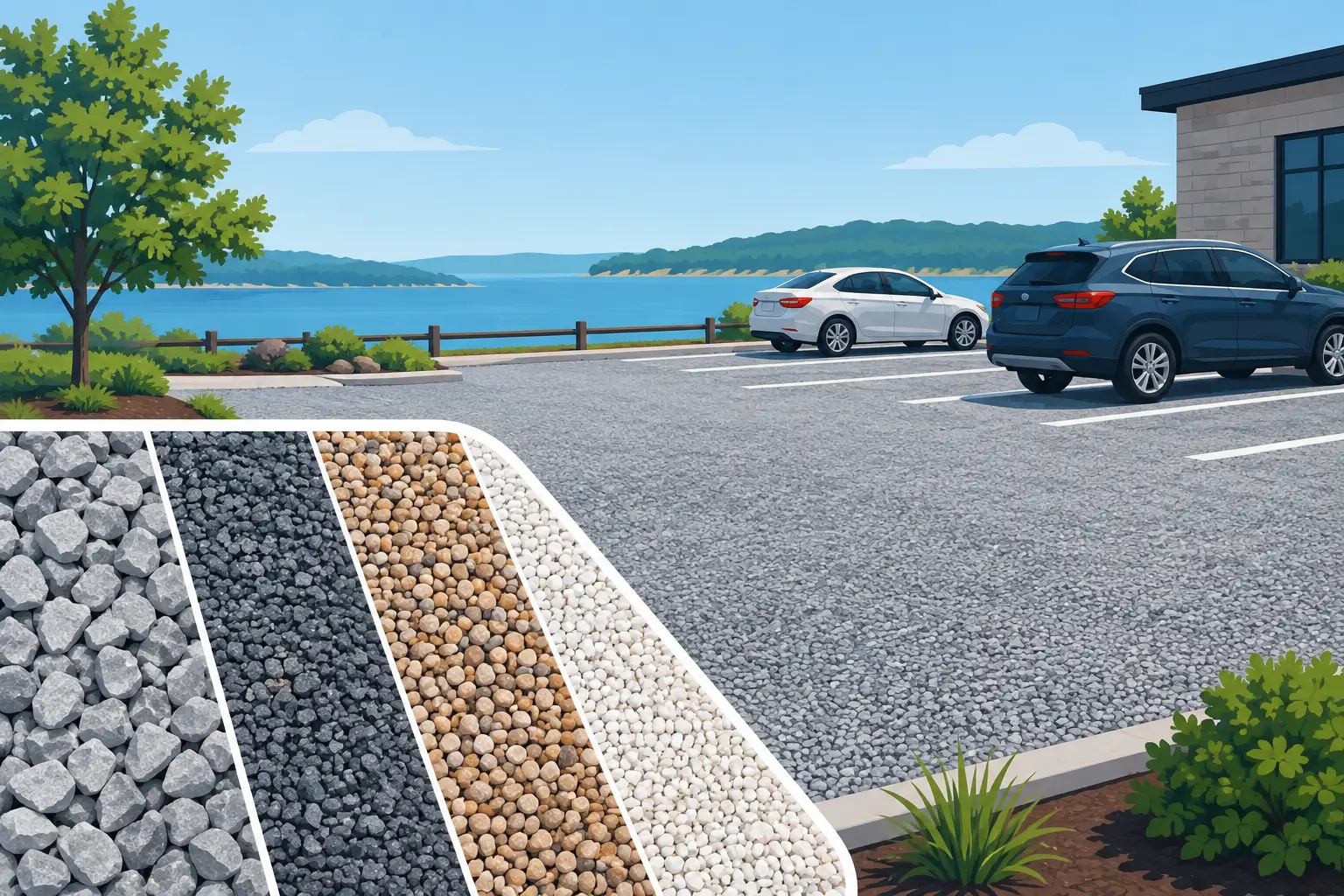
Material selection matters, but it depends on the job. Road-base products are commonly used where compaction and a firm driving surface are needed. Clean rock can help with drainage and support in certain areas. Limestone screenings may work well for specific finishing applications, while decomposed granite can provide a different look and feel for lighter-use surfaces. A heavily traveled ranch road, a residential driveway, and a gravel parking lot should not automatically receive the same material or thickness.
Traffic matters just as much as weather. A driveway used by passenger vehicles has different demands than one carrying concrete trucks, feed deliveries, equipment trailers, or daily ranch traffic. Building it for the actual load helps avoid premature rutting and repeated repairs.
Working With Texoma Soil Conditions
Texoma ground can change quickly across a single property. One area may have firm native material, while another holds moisture or contains expansive clay. Low ground can stay soft longer than expected after rain. Topsoil may be valuable for final landscape areas but unsuitable beneath a road, pad, or parking surface.
That is why stripping, stockpiling, importing, or reusing material should be based on the project plan. Sandy-loam topsoil has a place in finishing yards, pasture improvements, and landscape areas. Select fill may be a better fit where elevation and support are needed. Material should be placed where it does the job it was intended to do.
Timing also affects results. Earthwork can be performed in many conditions, but wet soil is harder to shape and compact correctly. Working ground that is too wet can create pumping, rutting, and soft areas that require rework. Sometimes the right call is to let a section dry, adjust the work sequence, or bring in suitable material rather than forcing the grade in poor conditions.
Common Signs Your Property Needs Grading Work
Some grading problems are obvious, while others show up slowly. Standing water near a foundation, tire ruts that return after every rain, erosion at a gate, and gravel washing into a ditch are all signs that the site needs more than surface touch-up.
Watch for water crossing the driveway instead of draining beside it, bare channels forming on a slope, mud collecting around barns or equipment areas, and low places that stay wet long after the rest of the property dries. Cracks or settlement around concrete can also point to drainage or subgrade concerns, although the cause should be evaluated before assuming grading alone will solve it.
For rural properties, problem areas often develop where traffic and water meet: entrances, creek crossings, pond edges, feed areas, barn approaches, and fence-line gaps. Correcting the grade at those locations can make the property easier to use year-round and reduce the need for repeated patch work.
Get the Grade Right Before the Next Phase
Grading is one of the first major steps on a project, but its effects stay visible for years. A well-built pad supports the building. A properly shaped driveway sheds water and holds material. A planned drainage path keeps rain from choosing its own route across the property.
Before bringing in concrete, gravel, a building crew, or livestock equipment, look at the ground beneath the project. Triple R Dirt Works approaches land work with the finished use in mind, whether that means a house pad, ranch road, commercial subgrade, pond area, or a better-draining piece of property. The best time to correct a grade is before water, traffic, and construction expose the problem.