
How to Plan a Farm Pond That Holds Water
A pond that stays muddy, leaks through the basin, or washes out at the first heavy rain is an expensive hole in the ground. Before you plan a farm pond, look at how water already moves across your property. The best pond projects start with the land, not the machine.
For Texoma acreage, a farm pond may serve livestock, fishing, irrigation backup, fire protection, or simple drainage control. Those uses affect the right location, depth, bank shape, dam design, and overflow system. Getting the dirt moved is only part of the job. The goal is a pond that fills when it should, holds water when conditions turn dry, and sheds excess runoff without damaging the dam.
Start With the Pond’s Job
Decide what the pond needs to do before marking a site. A livestock pond needs dependable access, stable banks, and clean water protection. A fishing pond benefits from adequate depth, structure, and water quality. A pond built mainly for runoff control needs enough storage and a properly designed spillway.
One pond can handle more than one job, but there are trade-offs. Cattle walking directly into the water can damage the shoreline and stir up sediment. A shallow pond may be easier to excavate, but it heats up faster and can lose water quickly in a Texas summer. A deeper pond generally provides better temperature stability, but it requires suitable soil, more excavation, and safe bank slopes.
It also helps to set realistic expectations. A pond fed only by rainfall and a small drainage area may drop substantially during a dry stretch. That does not automatically mean it was built wrong. The watershed, soil, evaporation, and intended water use all need to be considered together.
Evaluate the Watershed Before You Dig
A watershed is the land area that drains toward a proposed pond location. It is one of the first things to evaluate when you plan a farm pond because it determines how much water may reach the basin and how quickly it arrives.
Walk the property after a good rain if possible. Look for natural draws, low spots, drainage swales, existing gullies, and places where water crosses roads or fence lines. A site at the lower end of a natural drainage area can work well, provided the drainage area is large enough to fill the pond but not so large that flood flows overwhelm it.
A pond in the wrong drainage path creates problems beyond the water itself. Runoff may cut around the dam, wash out an access road, carry silt into the basin, or push water toward a house pad, shop, barn, or neighbor’s property. If a road, driveway, or pasture crossing is part of the drainage route, culverts and ditch grading may need to be included in the overall plan.
The watershed also tells you what will enter the pond. Bare fields, heavily traveled livestock areas, and eroding ditches can send sediment downhill fast. In some cases, a small sediment trap or diversion swale uphill from the pond will protect the main basin and reduce future cleanout work.
Find Soil That Will Hold Water
Good pond soil is worth more than a convenient low spot. Clay-rich soil can often be compacted into a seal that holds water. Sandy soil, fractured rock, gravel seams, and porous subsoil can allow water to escape faster than runoff can replace it.
Test pits are a practical way to see what is below the surface. An excavator can expose the soil profile where the basin and dam are planned. Look for consistent clay material, changes in soil layers, rock ledges, seep zones, and buried organic material. Topsoil, roots, brush, and loose organic debris should not be left under a dam because they break down and create weak paths for water.
If suitable clay is available on site, it can be placed in controlled lifts and compacted during construction. If it is not available, importing select fill or using a different site may make more sense than building a pond that will always struggle to hold water. The least expensive location to excavate is not always the least expensive pond to own.
Choose a Site With Room for a Dam and Spillway
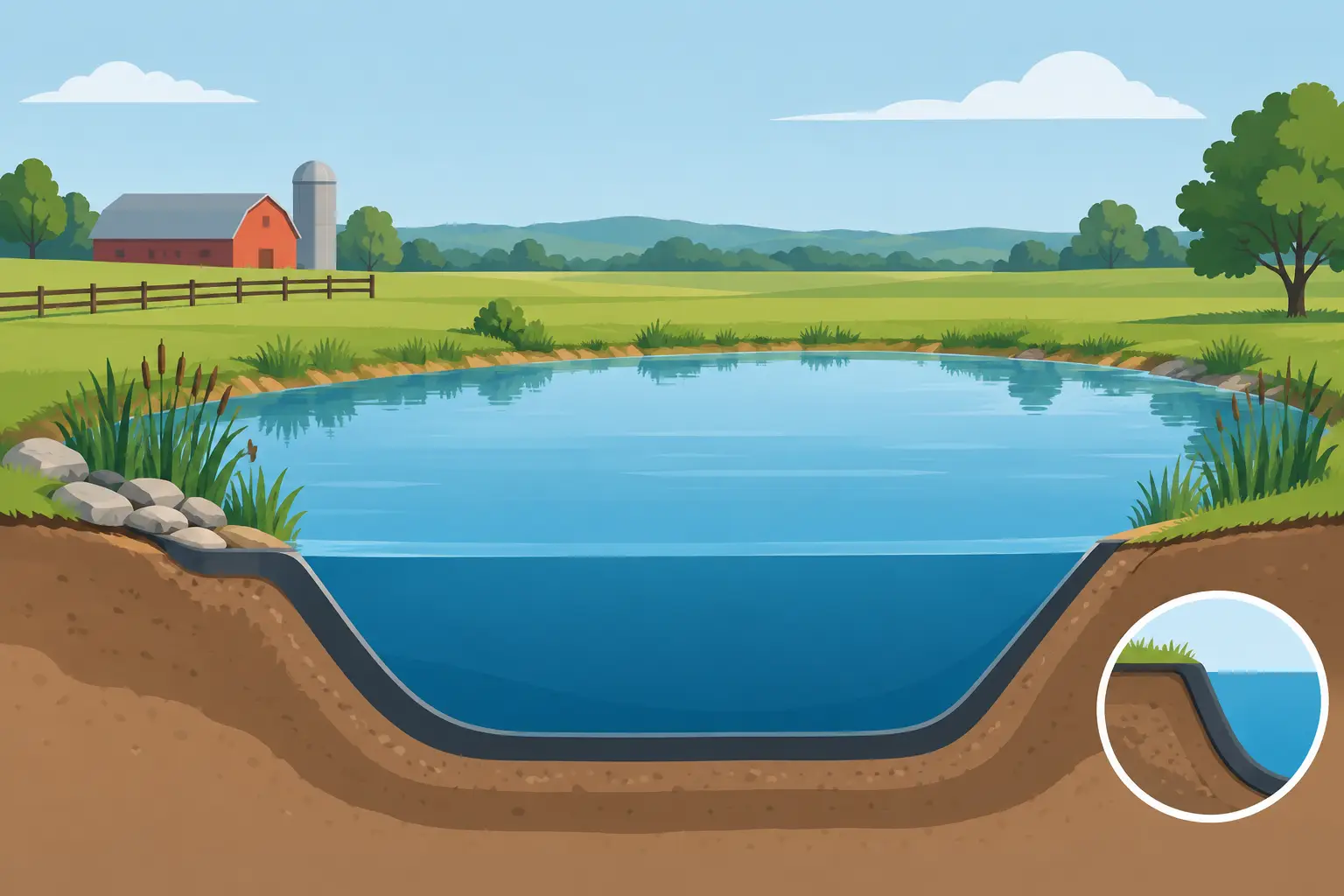
Most farm ponds are formed by constructing an embankment dam across a natural draw. That dam needs a wide, stable footprint and enough room for equipment to work safely. The basin also needs room to spread out behind it without backing water into a road, building area, utility corridor, or neighboring tract.
The dam is not just a pile of dirt. It must be built with properly prepared foundation soil, compacted fill, safe side slopes, and protection from erosion. A keyway or cutoff trench may be excavated into suitable native material beneath the dam to reduce seepage under the structure. This work is difficult to correct after the pond fills, which is why site preparation matters.
Every pond also needs a controlled way to pass excess water. A primary overflow pipe can maintain the normal water level, while an emergency spillway handles larger runoff events. The emergency spillway should direct water away from the dam on stable ground. Water should never be forced to find its own route around an embankment.
The size and placement of the spillway depend on the drainage area, slope, soil conditions, and anticipated runoff. This is not the place to guess. An undersized or poorly graded spillway can lead to erosion and dam damage during a major storm.
Plan Depth, Slopes, and Access
Depth should match the pond’s purpose and the local conditions. For many farm ponds, having a deeper area helps maintain water through hot weather and gives fish a better refuge from extreme temperatures. At the same time, steep underwater banks can be hazardous and difficult to maintain.
Build practical access into the layout. Equipment may need to reach the pond during construction, future cleanout, bank repair, or brush removal. If livestock will drink from the pond, consider a hardened access point or a separate watering system rather than allowing animals to trample the full shoreline. Limiting traffic around the banks helps prevent ruts, mud, and bank failure.
Think about where excavated material will go before work starts. Material from the basin may be used in the dam if it is suitable and properly compacted. Excess dirt can be used to improve low areas, build a pad, reshape drainage, or create a road base subgrade. It should not be pushed into another drainage path without a plan.
Account for Permits, Utilities, and Property Lines
Pond rules can vary by location and by the size, drainage connection, and intended use of the project. Check applicable county, state, and federal requirements before construction, especially if the work affects a creek, wet area, floodplain, or shared drainage route. If you are unsure, get the site reviewed before moving dirt.
Call for utility locating before excavation. Rural properties can still have buried power, water lines, gas lines, fiber, and old service lines crossing areas that appear undeveloped. Confirm property lines, easements, and access routes as well. A pond needs room not only for water but also for construction equipment, spoil placement, and future maintenance.
Build for Maintenance, Not Just the First Rain
A completed pond needs grass cover on exposed banks, regular checks after heavy rainfall, and attention to erosion before it grows. Keep brush and volunteer trees off the dam. Their roots can create seepage paths, and removing mature trees later can leave holes in the embankment.
Watch the water level over time. A gradual seasonal drop is common. A wet spot on the downstream side of the dam, a persistent flow below the embankment, or a sudden drop in water level can point to a leak that needs attention. Catching those signs early is easier than rebuilding a failed section later.
For pond excavation, dam construction, drainage grading, and material hauling, Triple R Dirt Works can help coordinate the dirt work with the practical site improvements around it. The right equipment matters, but a clear plan for water, soil, access, and overflow matters first.
A good farm pond should look like it belongs on the property. When the drainage is understood, the soil is prepared correctly, and the overflow has a safe path, the finished pond becomes useful ground instead of a recurring problem.