
Best Aggregate for Parking Areas in Texoma
A parking area can look finished on delivery day and still turn into ruts, potholes, and loose stone after the first hard rain or a season of traffic. The best aggregate for parking areas is not always the prettiest rock or the cheapest load. It is the material that matches the traffic, soil, drainage, and base preparation underneath it.
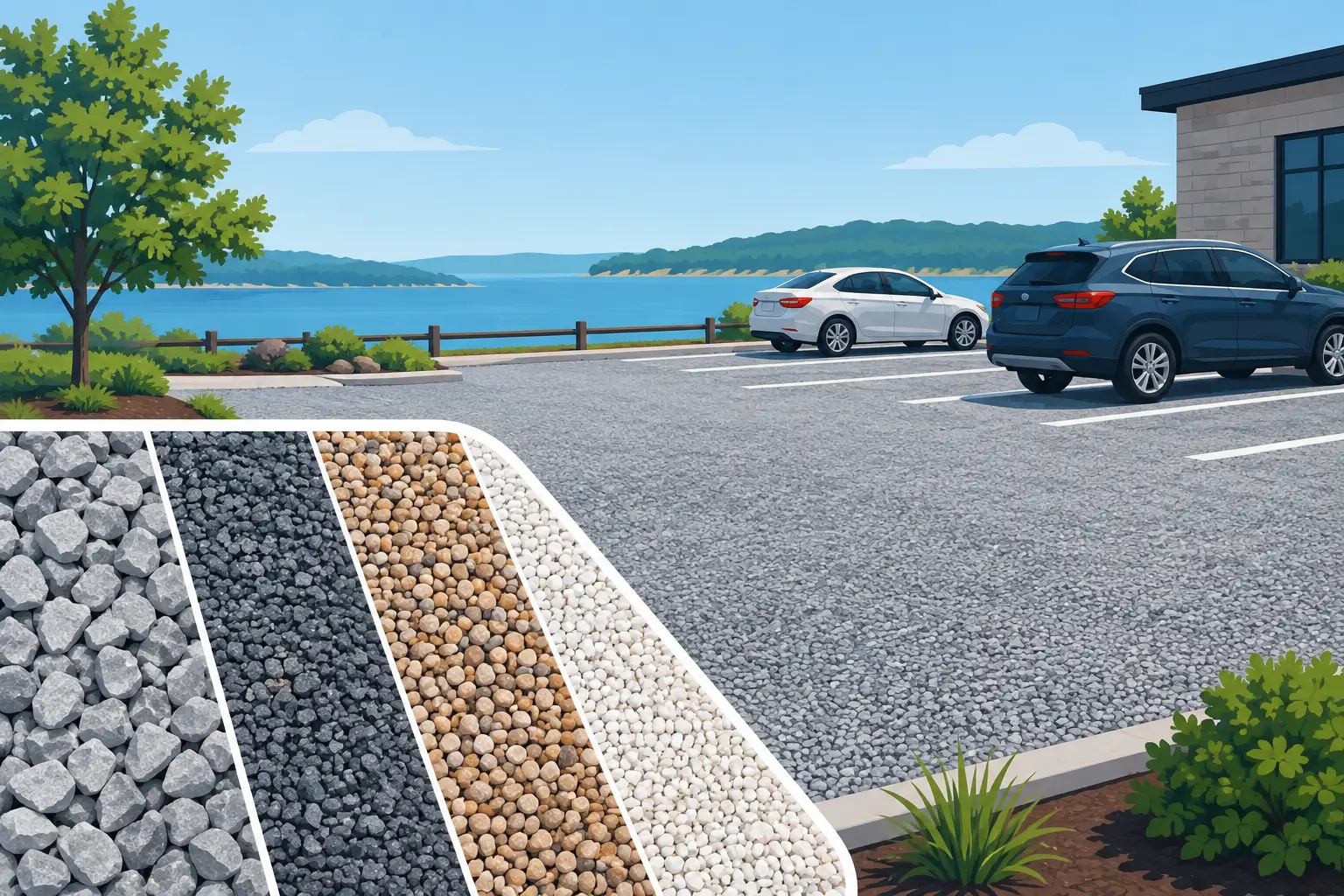
For most Texoma parking areas, a compacted road-base product is the practical starting point. It creates a tight, load-bearing surface that can support pickups, trailers, customer traffic, equipment, and daily use. Clean rock has its place, especially where drainage is the main problem, but it does not pack together the same way. Choosing correctly starts with understanding what each material is built to do.
Start With the Ground, Not the Top Rock
A gravel parking lot is only as good as the subgrade below it. If the native soil is soft, wet, or full of clay, placing rock directly on top may improve the appearance for a while, but it will not solve the underlying movement. Tires push the aggregate into the soil, water collects in low spots, and the parking surface begins to fail.
Proper grading gives water somewhere to go. A parking area should generally have enough slope to shed rainfall without becoming too steep for vehicles or trailers. Low areas may need select fill, while weak or saturated ground may call for undercutting, stabilization, or a geotextile fabric before base material goes down. The right approach depends on the property, but skipping this work usually costs more when the lot has to be rebuilt.
Drainage matters just as much at the edges. Water that runs across a parking area can wash fines away and cut channels through the rock. Water trapped beside it can soften the base from the outside in. Culverts, shallow swales, and properly shaped ditches often protect the parking surface better than simply adding more gravel.
Best Aggregate for Parking Areas: Road Base
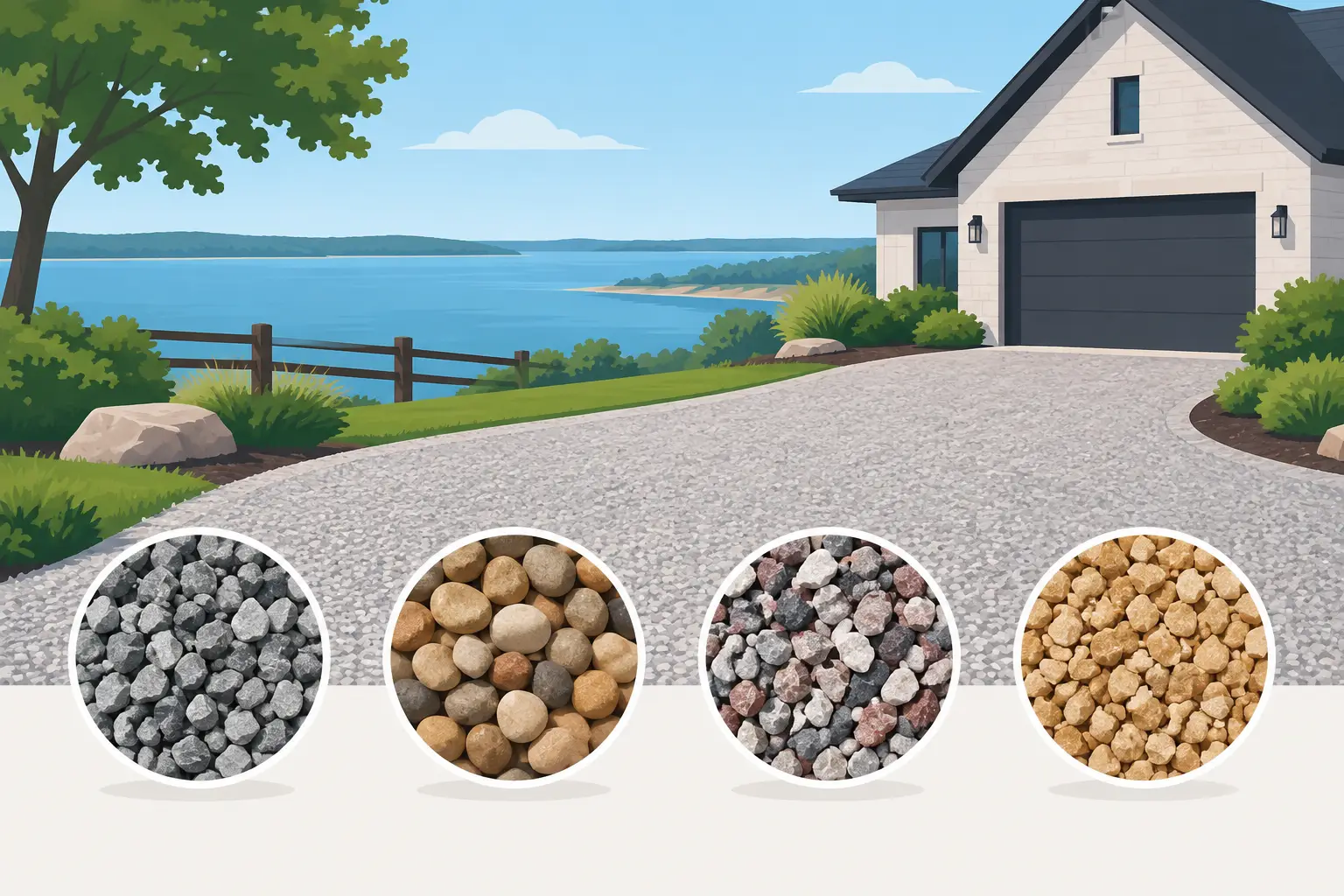
Road base is usually the best all-around aggregate for parking areas that need a firm, compacted surface. It contains a range of particle sizes, from larger crushed stone down to smaller fines. When placed in lifts, moisture-conditioned as needed, and compacted, those particles lock together and form a stable driving and parking surface.
This is the material to consider for a home with several vehicles, a shop yard, a church or business overflow lot, a ranch entrance, or a construction staging area. It handles repeated traffic better than loose, uniform stone because it resists shifting under tires. It also gives a good working base if a customer plans to add a cleaner-looking finish rock later.
Road base is not maintenance-free. Fine material can migrate or wear away over time, particularly where traffic brakes, turns, or accelerates. A periodic touch-up and regrading are normal parts of owning an unpaved parking area. Still, a correctly built road-base lot is far easier to maintain than a lot built on soft ground with oversized rock.
Why compaction changes the result
A load of good base material spread loosely is not the same as a finished parking lot. Compaction is what turns aggregate into a working surface. Heavy equipment shapes the grade, establishes the crown or drainage slope, and compacts the material so vehicle loads are distributed across the base instead of punching into one soft spot.
Thickness depends on traffic and soil conditions. Light passenger-vehicle parking on firm ground may need less material than an equipment yard, RV parking pad, or truck-access area. Where clay soils hold water or heavy vehicles are common, a thicker base section is usually money well spent.
When Clean Rock Is the Better Choice
Clean rock contains little to no fines. Because the pieces do not lock together as tightly as road base, it generally stays looser under traffic. That makes it less suitable as the only surface for a busy parking lot, but it is useful where drainage is the main concern.
Clean rock can help create a drainage layer beneath road base, stabilize wet areas, and support parking around shops, barns, or equipment storage where mud is a constant issue. Larger clean stone can bridge soft spots better than fine-heavy material, provided there is a plan for containing it and building a compacted surface above it.
It can also work as a top layer for low-speed, low-traffic areas where a rougher, open-rock appearance is acceptable. The trade-off is tire movement. Clean stone can scatter, develop tracks, and require more frequent reshaping than a well-compacted base. For a public-facing lot or a driveway entrance, most owners prefer a tighter finish.
Limestone Screenings and Decomposed Granite
Limestone screenings are fine crushed limestone material that can compact into a smooth, firm finish in the right application. They are commonly used for walkways, patio areas, and light-use surfaces. In a parking area, screenings are usually best as a finishing material over a sound base rather than the full structural section.
Used too thick on their own, screenings can get dusty in dry weather and soft when saturated. They may also track onto paved roads or concrete. But as a thin finish over road base, they can improve the appearance and create a more refined surface for light residential parking.
Decomposed granite offers a natural tan-to-rust color that many acreage owners prefer around homes, barns, and landscape areas. It can compact reasonably well, but it is not automatically the right choice for every vehicle area. Availability, particle mix, slope, and drainage all affect performance. On a steep entrance or a heavily traveled lot, a proven road base beneath it remains the safer plan.
Match the Aggregate to the Traffic
Before ordering material, be honest about how the area will be used. A few passenger vehicles parked at a house place a different demand on the ground than a contractor yard with loaded trailers. The biggest mistake is sizing the base for today’s light use when the property will soon handle delivery trucks, RVs, tractors, or work equipment.
Consider these four questions before selecting a material and thickness:
- Will the lot handle passenger vehicles only, or trucks, trailers, RVs, and equipment?
- Does water stand on the site after a rain, or does the ground drain naturally?
- Is the native soil firm, sandy, rocky, or heavy clay?
- Will vehicles turn, brake, and idle in one area, creating concentrated wear?
Turning areas deserve extra attention because tires scrub the surface sideways. Entrances also take more abuse from vehicles slowing down and turning off the road. These sections may need added depth, better compaction, or periodic topdressing even when the rest of the lot is performing well.
A Practical Build Sequence
A durable gravel parking area is built in stages. First, clear organic material and shape the subgrade to the intended elevation. Next, correct soft spots and establish drainage. If conditions call for it, install separation fabric before placing aggregate so the base does not disappear into the soil.
Then place road base in manageable lifts instead of dumping the full depth at once. Grade and compact each lift before adding the next. Finish by maintaining positive drainage away from buildings, gates, and traffic lanes. For areas needing a cleaner appearance, a thin layer of selected finish material can go on after the structural base is complete.
This sequence is why material delivery alone is not always the answer. A few loads spread across an unprepared lot may provide temporary access, but excavation, grading, and compaction create the surface that holds up. Triple R Dirt Works can handle both the site work and bulk material delivery, which keeps the base, drainage, and final surface working as one job.
Do Not Choose by Price Per Load Alone
The lowest per-load price can be expensive if the material does not fit the site. Cheap oversized rock may remain loose and hard to walk on. Fine material may look smooth initially but fail in wet soil. A thin layer of any aggregate will struggle if it is carrying heavier traffic than it was designed for.
The better value is a parking area that sheds water, stays in place, and can be maintained with occasional grading instead of repeated emergency repairs. Ask for a material recommendation based on the actual location, traffic, and existing ground conditions, not just the square footage.
Before the first truck arrives, walk the site after a rain and mark where water stands, where vehicles will turn, and where runoff needs to leave the property. Those details will tell you more about the right aggregate than a rock sample ever can.