

Gravel Parking Lot Installation That Holds Up
A gravel lot can look finished the day the rock is spread and still fail within a season. Ruts at the entrance, standing water after a hard rain, rock pushed into the surrounding soil, and soft spots under loaded trucks usually point to one problem: the gravel parking lot installation started at the surface instead of the ground below it.
For a home, shop, church, ranch, jobsite, or commercial property, a usable parking lot needs more than a load of clean rock. It needs a planned layout, stable subgrade, the right base material, enough depth for the traffic it will carry, and drainage that moves water away before it weakens the structure.
Start With the Traffic, Not the Rock
The first question is not what color gravel looks best. It is what will park, turn, and sit on the lot. Passenger vehicles on a residential property place far less demand on a surface than delivery trucks, trailers, farm equipment, dump trucks, or regular commercial traffic. A lot that handles a few pickups on weekends can often use a different section and material depth than one that sees loaded work trucks every day.
Layout matters just as much. Parking stalls, drive lanes, turnarounds, entrances, and truck access should be established before grading begins. A narrow entrance can force vehicles to turn sharply and shove gravel aside. Tight turning areas and loading zones need extra attention because tire movement works the surface harder than straight parking rows.
The lot should also be planned around the property rather than against it. Existing drainage paths, low areas, nearby buildings, gates, culverts, utilities, and the road connection all affect where water and traffic will go. On rural Texoma properties, it is common to deal with clay soils, changing elevations, and heavy rain events that can expose shortcuts quickly.
Gravel Parking Lot Installation Begins With Subgrade
Subgrade is the prepared soil beneath the aggregate. It is where a long-lasting lot is won or lost. If topsoil, roots, loose fill, or wet organic material remains under the gravel, the lot can sink and pump mud into the rock even when the surface layer is thick.
The work normally starts by clearing the parking area and stripping unsuitable material where needed. The exposed subgrade is then shaped and compacted. Soft areas may need to be undercut and replaced with select fill or additional base material before the lot is built up. Simply covering a soft spot with more surface rock rarely fixes it. The rock will settle into the weak soil, and the same spot will return after traffic and rain.
A properly prepared subgrade also gives the lot its direction for drainage. Gravel is not waterproof. Water moves through the aggregate, so the soil below must be graded to keep water from collecting inside the section. Depending on the site, that may mean crowning the lot, sloping it to one side, or directing runoff toward a ditch, swale, culvert, or other planned outlet.
Build the Base for the Load It Will Carry
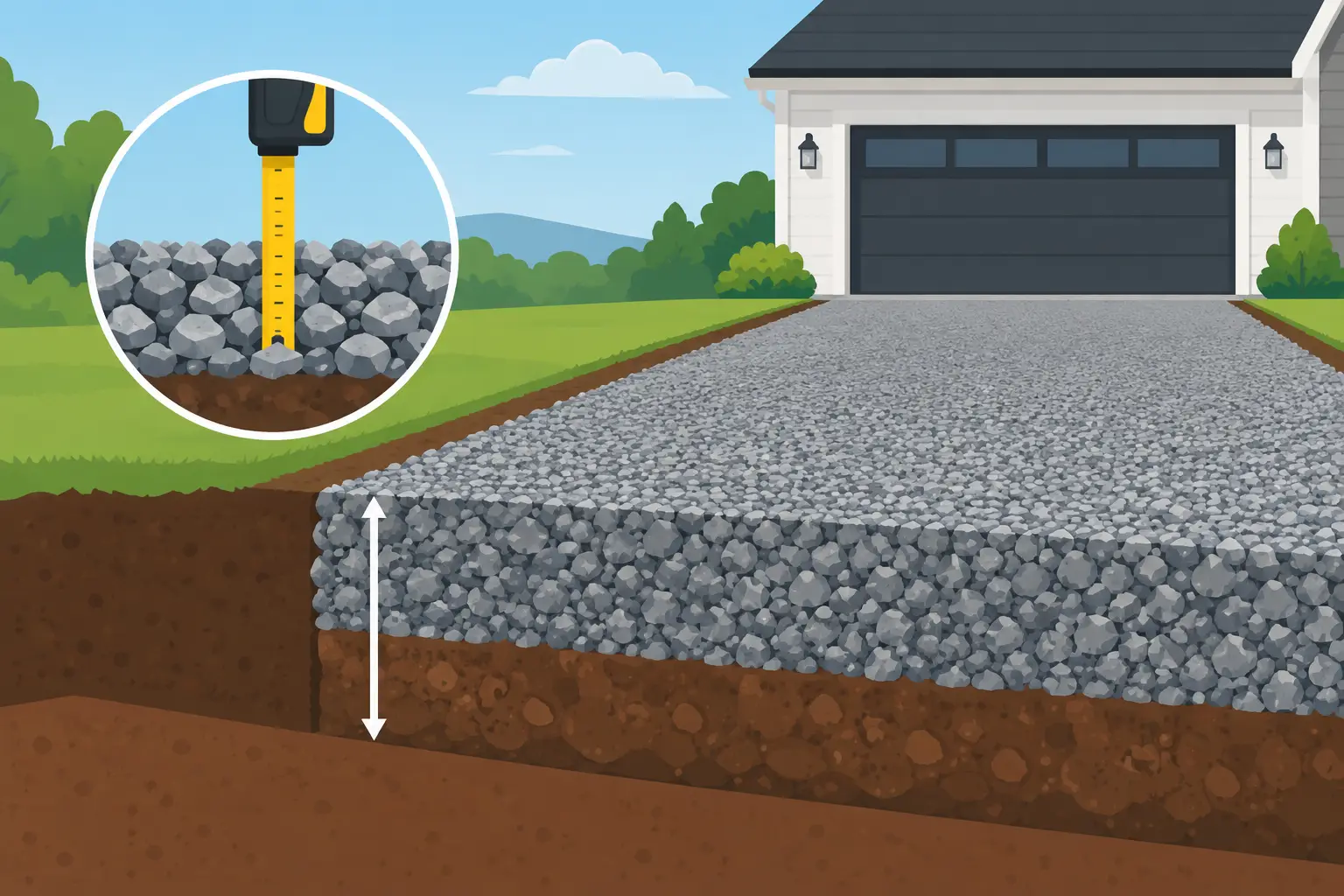
Road base is the working layer that spreads vehicle weight across the subgrade. For many gravel lots, crushed limestone road base or a similar compactable aggregate is placed in controlled lifts, watered as needed, and compacted. The fines in a good base help the material lock together, creating a stable platform rather than a loose layer of stone.
Base depth depends on soil conditions and traffic. Firm, well-draining ground carrying mostly passenger vehicles may require a lighter section than a lot built over soft clay or used by trailers, work trucks, and equipment. Heavier traffic often calls for a thicker base, better edge support, and more careful compaction. There is no single depth that works for every property, which is why a site look matters before material is ordered.
Geotextile fabric can be useful on weak or wet subgrades. Installed between soil and aggregate, it helps separate the base from the native ground and can reduce contamination of the rock by fine soil. It is not a substitute for drainage or proper excavation, though. If water has nowhere to go, fabric alone will not create a stable parking lot.
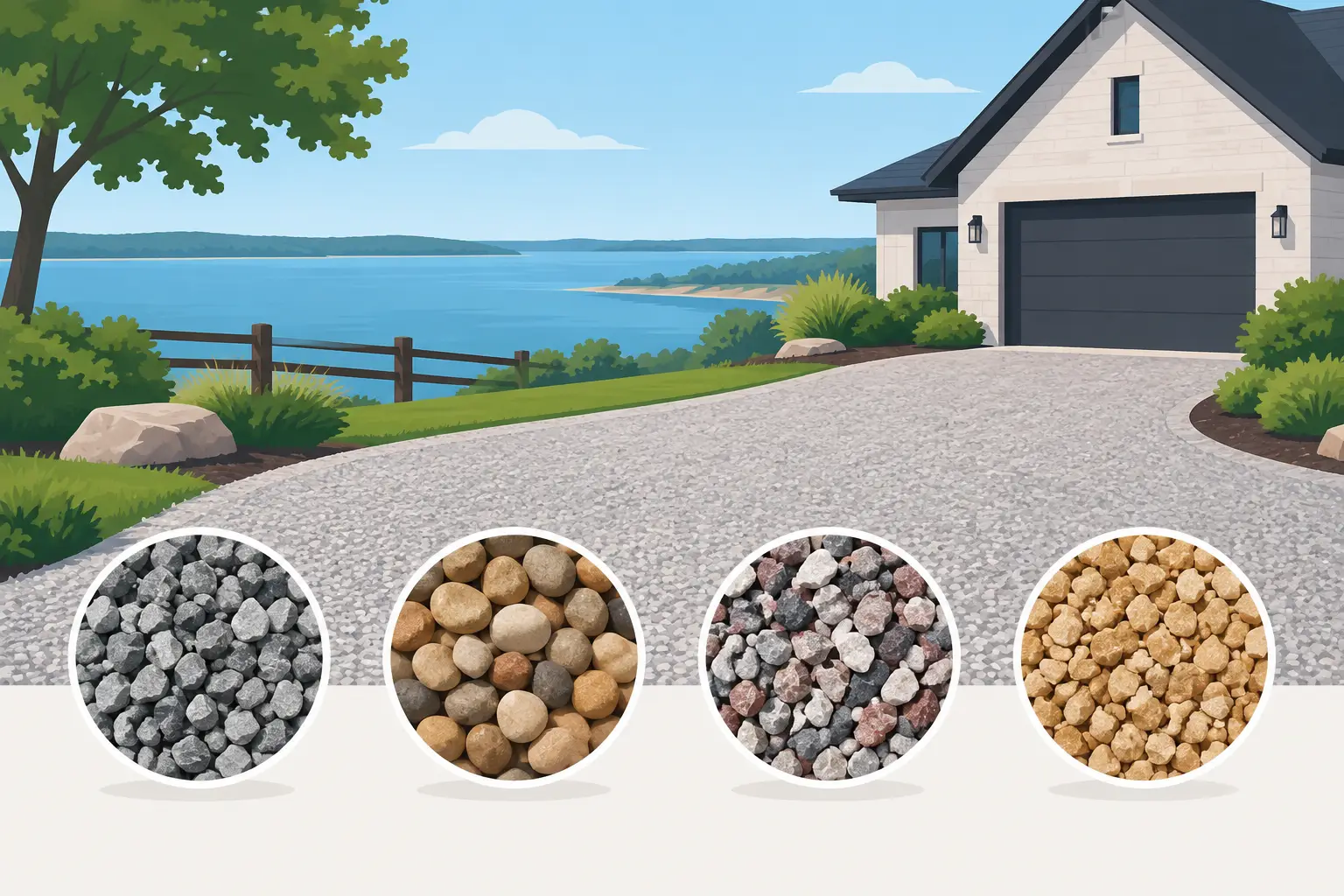
After the base is compacted, a surface course can be placed for traction, appearance, and easier maintenance. Clean rock, crushed limestone, decomposed granite, or another locally suitable material may be a good fit depending on the intended finish. Angular material generally locks together better than rounded rock. Large, clean stone may drain well but can be hard to walk on or difficult to keep smooth. Material selection should match the way the lot will actually be used.
Drainage Is Part of the Parking Lot
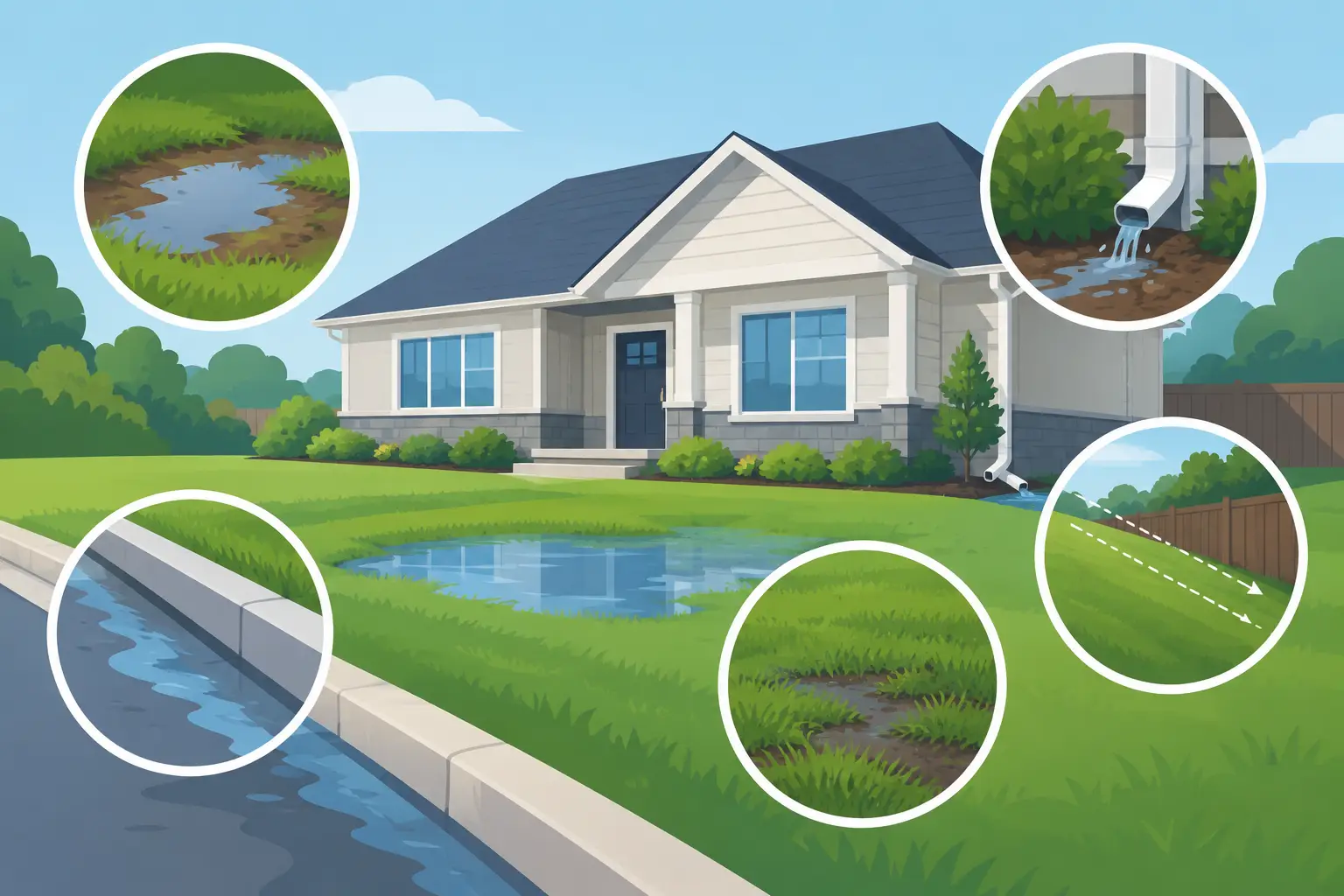
Water is the main enemy of gravel parking areas. It softens subgrade, carries fines out of the base, creates potholes, and moves loose aggregate toward low spots. A lot that is flat enough to hold water will need regular repair, no matter how good the rock looked on delivery day.
A finished lot should have positive drainage, meaning water has a route off the surface and away from the parking area. In many cases, a slight crown sends runoff to both sides. In other locations, a consistent cross slope is the better option, especially where one side can drain into a ditch or swale. The right approach depends on available fall, surrounding structures, and where runoff can safely discharge.
Entrances deserve special attention. If road runoff crosses the drive or parking entrance, a culvert may be needed to maintain the ditch line and keep water from cutting across the gravel. Culvert size and elevation need to match the drainage volume and surrounding grades. A culvert that is too small, too high, or improperly bedded can create more problems than it solves.
Do not send runoff toward a building pad, neighboring property, gate opening, or a low area with no outlet. Correcting drainage after the lot is built often means moving rock, regrading the base, and rebuilding sections that could have been handled during initial site preparation.
Shape Edges and High-Wear Areas Correctly
Gravel needs containment. Without defined edges, traffic gradually pushes material into grass, ditches, and adjacent drives. That loss is most noticeable at entrances, around parking rows, and in tight turns. A shaped shoulder, compacted edge, curb, timber border, or other restraint may be appropriate depending on the site and the desired look.
The entrance and turning areas should be built for their hardest use. If delivery trucks will enter, those zones may need a thicker aggregate section than the stalls themselves. The same is true around dumpsters, loading areas, trailer parking, or equipment gates. Designing every square foot for the lightest vehicle on site is a common way to end up repairing the busiest spots first.
It also helps to keep the finished surface slightly above the surrounding ground where practical. This gives water room to leave the lot and reduces the chance of soil washing onto the rock. The goal is a clean transition that vehicles can cross without dragging dirt onto the parking surface.
Common Shortcuts That Cost More Later
A few shortcuts show up repeatedly on failed gravel lots:
- Spreading gravel directly over grass, topsoil, or wet clay.
- Using decorative rock as the only structural layer.
- Building the lot flat with no drainage plan.
- Ordering material by appearance without considering vehicle weight and traffic.
- Skipping compaction and expecting traffic to pack the lot evenly.
- Building thin at the entrance, turns, and heavy-use areas.
Some properties can get by with a straightforward gravel surface over good native ground. Others need excavation, select fill, geotextile, a thicker road-base section, or drainage improvements before the first load of surface rock arrives. The cost difference upfront is real, but so is the cost of repeatedly adding gravel to a muddy, unstable area.
Plan for Simple Maintenance
A well-built gravel lot still needs occasional attention. Traffic and weather will move material over time. Light grading can restore the crown or cross slope, pull displaced gravel back from the edges, and remove shallow ruts before they turn into larger failures. Adding surface material periodically is normal, especially in areas with regular truck traffic.
The key is to maintain the shape, not just add more rock. If water is ponding or a soft spot keeps returning, the repair may need to reach the subgrade or drainage system. More gravel on top can hide the issue briefly while making the eventual repair larger.
Triple R Dirt Works can handle the grading, excavation, base preparation, drainage work, aggregate delivery, and finish work that turn a raw area into functional parking. The right gravel parking lot is not the one with the most rock on top. It is the one that stays firm, drains after rain, and gives every vehicle a dependable place to park.