

Road Base Versus Crushed Rock: What to Use
A driveway can look finished the day the gravel truck leaves and still turn into a washboard, muddy rut, or soft edge after the first hard rain. The difference often comes down to choosing the right material below and on top. When comparing road base versus crushed rock, the best choice depends on whether the job needs compaction, drainage, surface traction, or a combination of all three.
For Texoma properties, that decision matters. Clay soils, heavy equipment, steep entrances, livestock traffic, and sudden rainfall can expose weak material quickly. A good driveway, parking area, building pad, or ranch road starts with material matched to the job instead of whatever rock happens to be cheapest per load.
Road Base Versus Crushed Rock: The Main Difference
Road base is a blended aggregate made from crushed stone and fine material, often called fines or screenings. The mix may include limestone, granite, or other local rock depending on the source. Its key feature is the range of particle sizes. Larger pieces interlock while the finer material fills voids, allowing the base to compact into a dense, stable layer.
Crushed rock is a broader term. It usually refers to clean, angular stone that has been crushed and screened to a specific size. It may contain very little fine material. Because of those open spaces between pieces, clean crushed rock drains better than road base but does not lock together and compact into the same hard, nearly solid layer.
That is why these materials are not direct substitutes. Road base is generally the better structural material. Crushed rock is often the better drainage material, surface stone, or finish material where water needs a place to move.
When Road Base Is the Better Call
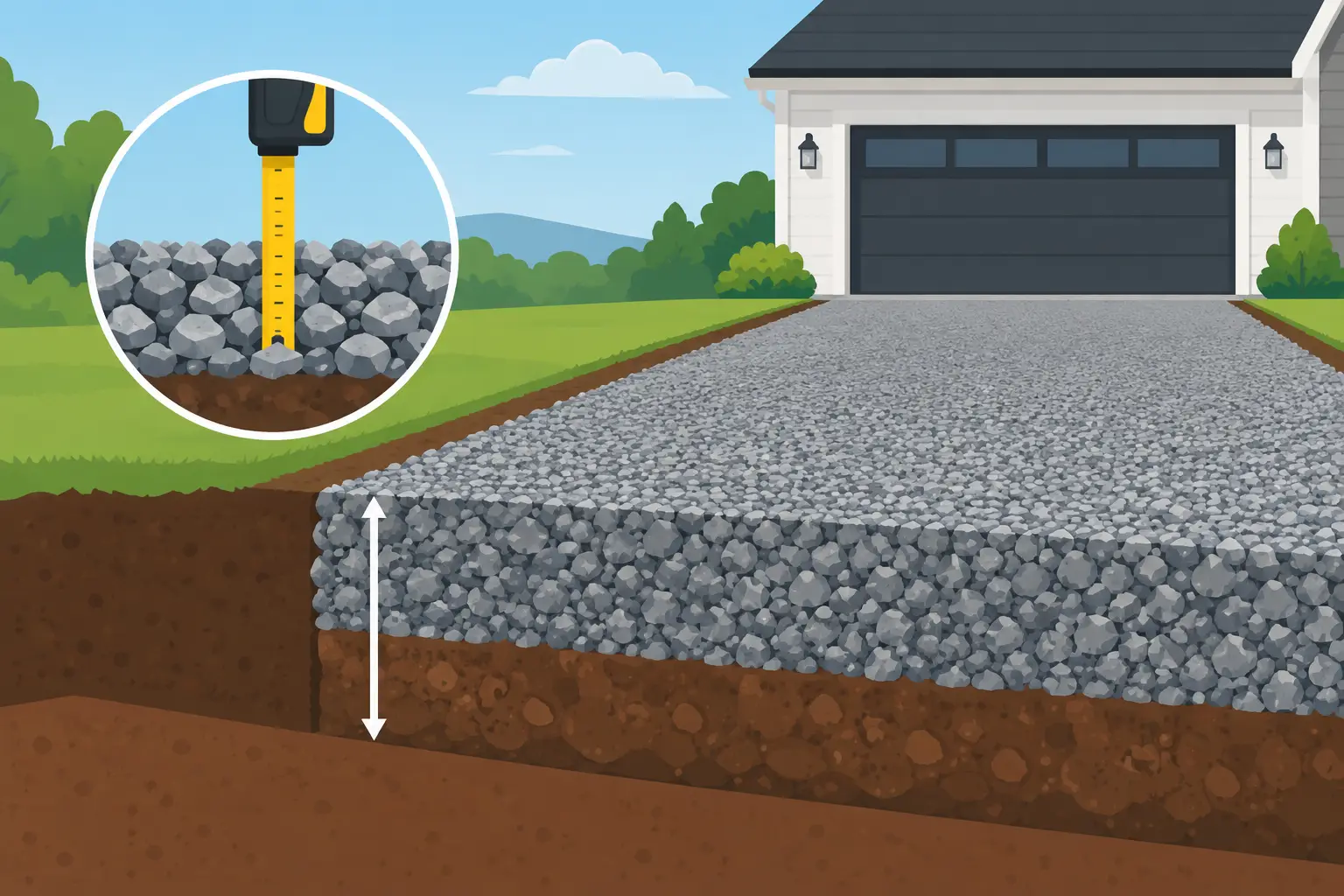
Road base earns its name under vehicle traffic. Once it is placed in proper lifts, moisture-conditioned when needed, and compacted, it forms a firm working platform that spreads vehicle weight across the subgrade. That makes it a practical choice for gravel driveways, private roads, equipment yards, parking lots, access roads, and the base under a final rock surface.
It is also commonly used beneath foundation pads and building areas when a project calls for a stable prepared layer. The right depth depends on soil conditions, expected load, drainage, and the overall site plan. A light-use driveway on firm ground does not need the same section as a road carrying loaded dump trucks, concrete trucks, trailers, or agricultural equipment.
Road base is especially useful when the native soil is soft or clay-heavy. It will not correct a drainage problem by itself, but a well-built base gives the road structure that loose stone alone cannot provide. If the subgrade is wet, pumping, or unstable, it may need to be stripped, shaped, dried, improved with select fill, or reinforced before base goes down.
What proper compaction changes
Uncompacted road base can feel acceptable at first, then settle under traffic and collect water in low spots. Compaction is what turns a loose delivered material into a dependable base course. The material must be spread evenly, placed at a manageable depth, and compacted with the right equipment.
Too dry, and the fines may not bind well. Too wet, and the material can shove or rut under the roller. An experienced operator watches how the material responds rather than assuming every load behaves the same. Local moisture, rock source, and soil conditions all affect the result.
Where Crushed Rock Makes More Sense
Clean crushed rock works well when drainage is the priority. Its open structure lets water pass through instead of holding it near the surface. That makes it useful around drain lines, French drains, culverts, retaining areas, and low spots where the design needs a free-draining aggregate layer.
It can also be a good top dressing over a compacted road-base driveway. A clean rock surface can improve appearance, provide traction, reduce tracked mud, and hold up well under regular traffic when it is supported by a solid base underneath. The exact size matters. Smaller stone may feel smoother under tires, while larger stone can handle heavy use but may be rougher to drive across or walk on.
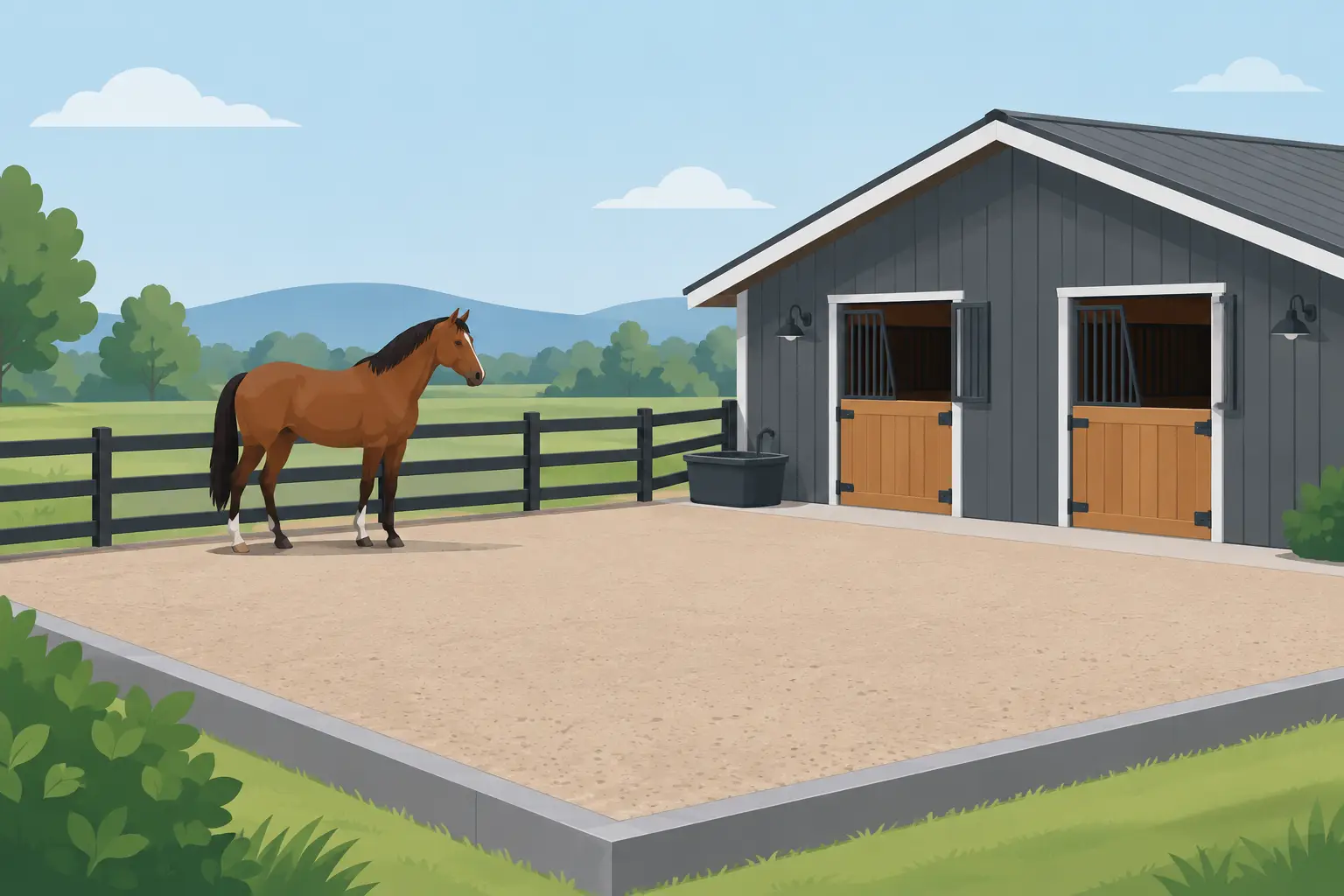
For decorative areas, clean rock offers a cleaner look than road base. It is often used around shops, barns, landscaping, and rural homes where drainage and appearance both matter. Still, it should not be expected to perform like compacted base under repeated heavy loads.
A driveway built entirely from clean crushed rock can work on firm, well-drained ground with modest traffic. But on soft soil or a busy entrance, the rock may migrate outward, press into the ground, and develop tire tracks. Adding more loose rock usually treats the symptom, not the cause.
Build the Ground Before You Build the Driveway
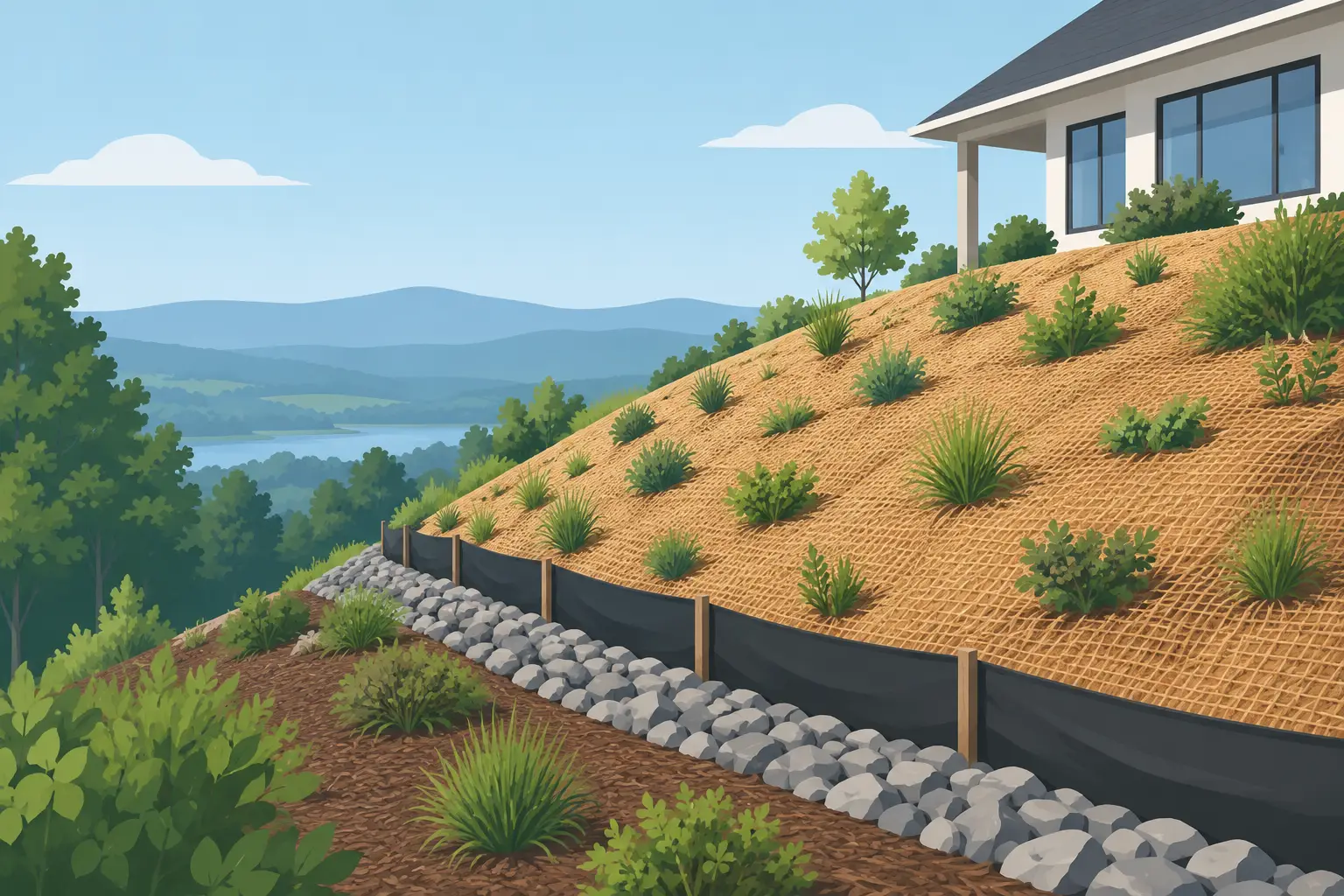
Material selection is only one part of a road that lasts. Water control and subgrade preparation are just as important. A driveway needs a crown or planned cross slope so water sheds off the driving surface. Ditches, swales, culverts, and driveway entrances need to move runoff without letting it cut through the road.
If water stands at the edge of the driveway, it can soften the subgrade and let the base fail from below. If water crosses the roadway without a culvert or proper drainage route, it can wash fines away and create potholes. A well-shaped road base with poor drainage will still have problems.
Before placing aggregate, the existing ground should be cleared of organics, soft spots, and loose topsoil where needed. The subgrade should be graded to shape and compacted. On certain sites, select fill may be needed to build elevation, improve weak ground, or establish a stable platform before road base is installed.
This is where a site visit is worth more than a generic depth recommendation. A ranch entrance built over wet clay, a residential circular drive, and a commercial laydown yard may all use road base, but they are not the same project.
Common Material Setups for Texoma Projects
For a standard gravel driveway, a common approach is compacted road base over a prepared subgrade, followed by a cleaner crushed rock top layer if the owner wants a more finished surface. The base carries the load; the top rock provides the visible finish and additional traction.
For a heavy-use access road or equipment yard, deeper compacted road base is often the better investment. The surface may be finished with crushed rock, but the load-bearing layer is what prevents deep ruts and repeated repair work. Areas that turn frequently, such as gates, shop entrances, and trailer turnaround points, usually need extra attention because tires push material sideways there.
For drainage around a culvert or low crossing, clean crushed rock may be used where water needs to move freely. Road base may still be used in the driving surface above, provided the road is shaped correctly and the culvert is sized and installed for the drainage area.
For foundation-pad work, the material plan should follow the building requirements and site conditions. Road base can provide a compactable working layer, while select fill may be used to build and stabilize the pad. The finished pad needs grade control and drainage, not simply a pile of rock spread flat.
Cost Is More Than the Price Per Ton
Clean crushed rock can cost more than road base, but the lowest delivered price should not be the only deciding factor. Haul distance, material depth, site access, preparation work, compaction, drainage improvements, and the cost of future repairs all belong in the decision.
Using clean rock where compacted base is needed may save money on the first delivery and cost more in maintenance. On the other hand, using road base in a drainage trench can restrict water movement and work against the purpose of the installation. The right material in the right location prevents both problems.
It also pays to order enough material to achieve the planned compacted depth. Aggregate loses height as it is spread and compacted. A surface that looks deep in a dump pile may not provide enough thickness after grading and rolling.
Get the Material and the Work Matched Up
Road base and crushed rock both have a place on Texas and Oklahoma properties. The question is not which one is better across every job. The question is what the ground, traffic, water, and finished use require.
Triple R Dirt Works can evaluate the site, prepare subgrade, correct drainage, install culverts, build the road or pad, and deliver the material needed for the finished work. A road that drains, compacts, and carries the expected traffic is easier to live with than one that needs another load after every wet season.
If you are planning a driveway, parking area, ranch road, or building pad, start by looking at the soil and where the water goes. That is usually where the right material choice becomes clear.