

Rural Property Drainage Planning Guide for Texoma
A hard rain can show you more about a property in 30 minutes than a dry summer shows you in six months. Water will find the low spot behind the shop, cut across a gravel driveway, pond beside a foundation pad, and wash a rut straight down a ranch road. This rural property drainage planning guide gives Texoma landowners a practical way to read that water and plan work that holds up.
Drainage is not just about getting water off one problem area. The real job is to move runoff across the property without sending it through a building site, across an access road, into a gate opening, or onto a neighbor’s ground. A good plan works with the natural lay of the land, then uses grading, swales, ditches, culverts, and stable materials where they are needed.
Start Your Rural Property Drainage Planning Guide on the Ground
Do not plan drainage from a satellite image alone. Walk the property after a normal rain and again after a heavy one if possible. Look for standing water, fresh erosion, muddy tire tracks, washed gravel, flattened grass, exposed roots, and debris lines. Those are all signs of where water is collecting and where it wants to travel.
Pay close attention to high ground, natural draws, fence lines, road crossings, existing ponds, creek areas, and the downhill side of buildings. A shallow depression that looks harmless in dry weather may carry a serious amount of runoff when the upper part of the property drains toward it.
Mark the problem areas and trace the water uphill. The wet spot itself is often not the source of the issue. For example, water ponding at a barn may be coming off a higher pasture, a driveway that blocks sheet flow, or a roof with downspouts that dump at the building corner. If you only fill the low spot, the water usually comes back.
For a building pad or future home site, identify the finished floor area early. The surrounding grade needs to fall away from the pad, with a defined route for runoff once it leaves the building area. The pad, driveway, utilities, and drainage paths need to be planned together. Trying to add drainage after the pad and drive are finished can mean tearing out work that could have been avoided.
Give Water a Clear Route
Every drainage plan needs three answers: where water comes from, where it will travel, and where it can safely discharge. If any one of those answers is missing, the project is not fully planned.
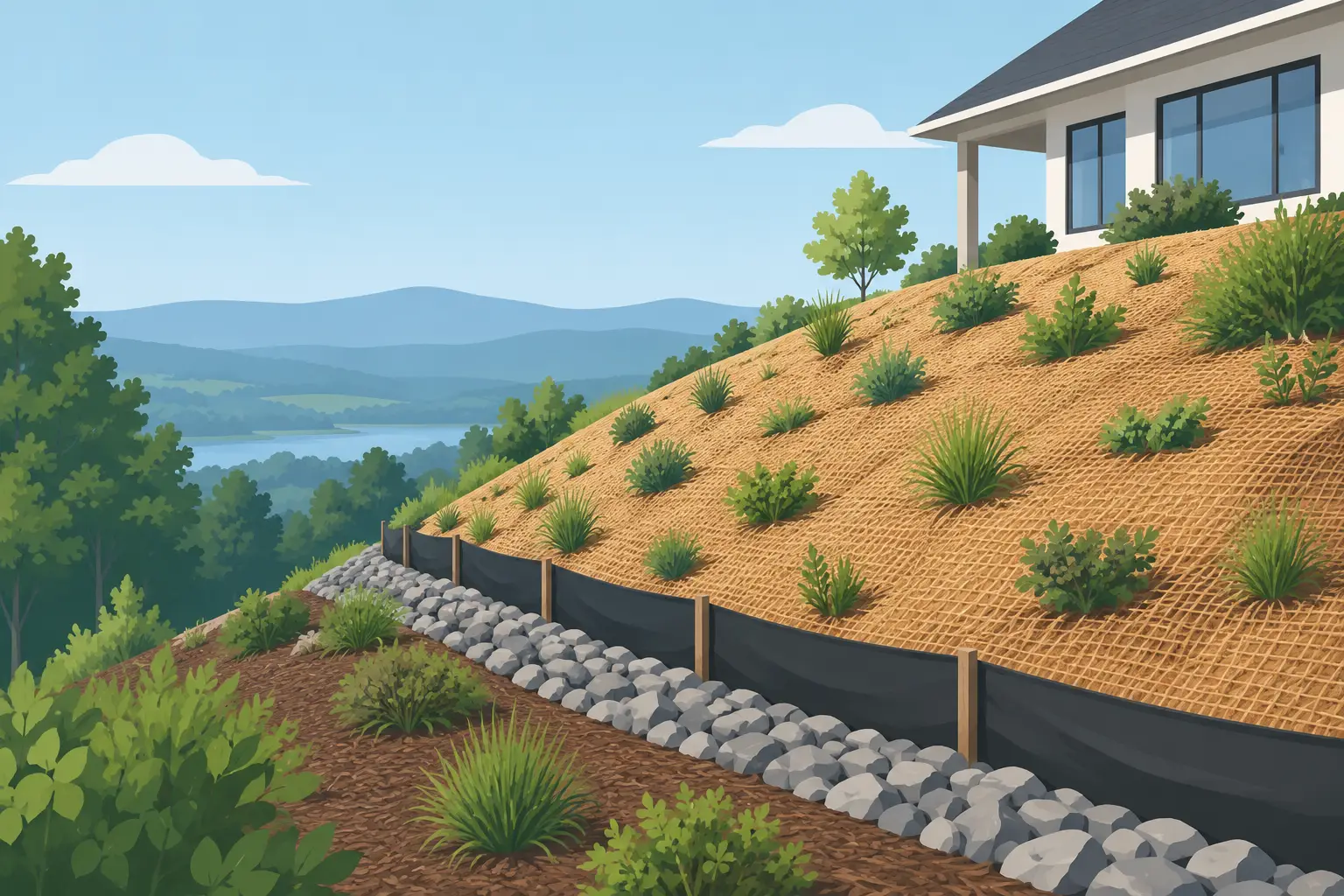
Sheet flow across open ground is often the easiest water to manage. Light grading can keep it moving as a broad, shallow flow instead of concentrating it into a ditch that starts cutting soil. On sloped acreage, a shallow swale can intercept runoff above a house pad, shop, arena, or driveway and guide it around the improvement.
Swales work well when they have enough fall to drain but not so much slope that they scour. Their shape matters. A broad, gently sloped swale is easier to mow, safer around equipment, and generally less likely to erode than a narrow, deep trench. In areas with faster water, the bottom and outlets may need rock protection or other erosion control.
A ditch makes sense where runoff is concentrated and there is room to maintain it. It needs a positive grade, a clean outlet, and side slopes that will not cave in or become a hazard. A ditch that dead-ends at a gate, a driveway, or a flat corner of the property is just a future mud hole.
Ponds can also be part of a drainage plan, but they are not a catch-all answer. A pond needs a suitable watershed, proper excavation, a spillway or overflow route, and stable banks. Directing every drainage issue into an undersized pond can create a larger problem during a major storm.
Keep Water Away From Structures
The ground immediately around a house, barndominium, shop, or livestock building deserves special attention. Finished grade should carry water away from the structure instead of trapping it against the slab or pier foundation. Roof runoff needs to discharge far enough from the building that it does not saturate the perimeter or cut gullies beside the pad.
On a rural site, it is common for a shop pad or house pad to sit higher than nearby ground. That is usually the right move, but the transition from pad to surrounding grade must be shaped correctly. A steep drop without stable cover can erode. A flat transition can hold water. The right approach depends on soil, slope, available room, and the amount of runoff coming toward the site.
Plan Driveways and Culverts Together
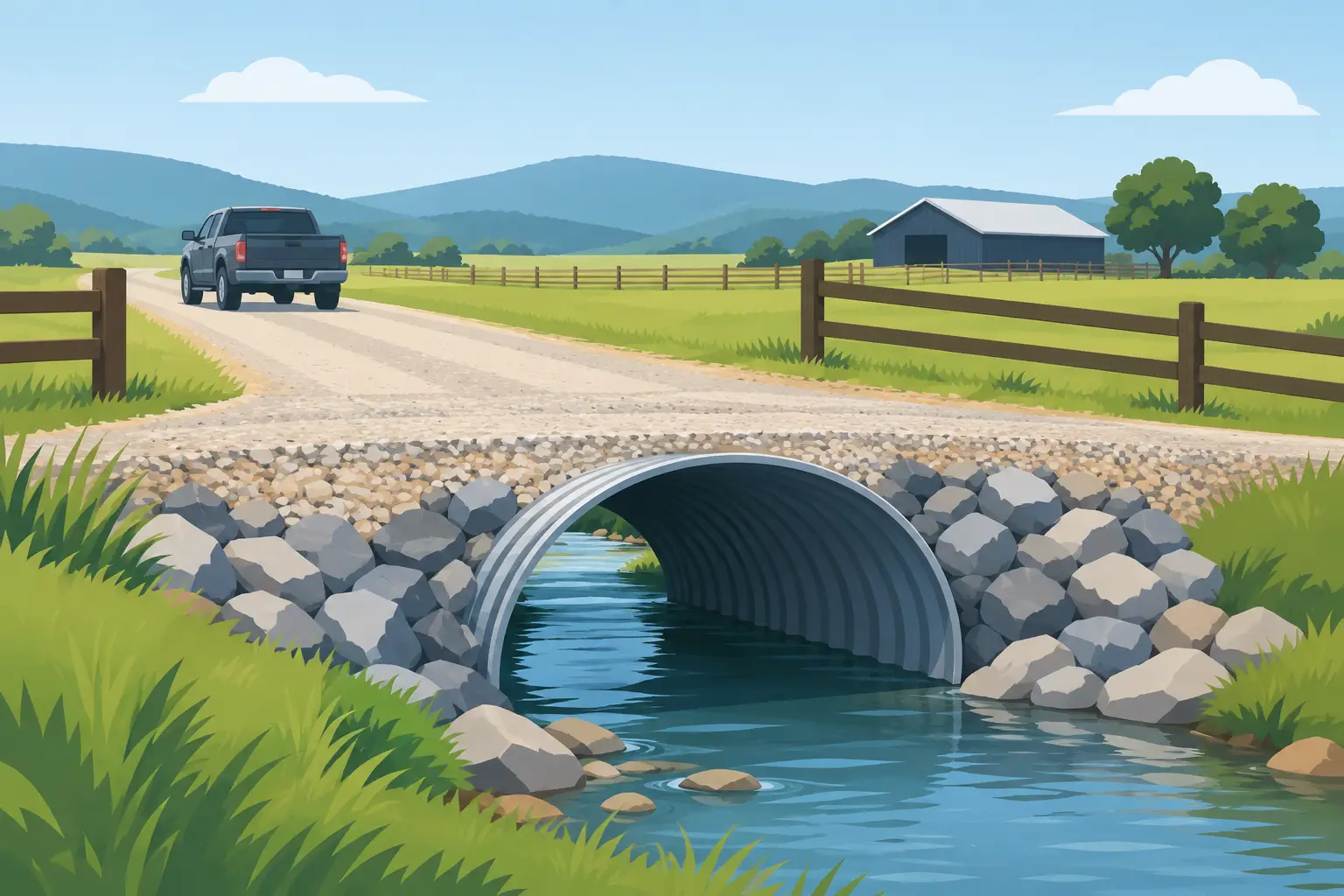
A driveway is one of the most common places where drainage gets overlooked. The drive changes the natural flow of water. Without a culvert or properly designed crossing, runoff builds on the uphill side, softens the road base, and eventually washes over the driving surface.
Culvert size is not something to guess by looking at the ditch on a dry day. The pipe has to handle the drainage area above it, the slope of the ground, and the volume expected during heavy rain. A pipe that is too small can plug with leaves, limbs, and sediment, forcing water over the driveway. One that is installed too high can leave water trapped upstream. One that is installed too low may not have the cover it needs to survive traffic.
The culvert inlet and outlet need protection as well. Rock placed at these areas can help control scour where water enters and exits the pipe. The driveway should be shaped to shed water off its surface rather than channeling it down the wheel tracks. Road base, proper compaction, and a maintained crown make a major difference in how long a gravel drive lasts.
For long drives, drainage may require more than one crossing. Water should not be carried in a roadside ditch for hundreds of feet if it has safe places to cross naturally. Spreading crossings out can reduce ditch erosion and keep runoff from building into a damaging flow.
Match the Fix to Texoma Soils and Weather
Texoma properties can have sandy ground that moves easily, tight clay that holds water, rocky areas, and mixed soils on the same tract. That changes the drainage approach. Sandy soil may drain quickly but wash out on a slope. Clay may need more positive grade because water does not soak in fast enough. Low areas with heavy clay often stay soft long after the rain stops.
Material selection matters where vehicles travel or runoff concentrates. Clean rock can stabilize an outlet or crossing. Road base provides a stronger layer for driveways and parking areas when it is placed and compacted correctly. Limestone screenings, decomposed granite, select fill, and sandy-loam topsoil all have different uses. The material that looks best on top is not always the material that should be carrying traffic underneath.
Vegetation is part of the finished drainage system, too. Bare dirt is temporary. Once grading is complete, disturbed slopes and swales need cover appropriate for the site. Grass helps hold soil, slows water, and reduces sediment moving into ditches, culverts, and ponds.
Avoid Drainage Fixes That Create a Bigger Problem
The quickest-looking fix is often to raise a low area with fill. Fill may be needed, especially around a building pad, but it should not block a natural drainage route without giving the water another way through. Raising one lot corner can push runoff toward a neighbor, flood a fence line, or turn a driveway into a dam.
Another common mistake is making ditches too deep and too narrow. They can move water quickly at first, then start eroding and become difficult to mow or cross. Likewise, dumping loose gravel into a washout without correcting the grade or water route only buys time until the next storm.
Do not ignore maintenance. Culverts collect debris. Driveway crowns flatten under traffic. Ditches fill with sediment and vegetation. Check the system before storm season and after major rain. A few hours of cleanup can prevent a washed-out road or a flooded building site.
When Equipment and Field Experience Matter
Small drainage work can sometimes be handled with hand tools, but many rural drainage problems need accurate grading and the right equipment. A dozer can shape broad drainage paths and building pads. A skid steer can finish grade, spread material, and work tighter areas. An excavator is suited for ditches, culvert installation, pond work, and deeper excavation.
The key is not simply moving dirt. It is setting grades that drain, placing culverts at the right elevation, compacting roadway materials, and leaving a finished surface that can be maintained. Triple R Dirt Works handles those pieces together, from grading and drainage correction to culverts, gravel driveways, pads, excavation, and material delivery.
Before the next big rain, walk your property with a notepad, follow the water uphill, and identify where it needs a better path. A drainage plan built before the dirt starts moving is cheaper to correct, easier to maintain, and far more likely to keep your land usable when the weather turns.