
Erosion Control for Sloped Lots That Holds Up
A sloped lot can look fine right up until the first hard rain cuts ruts through the yard, washes gravel off the drive, and carries topsoil toward the road or a neighboring property. Effective erosion control for sloped lots is not usually one product or one quick fix. It starts with moving water where it needs to go and building the ground so it can handle the runoff.
For property owners across Texoma, the problem often shows up around new home pads, shop sites, rural driveways, pond banks, and lots where clearing has left bare soil exposed. The right solution depends on the grade, soil type, drainage area, and how the property will be used after the work is complete.
Start With the Water, Not the Washed-Out Spot
A washed-out area is usually the result of water collecting uphill and gaining speed as it moves downhill. Filling the rut with loose dirt may make it look better for a while, but the next storm often puts it right back. Before placing material, identify where runoff begins, where it concentrates, and where it can safely discharge.
That means looking beyond the damaged section. A roof downspout that dumps at the edge of a slope, an uphill driveway with no cross-drainage, or a shallow swale that ends too soon can feed enough water to cut a deep channel. On larger sites, runoff may come from several acres of pasture, a building pad, or a road surface.
The goal is not to stop water. Water has to leave the property somehow. The job is to slow it down, spread it out where appropriate, and direct concentrated flow through a stable drainage route.
Proper Grading Is the First Line of Erosion Control
Grading determines whether water moves broadly across a slope or funnels into a destructive ditch. A properly shaped site uses positive drainage away from structures while avoiding sudden low areas that trap water or force it toward a vulnerable bank.
On a building site, this commonly begins with a stable foundation pad and finished grades that fall away from the structure. The slope needs to be enough for drainage, but not so steep that bare soil will not hold during construction. On rural properties, grading may include shaping drainage swales, repairing gullies, smoothing transitions around drives, or cutting and filling ground to create a more workable slope.
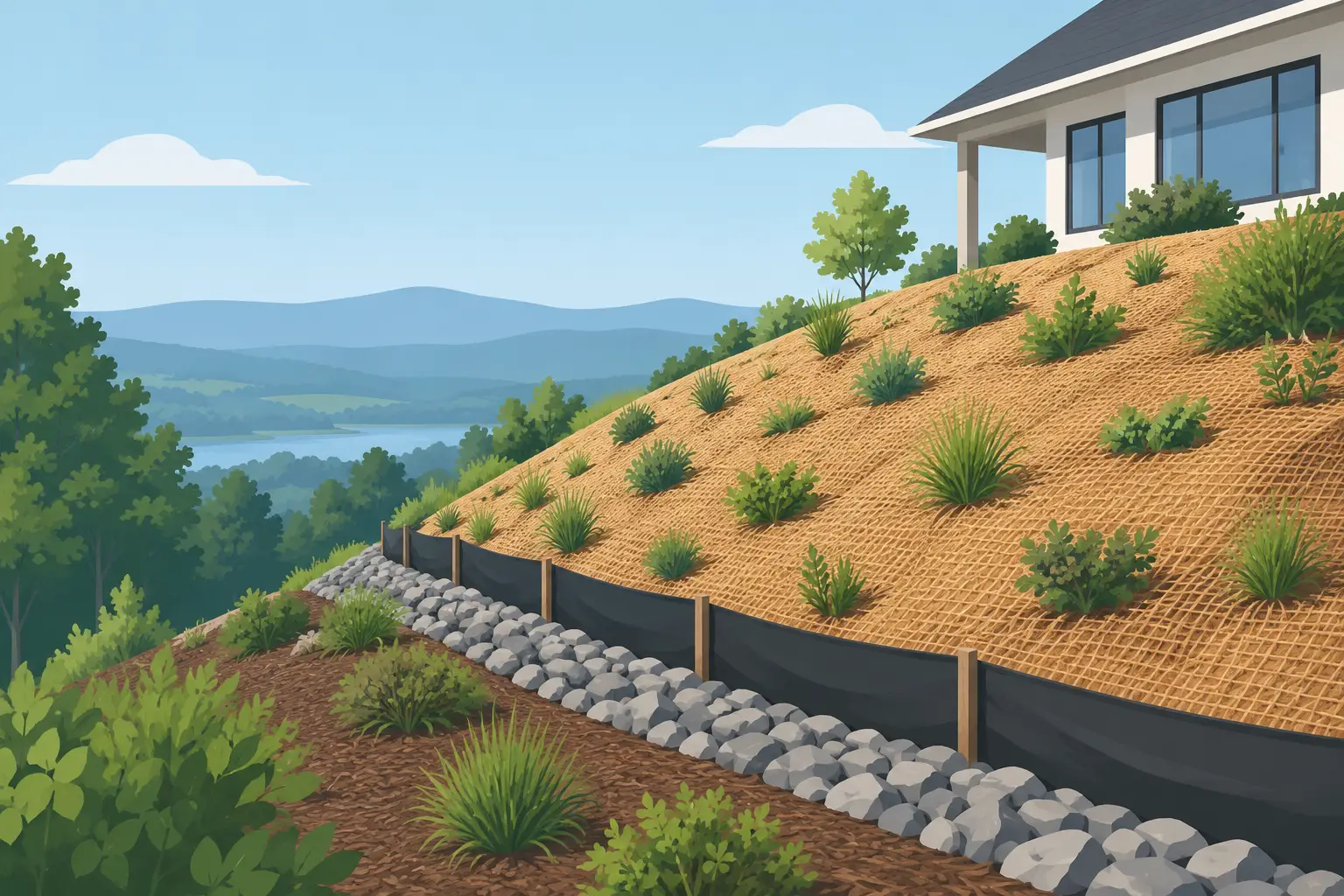
Cutting a slope too steep can create a long-term maintenance problem, especially in loose sandy soil or areas with little vegetation. A flatter slope takes more room, but it is easier to cover, seed, mow, and maintain. Where space is limited, the slope may need additional protection with rock, erosion-control fabric, retaining work, or terracing.
Give Concentrated Runoff a Built Route
When water is gathered into one path, it needs a path built to carry it. This is where many driveway and site-prep projects either hold up or wash out.
A shallow grassed swale can work well when runoff is moderate and the ground has enough room to spread the flow. Vegetation slows the water and helps hold the soil. But a grass swale is not the right answer for a steep ditch taking runoff from a large roof, road, or upper slope. In those areas, a lined channel, rock protection, culvert, or properly sized drainage structure may be needed.
Culverts are especially important where a driveway crosses a natural drainage path. If the pipe is too small, set too high, or installed without stable inlet and outlet protection, water can go around the driveway or scour the downstream end. Proper bedding, cover, ditch shaping, and rock at the outlet help a culvert carry water without creating a new erosion problem.
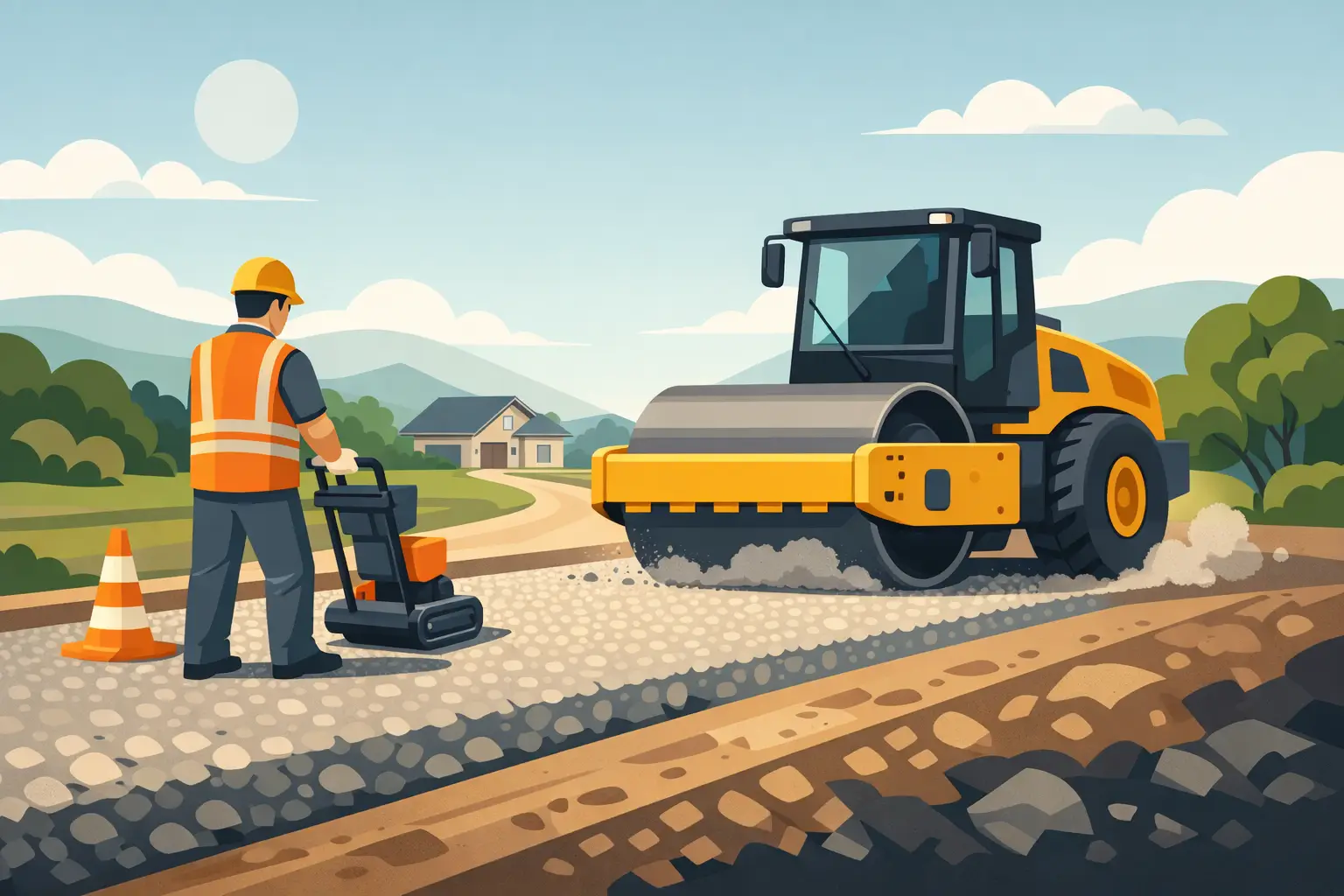
The same principle applies to road building. A gravel driveway should shed water from its surface instead of becoming a channel. Crown, side ditches, turnouts, and cross-drainage all matter. Gravel alone cannot fix a driveway that is holding water or directing it straight downhill.
Match the Material to the Job
The material used on a slope should match the force of the water and the purpose of the area. Fine topsoil is valuable for establishing grass, but it is not built to armor a drainage outlet. Loose rock may slow runoff in one location but can migrate if it is not the right size or placed over unstable soil.
For areas that need vegetation, a layer of workable sandy-loam topsoil can help establish grass after final grading. Seed, mulch, and erosion-control blankets can protect exposed ground while roots take hold. This approach works best on moderate slopes where runoff is spread out rather than concentrated.
For drainage channels, culvert outlets, pond spillways, and steeper areas with fast-moving water, clean rock is often the better choice. The rock size should fit the flow. Small aggregate may shift during a heavy storm, while oversized rock can be unnecessary and harder to finish around. Underlayment or geotextile fabric may be needed beneath rock to separate the soil from the stone and reduce undermining.
Decomposed granite, limestone screenings, road base, and other compactable materials have their place, but they serve different purposes. Road base is commonly used for driveways and parking areas because it compacts into a stable surface. Screenings can help finish and bind certain surfaces. Neither should be treated as a cure-all for a drainage failure. If water is running through the area, correct the drainage first, then select the surface material.
Stabilize Bare Ground Before the Next Storm
Bare dirt is most vulnerable immediately after excavation, grading, or construction. A site does not need to be fully landscaped before it is protected, but it does need a plan for temporary stabilization.
On a residential lot, that may mean rough grading early, getting drainage routes established, then placing topsoil and seed as soon as final work allows. On a commercial pad or long construction schedule, temporary measures may need to stay in place longer. The right approach depends on whether heavy equipment still needs access and whether final grades are complete.
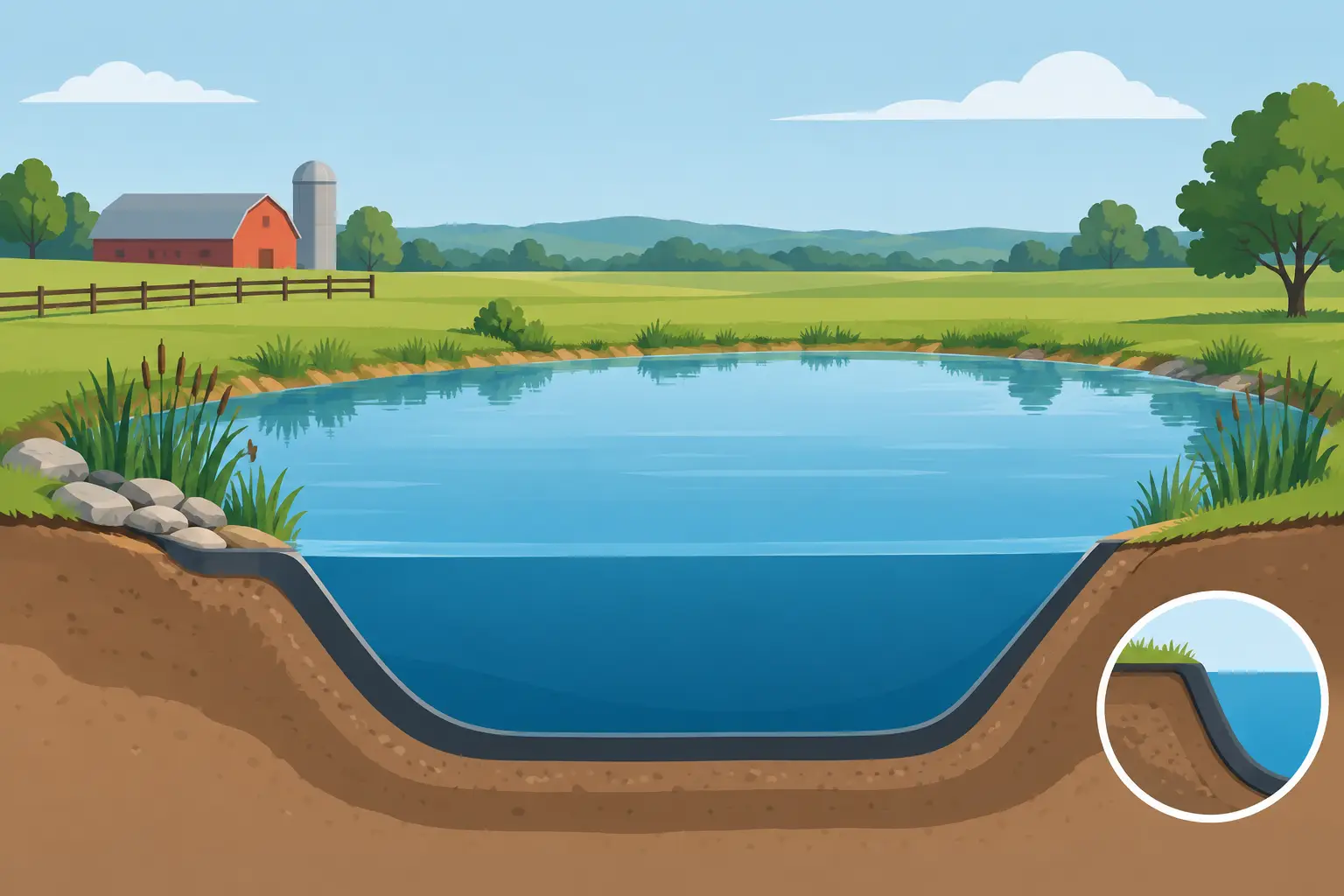
Do not wait until the whole job is finished to address a steep exposed slope. If rain is in the forecast, temporary diversion, rock checks, mulch, or fabric can prevent damage that costs more to repair later. This matters even more around fresh pond excavation, disturbed fence rows, and newly cut road ditches.
Avoid Fixes That Only Move the Problem
Some erosion repairs fail because they push water toward someone else’s property, a county road ditch, or the side of a building. Raising one area without considering the surrounding grade can redirect runoff in ways that create a bigger problem downstream.
Another common mistake is building a deep ditch to solve every drainage issue. A ditch can handle flow, but it can also speed water up. If it does not have a stable outlet, the ditch may erode deeper with every storm. In some situations, a broad shallow swale is the better choice. In others, the runoff needs a defined rock-lined channel or culvert. It depends on the volume and velocity of the water.
Retaining walls also deserve careful planning. They can create usable space on a tight lot, but a wall must include proper base preparation and drainage behind it. Water pressure behind a wall can cause movement, cracking, or failure, even when the face of the wall looks well built.
Plan the Work in the Right Order
The best erosion-control work is usually handled as part of the overall site plan, not added after the lot has washed out. Start by establishing drainage patterns and rough grade. Build pads, access roads, and culvert crossings with runoff in mind. Then complete final shaping, stabilize exposed soil, and place finish materials after the heavy equipment work is done.
Triple R Dirt Works handles this kind of work with the equipment and materials needed to shape ground, build drainage routes, install culverts, prepare stable pads, and deliver rock, road base, or topsoil for the next phase. Combining grading with material delivery helps keep the job moving without guessing at what the site needs.
A slope does not have to become a maintenance problem. When water has a planned route, soil is properly shaped, and the surface protection fits the conditions, the property stays usable long after the dirt work is complete.