
Can Grading Eliminate Standing Water? It Depends
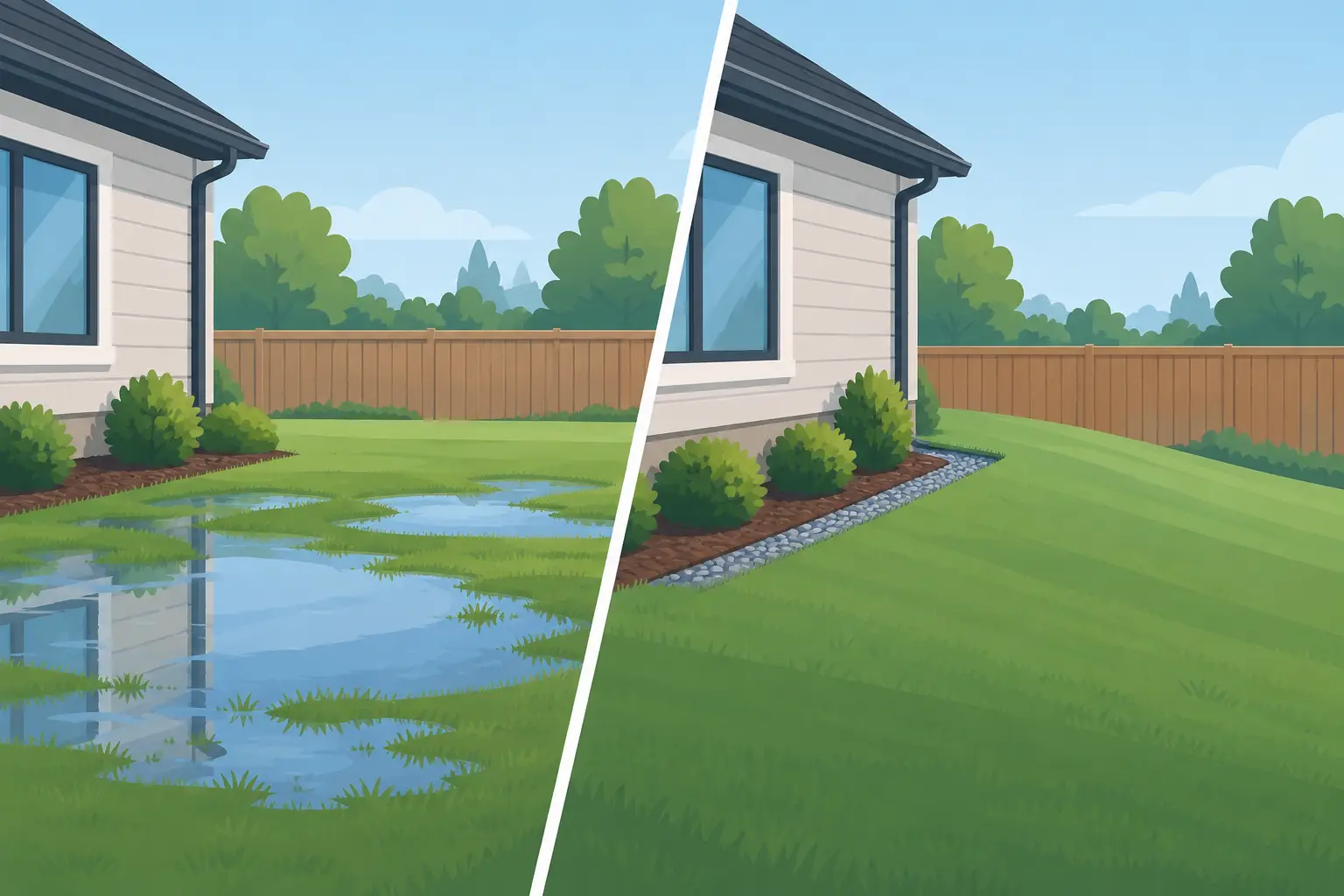
A low spot that holds water after every rain is more than an eyesore. It can soften a driveway, flood a yard, leave mud around a shop or barn, and keep a building pad from performing the way it should. Can grading eliminate standing water? In many cases, yes – but only when the grade gives water a workable path to a proper outlet.
Moving dirt without a drainage plan can simply move the puddle somewhere else. The right correction depends on where the water starts, how much water reaches the area, what the soil will absorb, and where runoff can legally and safely leave the property.
How grading eliminates standing water
Grading is the process of shaping the ground so water drains away from structures, traffic areas, and low-use sections of a property. A dozer, skid steer, excavator, and proper laser or grade control can cut high areas, fill low areas, establish consistent fall, and direct runoff toward a ditch, swale, drainage easement, pond, or other approved outlet.
The key is fall. Water does not need a steep ditch to move, but it does need a continuous downhill route. A yard may look level to the eye while still having shallow bowls that trap rainfall. Correct grading removes those bowls and creates a gentle plane or broad swale that carries water where it needs to go.
Around a house, shop, barn, or foundation pad, the finished grade should generally slope away from the structure. On a gravel driveway or parking area, the surface needs crown or cross slope so water sheds off the driving surface instead of soaking into the road base. On acreage, a shallow interceptor swale may keep uphill runoff from crossing a driveway, arena, gate opening, or building site.
Grading works best when the correction addresses the full drainage path. Filling a low spot without correcting the approach and outlet often creates a flat basin with a new location.
When grading alone is enough
Simple grading is often the right answer when standing water comes from minor surface irregularities. This is common on yards that settled after construction, gravel drives with wheel-rut depressions, and areas where previous work left inconsistent finish grades.
If the property has enough room to create a gentle slope and a clear lower outlet, a cut-and-fill correction can be straightforward. The contractor may strip soft topsoil from the problem area, establish the desired subgrade, compact suitable fill as needed, and replace topsoil or finish material. For a driveway, the work may include reshaping the road base, restoring the crown, compacting it, and adding fresh gravel where the existing surface has broken down.
A properly built building pad can also prevent water problems before construction starts. The pad needs stable material, positive drainage away from the structure, and elevations that account for surrounding grades. Raising a pad without planning the perimeter drainage can leave water trapped along the edges, so the finished pad and surrounding ground must work together.
When grading will not solve the whole problem
Some standing-water problems need more than reshaping the surface. If there is no lower place for water to go, grading alone cannot create an outlet. The water may need to be carried through a culvert, routed to a drainage ditch, collected in a swale, or directed toward a pond designed to receive runoff.
Heavy clay soils are another common issue across Texoma. Clay can hold water near the surface long after a storm, especially where the soil has been compacted by construction traffic or livestock. Surface grading can move rainfall off the area, but it will not make tight clay drain like sandy soil. In those situations, the goal may be to prevent new runoff from collecting there and improve the usable surface with select fill, sandy-loam topsoil, aggregate, or a properly built base.
Water coming from a roof can overwhelm an otherwise well-graded yard. Downspouts that discharge beside a foundation or onto a short slope will create erosion, soft spots, and puddles. Extending or piping roof runoff to a stable discharge point may be part of the fix.
Groundwater, leaking water lines, overflowing septic systems, and irrigation problems are separate issues. A wet area that stays saturated during dry weather deserves investigation before dirt work begins. Adding fill over a leak or spring may hide the symptom while making repair harder.
A drainage correction needs an outlet
Every drainage plan comes back to one question: where will the water go?
A workable outlet may be a roadside ditch, a natural draw, an existing drainage easement, a properly sized culvert, a detention area, or a pond. The discharge point has to be lower than the problem area and able to handle the expected flow without washing out. It also has to respect property lines, public right-of-way requirements, and any local drainage restrictions.
Never assume runoff can be pushed toward a neighbor’s property because it is the easiest direction. Redirecting water across a boundary can create erosion, disputes, and expensive rework. A good plan keeps water managed on site where practical or routes it through an established drainage path.
For rural driveways, culverts are often the missing piece. A driveway crossing a shallow ditch can act like a dam when no culvert is installed or when the pipe is too small, crushed, or blocked. Water backs up on one side, crosses the driveway during larger storms, and cuts ruts into the surface. Regrading the driveway may help temporarily, but a correctly installed culvert and rebuilt road section provide the lasting solution.
Common standing-water fixes by area
A backyard low spot may need a broad swale that blends into the lawn rather than a deep, hard-to-mow ditch. The swale should start high enough to intercept water and continue all the way to its outlet. If the yard is boxed in by fences, buildings, or neighboring grades, a shallow collection area and drain pipe may be necessary.
A gravel driveway needs a crowned profile, solid road base, and working side drainage. Simply adding more gravel over potholes rarely lasts because the wet, weak subgrade remains underneath. The repair may require removing failed material, rebuilding the base, compacting in lifts, and using road base or clean rock suited to the traffic and site conditions.
Around a shop or metal building, positive grade should carry water away from the slab. If the building sits at the bottom of a slope, an uphill diversion swale or ditch may be needed before runoff reaches the structure. The ditch must be stable and maintained, not left as a loose cut that erodes after the first hard rain.
For ranch entrances, cattle guards, gates, and equipment lanes, drainage needs to account for repeated heavy loads. A soft approach can shift culvert ends, rut around a cattle guard, and turn access into a mess. Proper excavation, compaction, and durable aggregate make the area usable in wet weather.
Why material selection matters
The dirt used to correct a low area matters as much as the shape of the finished grade. Unsuitable fill can settle, hold moisture, or turn unstable under traffic. Select fill is often used where a firm, buildable subgrade is needed. Sandy-loam topsoil can help finish a lawn area, while road base, limestone, decomposed granite, or clean rock may be better for driveways, parking areas, and high-traffic access.
Compaction matters too. Loose fill may look fine on the day it is placed, then settle after rain and recreate the same low spot. Placing material in manageable lifts and compacting it correctly helps the grade stay where it was built.
There is also a trade-off between steepness and erosion. A sharper slope moves water quickly, but it can scour bare dirt and carry sediment into ditches or ponds. Broad slopes, stable swales, vegetation, rock protection, and properly placed culverts help control the flow without creating a new erosion problem.
Start with the water, not the puddle
The best time to evaluate drainage is during or soon after rainfall. Look uphill from the standing water. Check roof discharge, road ditches, culvert crossings, fence lines, compacted work areas, and the surrounding elevations. The puddle is usually the final stop in a larger drainage story.
For larger properties or construction sites, it pays to establish grades before the first load of material is placed. Triple R Dirt Works approaches drainage corrections as part of usable site preparation – whether the goal is a dry yard, stable foundation pad, all-weather driveway, or better access across working land.
A good drainage correction should leave you with more than a temporarily dry spot. It should leave water with a clear route, protect the surfaces you use every day, and keep the next hard Texoma rain from putting the same problem right back where it started.