

Livestock Arena Site Preparation That Holds Up
A livestock arena that turns into deep mud after a hard rain, develops washboard along the rail, or holds standing water in the center is usually showing a ground-work problem, not just a footing problem. Proper livestock arena site preparation starts below the riding surface. The goal is a level, well-draining, compacted build that stands up to horses, cattle, equipment, weather, and regular use.
For ranches, training facilities, and acreage owners across Texoma, an arena is working infrastructure. It needs dependable access for trailers and tractors, drainage that moves water away from the surface, and a base that does not shift under traffic. Cutting corners during the dirt-work phase can leave an owner adding material year after year without fixing what is underneath.
Start With the Ground You Have
Before moving dirt, look at the site as a whole. Natural slope, existing drainage paths, soil type, nearby buildings, tree lines, and the location of gates all affect the finished arena. A flat-looking field may still carry water toward the proposed pad, especially after a heavy Texoma storm.
The site should also make sense for daily use. Consider trailer approach, turn-around room, equipment access, feed or hay traffic, and whether the arena will connect to pens, barns, round pens, or a driveway. Building an arena in the lowest spot on the property can create an ongoing drainage fight. Sometimes a better location saves far more money than trying to engineer around poor ground.
Native soil matters as well. Clay-heavy ground can be strong when dry but slick and unstable when saturated. Sandy soil may drain faster but can move under repeated hoof and equipment traffic. Soil conditions determine how much excavation, select fill, compaction, and aggregate base are needed. There is no single arena section that fits every property.
Strip Organics and Build a Firm Subgrade
Grass, roots, loose topsoil, and organic material do not belong beneath an arena base. They hold moisture and break down over time, creating soft spots and uneven areas. The first major step is stripping those materials from the arena footprint and hauling, stockpiling, or reusing suitable topsoil elsewhere on the property.
Once the area is stripped, the subgrade can be cut, shaped, and compacted. This is the ground that supports every layer above it. If it is soft, saturated, or poorly shaped, a good-looking arena surface will not stay good for long.
A contractor may need to undercut weak material and replace it with select fill or another suitable material before building the base. This adds work and material cost, but it is often the right call where the existing ground pumps, ruts, or holds water. The alternative is usually repeated repairs after the arena is in service.
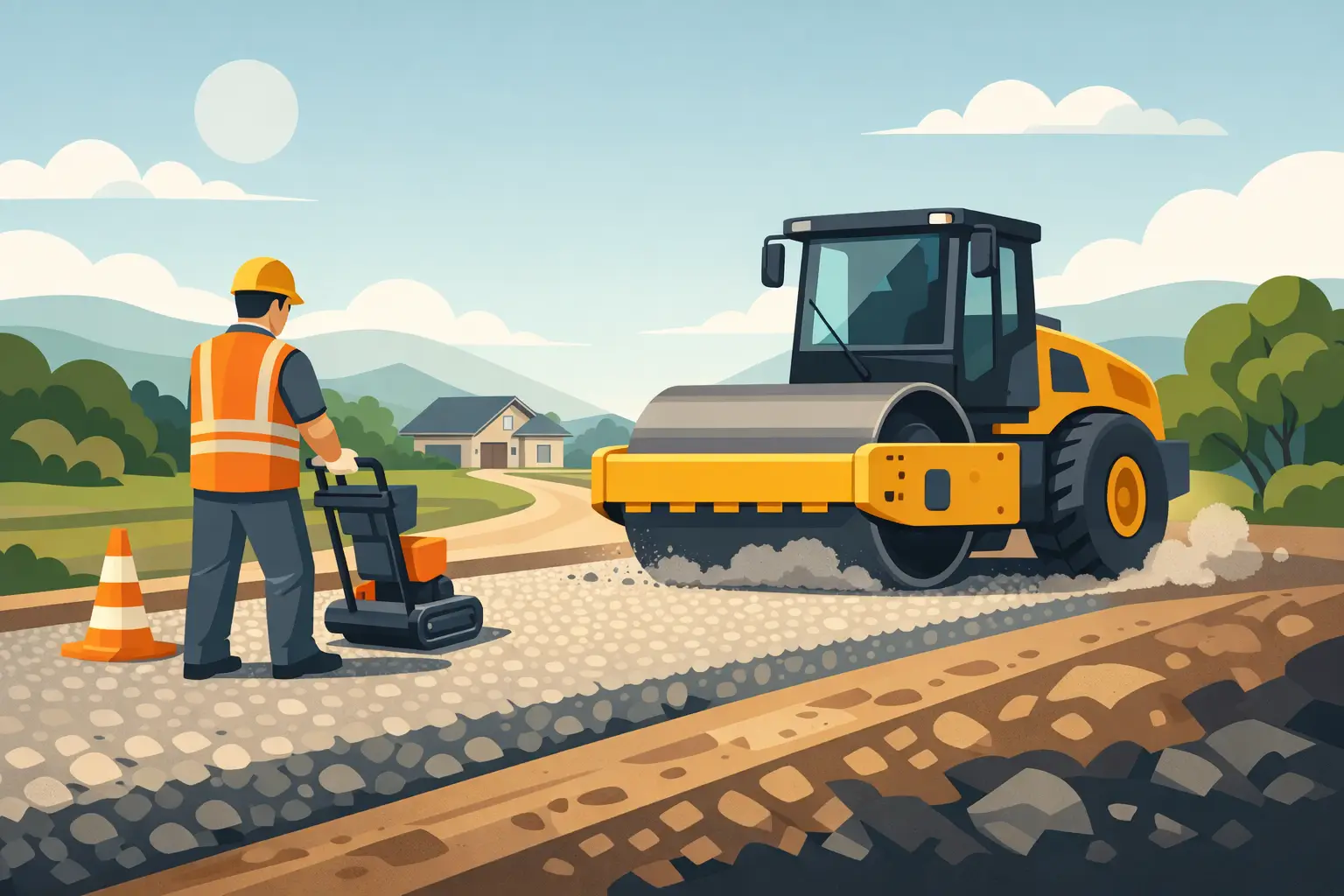
Compaction is not just running equipment over the dirt until it appears smooth. Moisture content, lift thickness, soil type, and compaction equipment all affect the result. A properly compacted subgrade provides a stable platform for the aggregate and footing layers to follow.
Grade for Drainage Without Creating a Sloped Arena
Arena drainage needs a balance. The surface must shed water, but it cannot be so steep that it affects riding, roping, training, or livestock handling. A slight, controlled grade is generally used to move water toward a planned outlet rather than allowing it to sit in low spots.
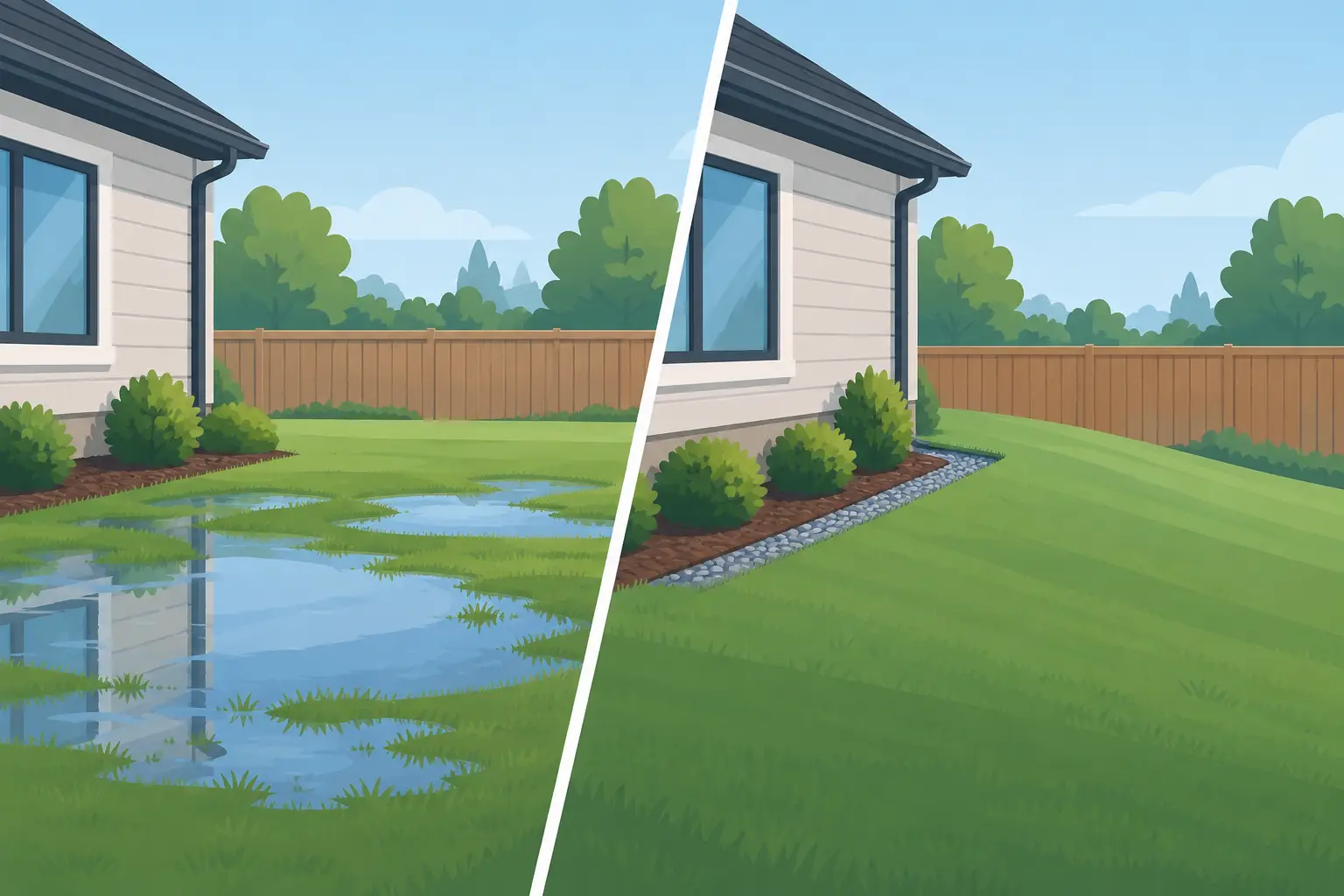
The bigger drainage work often happens around the arena. Perimeter swales, shallow ditches, culverts, or properly graded approaches can keep runoff from entering the arena in the first place. If an uphill pasture, barn roof, or driveway drains toward the site, that water needs to be intercepted and directed away.
Where Does the Water Go?
Every arena drainage plan needs an answer to that question. Moving water off the surface and dumping it beside the arena only transfers the problem. Water needs a stable path to a ditch, swale, pond, drainage area, or other approved outlet that can handle the flow.
This is especially important where an arena ties into a gravel driveway or trailer parking area. Runoff can carry loose material, cut ruts at the entrance, and undermine the edge of the arena pad. Grading the entire working area together produces better long-term results than treating each section as a separate project.
Build the Base for Traffic and Use
The base layer gives an arena its structure. Depending on the site, that may include compacted select fill, road base, clean rock, limestone screenings, or a combination of materials. The right choice depends on the native soil, expected use, drainage needs, and the type of footing planned for the top.
A working cattle or multi-use arena may need a firmer section than a light-use riding arena. Facilities that receive regular trailer traffic, drag equipment, and heavy use need a base that resists rutting and maintains grade. Outdoor arenas also need materials that handle changing moisture conditions without turning soft beneath the footing.
Material selection should be intentional. Clean rock can improve stability and drainage in certain conditions, while road-base products provide compaction and support. Limestone screenings may be useful for fine grading and tight surfaces. A layer that drains too freely without proper separation or edge control can move, while a layer that seals too tightly can trap water above it.
This is why footing should not be selected first. Sand, native material, manufactured footing, and blended surfaces all perform differently over different bases. Start with a stable, correctly graded foundation, then choose a top surface suited to the activity.
Plan the Footing and Edge Details
The riding or working surface should provide usable traction, reasonable cushion, and a consistent depth. It should also be maintainable with the equipment available. A surface that looks good on the day it is spread but requires constant replacement is not a practical finish.
For many rural properties, a well-prepared base with an appropriate sand or arena blend provides dependable performance. The exact depth and makeup depend on whether the arena is used for roping, barrel work, general riding, livestock handling, or training. Deep footing can be tiring for horses and difficult to maintain, while shallow footing can expose a hard base and become slick.
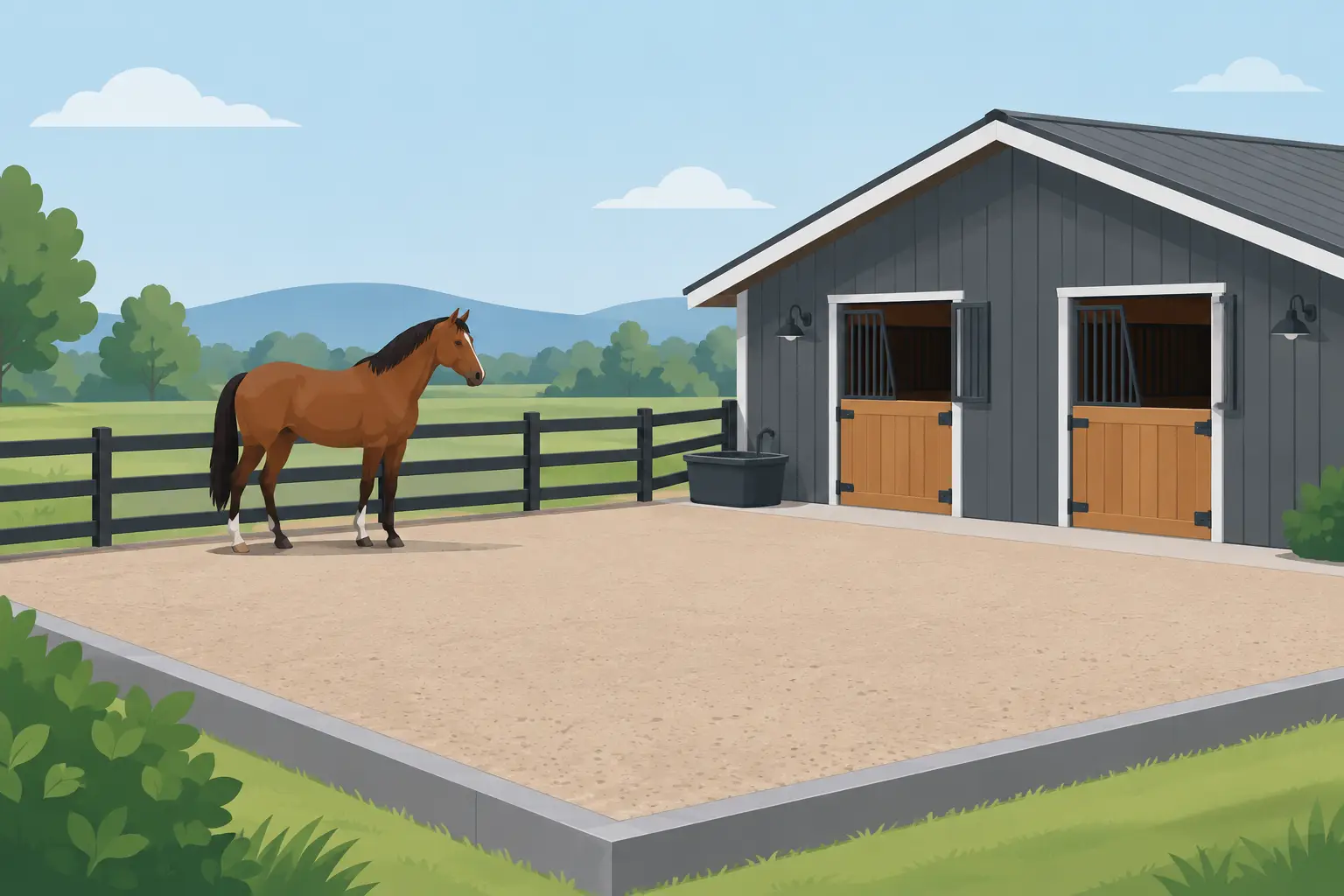
Edges matter more than many owners expect. A clean perimeter helps hold material in place, protects the arena from runoff, and gives maintenance equipment a workable boundary. In some projects, curbing, treated timbers, pipe, or a raised edge may be appropriate. On others, a graded perimeter and drainage swale are a better fit. The best detail depends on how water moves across the property and how the arena will be used.
Do Not Forget Access, Gates, and Surrounding Ground
A finished arena is only as useful as the route leading to it. Trailer traffic, tractors, feed trucks, and material deliveries need an all-weather approach that will not rut out after rain. A compacted gravel driveway or parking area often belongs in the same project scope as the arena pad.
Gate placement should allow room for trailers and equipment to enter without tearing up corners. If livestock move between pens and the arena, consider how traffic will affect the entrance during wet weather. A small area of added base material at gates and high-traffic spots can prevent recurring mud holes.
If the project includes fencing, cattle guards, culverts, or a new driveway crossing, coordinate those items before final grading. It is far easier to install drainage and access components while equipment is already on site than to disturb a completed arena later.
What Good Livestock Arena Site Preparation Looks Like
A properly prepared arena may not look dramatic once the footing is in place, but the results show up over time. Water leaves the surface instead of standing in it. The base stays firm under equipment. The rail line remains consistent. The entrance does not become a mud pit, and routine dragging improves the surface instead of exposing construction problems.
Triple R Dirt Works can handle the grading, excavation, subgrade work, drainage correction, base installation, and material delivery that get an arena ready for the next layer. Whether the job needs a simple pad for a round pen or a larger arena with access roads and drainage improvements, the ground work should match the way the property will actually be used.
Before ordering footing, walk the site after a rain and watch where water travels. That one look often tells you more about the arena you need to build than a measurement taken on a dry day.