
Site Excavation That Sets the Job Up Right
A building pad can look level on Friday and turn soft after the first hard Texoma rain if the ground underneath was not prepared correctly. That is why site excavation is more than moving dirt out of the way. It is the work that determines whether a foundation pad stays stable, a driveway remains passable, water drains where it should, and the next contractor has solid ground to build on.
For homeowners, builders, ranch operators, and developers, good excavation starts with the intended use of the property. A house pad, shop site, gravel parking area, pond, livestock arena, and commercial development may all require excavation, but they do not require the same cut, fill, material, or drainage plan. Getting the site right early avoids expensive fixes once concrete, fencing, utilities, or finished surfaces are in place.
What Site Excavation Actually Includes
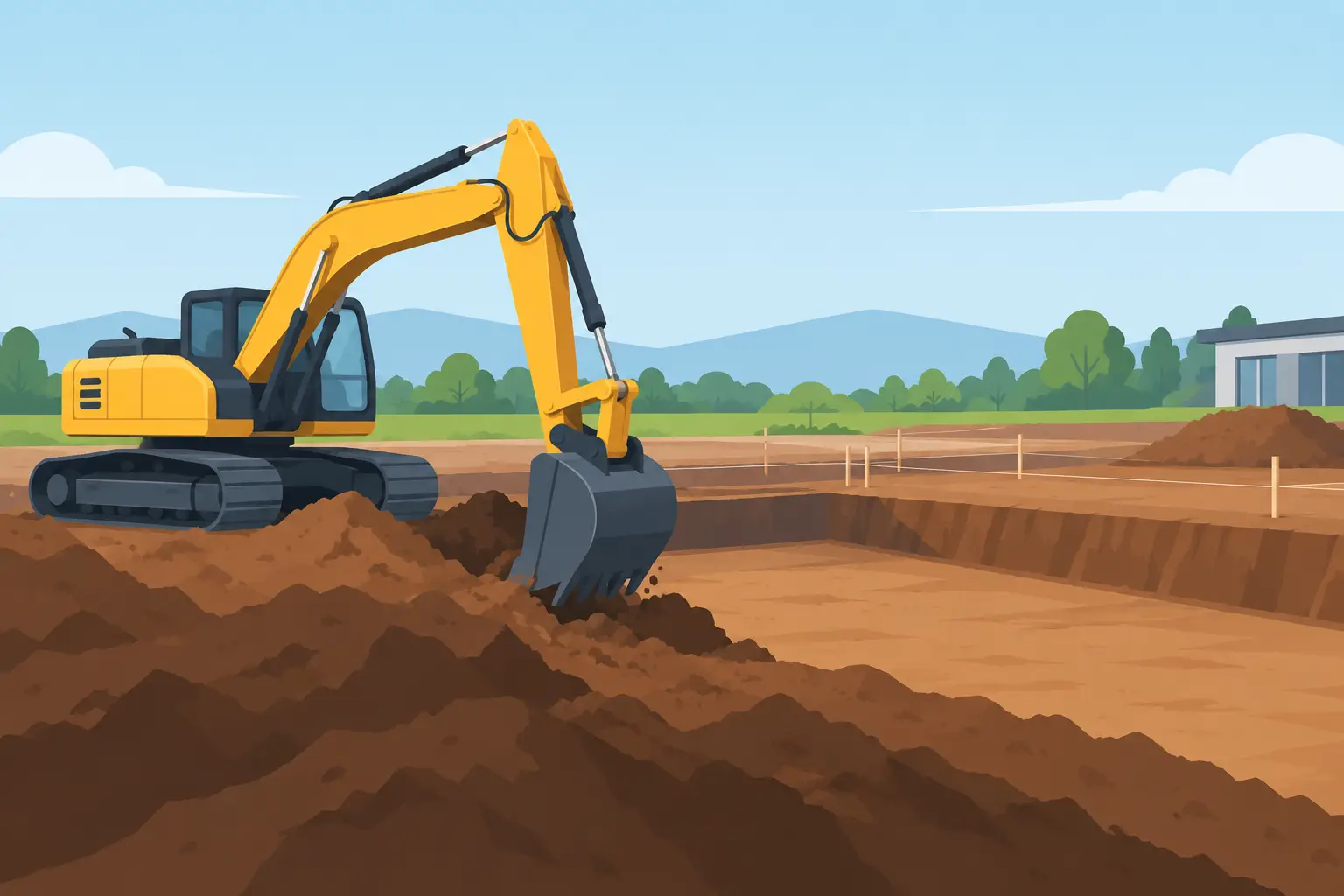
Site excavation is the controlled removal, placement, shaping, and compaction of soil to prepare land for construction or better use. Depending on the job, that may mean stripping topsoil, cutting high areas down, filling low areas, building up a pad, digging drainage swales, or excavating for a pond, culvert, utility route, or retaining area.
The visible excavation is only one part of the work. The grade has to make sense across the whole property. Water needs a path away from structures and travel areas. Fill needs to be placed in manageable lifts and compacted when the project calls for a stable building surface. Access needs to support the vehicles that will use it, not just look good when it is freshly graded.
On a rural property, site work may also include clearing and maintaining fence rows, installing cattle guards, building all-weather entrances, or shaping ground around barns, pens, and arenas. On a construction project, the focus may be development subgrade, foundation-pad construction, construction access, parking areas, and material staging. The equipment changes with the task, too. Excavators handle digging and loading, dozers spread and shape larger areas, and skid steers are useful for tighter work and finish grading.
Start With the Ground You Have
Texoma ground can change quickly from one end of a property to the other. One area may have workable sandy loam, while another has heavy clay, rock, soft soil, old fill, or a low spot that holds water. A plan based only on what the land looks like from the road can create problems once equipment starts cutting.
Before work begins, the site should be walked with the finished use in mind. Where will the structure sit? How will trucks get in during construction? Where does runoff enter and leave the property? Are there existing ditches, culverts, trees, fence lines, septic areas, or utility routes that affect the layout? Is there enough suitable soil on site to build the needed elevation, or will select fill be needed?
This is where practical field experience matters. Dirt removed from one area is not automatically good pad material somewhere else. Organic topsoil, wet clay, and loose debris should not be buried under a building pad just because they are available. In some cases, on-site material can be conditioned and used effectively. In others, importing select fill or road base is the better move. The right answer depends on soil conditions, drainage, intended load, and budget.
Utility locations need to be identified before excavation begins. This is especially important around existing homes, shops, barns, water lines, septic systems, electrical service, and buried communications lines. A damaged line can stop a project fast and create a costly repair that had nothing to do with the planned dirt work.
Building a Pad That Holds Up
A foundation pad is not simply a flat piece of ground. It needs the correct elevation, footprint, slope control, and prepared subgrade for the building that will sit on it. The pad must also work with the surrounding property so water does not run toward the structure once the job is complete.
The work commonly starts by stripping vegetation and unsuitable topsoil from the building area. Then the site is cut or filled to reach the planned grade. Where fill is placed, it should be spread in layers and compacted as required for the project. Skipping that step can leave weak zones that settle later, especially under a slab, metal building, driveway approach, or heavy equipment area.
Pad elevation is a trade-off that deserves attention. Raising a pad can improve drainage and help keep a structure above surrounding runoff. But a pad that is built too high without proper transitions may create steep approaches, drainage issues at the edges, or unnecessary material costs. The goal is a usable grade that ties into the property rather than fighting it.
Builders may have engineering or compaction requirements that guide the work. For a residence, shop, commercial structure, or other permitted construction, the excavation plan should match the project drawings and any specifications from the builder, engineer, or local authority. Field adjustments are sometimes necessary, but they should support the construction plan, not replace it.
Drainage Is Part of the Excavation Plan
Water is usually the reason a site excavation job gets called back for repairs. Standing water by a house, a washed-out driveway, ruts at a gate entrance, and a muddy parking area are often grading and drainage problems before they are surface-material problems.
Proper drainage begins with slope. Finished grades should direct water away from buildings and away from areas that need to stay firm. Swales, ditches, berms, and shallow channels can guide runoff across the property without sending it through a driveway or toward a neighboring improvement. The exact approach depends on the land’s natural fall and where water can legally and practically discharge.
Culverts are a common part of that plan. A culvert under a driveway entrance or crossing allows water to keep moving instead of cutting through the road base. Size, placement, cover depth, and end protection all matter. A culvert that is too small, set too high, or installed without solid backfill may become a blockage point during heavy rain.
For pond excavation, drainage planning becomes even more specific. The basin, dam, overflow route, and surrounding grade must work together. Excavating a hole is easy compared with creating a pond area that collects water as intended while protecting the surrounding ground from uncontrolled runoff.
Access Roads Need More Than Gravel on Top
A gravel driveway or construction road is only as dependable as the surface below it. If the subgrade is soft, uneven, or holding water, new rock can disappear into the soil, rut under traffic, or wash out along the edges. That is why road building often starts with excavation and shaping before the first load of aggregate arrives.
The subgrade should be graded to provide drainage and a consistent base. Soft spots may need to be undercut and replaced, depending on the conditions. Once the ground is ready, road base can be placed and compacted for strength. Clean rock may work well for certain applications, while limestone screenings, decomposed granite, or other materials may be better suited for a finished surface or specific property use.
There is no single best driveway material for every Texoma property. Traffic volume, truck weights, shade, soil type, slope, and water flow all affect the choice. A ranch entrance used by feed trucks needs a different build than a lightly traveled residential lane. A parking area for a shop or event space needs a different plan than a short driveway to a home.
Working with one provider for excavation, grading, hauling, and materials can keep those decisions connected. Triple R Dirt Works can prepare the ground and deliver the road base, clean rock, select fill, sandy-loam topsoil, or other aggregate needed for the next phase, without making the customer coordinate separate dirt and material crews.
When Cutting and Filling Need a Balanced Plan
Many sites need both cut and fill. Material cut from a high area may be used to raise a low area, form a pad, shape a road, or improve drainage. Reusing suitable on-site soil can reduce hauling and material costs, but it only works when the material is appropriate and the finished grades still function.
Hauling excess dirt off site may be necessary when cuts create more material than the property can use. Bringing material in may be necessary when a pad needs more elevation than on-site soil can provide. Both options affect schedule and cost, which is why it helps to make those decisions before equipment is already on the clock.
Finish grading comes after the major earthmoving is complete. This is where rough construction ground becomes usable property: road edges are cleaned up, drainage paths are refined, slopes are blended, and areas intended for topsoil, grass, gravel, or future improvements are prepared. It may not be the most dramatic part of the job, but it is where the site starts to look and perform like it should.
Before any equipment rolls, mark the building location, identify utilities, consider drainage after a heavy rain, and decide how the finished area will be used. A clear plan gives the excavation crew something practical to build toward and gives the property a better chance of staying dry, stable, and usable for years.


