

Development Subgrade Preparation That Holds Up
A building pad can look level on Friday and still create trouble months later if the ground underneath was not handled right. Development subgrade preparation is the work that turns rough, variable soil into a dependable base for foundations, roads, parking areas, and other improvements. It is not just pushing dirt until the site looks flat. The grade, moisture, material, and compaction all have to work together.
In Texoma, that matters because many properties carry a mix of clay, sandy soil, rock, old fill, low spots, and runoff paths. A good finished surface starts below the surface. When the subgrade is properly prepared, the next phase of the project has a better chance of staying level, draining correctly, and holding up under traffic and weather.
What Development Subgrade Preparation Actually Does
The subgrade is the prepared soil or select fill directly below a building pad, road base, parking lot, slab, or other constructed surface. Its job is to support what goes above it without shifting, pumping water, rutting, or settling unevenly.
For a home site, that may mean creating a stable foundation pad with the right elevation and drainage away from the future structure. On a commercial job, it may mean cutting high areas, filling low areas, conditioning the soil, and compacting the site before base material or concrete work begins. For a rural property, it can include preparing the ground under an all-weather access road, equipment yard, barn pad, or gravel parking area.
The finished subgrade must meet the needs of the planned use. A pad for a light metal building does not have the same requirements as a truck entrance or a parking lot that will see loaded trailers. The dirt may be the same, but the preparation plan should not be.
Start With the Existing Ground Conditions
Before equipment starts moving soil, the crew needs to understand what is already on the property. That includes the natural slope, visible drainage routes, soft areas, existing vegetation, buried debris, rock, and any material previously brought onto the site.
Topsoil and organic material are usually not suitable beneath a pad or road. Roots, brush, decomposing vegetation, and loose topsoil can settle after construction. Clearing and stripping these materials from the work area helps keep them out of the structural fill zone. In many cases, usable topsoil can be stockpiled for later finish grading, landscaping, or pasture repair rather than wasted.
Water is the other major factor. A low area may look solid during a dry stretch but turn soft after a hard rain. Clay soils can hold moisture and lose bearing strength when saturated. Sandy ground may drain faster but can still move or wash out if it is not shaped and contained properly. Identifying those conditions early prevents a crew from simply covering a problem with more material.
Cut, Fill, or a Combination of Both
Most sites need some balance of cutting high ground and filling low ground. The goal is not always to make everything perfectly flat. A pad, driveway, or parking area needs planned elevation and slope so water leaves the surface without creating erosion or ponding.
Where fill is required, the quality of that fill matters. Suitable select fill can build up low areas and create a more consistent working surface. Unsuitable dirt, trash fill, saturated clay, or oversized debris can cause trouble later, even if the surface initially looks smooth.
A practical grading plan also considers where excess material will go. Sometimes it can be used to shape drainage swales, build up another work area, or correct a low spot elsewhere on the property. Other times, it needs to be hauled away. Moving dirt twice costs more than putting it in the right place the first time.
Compaction Is Where a Good Pad Gets Its Strength
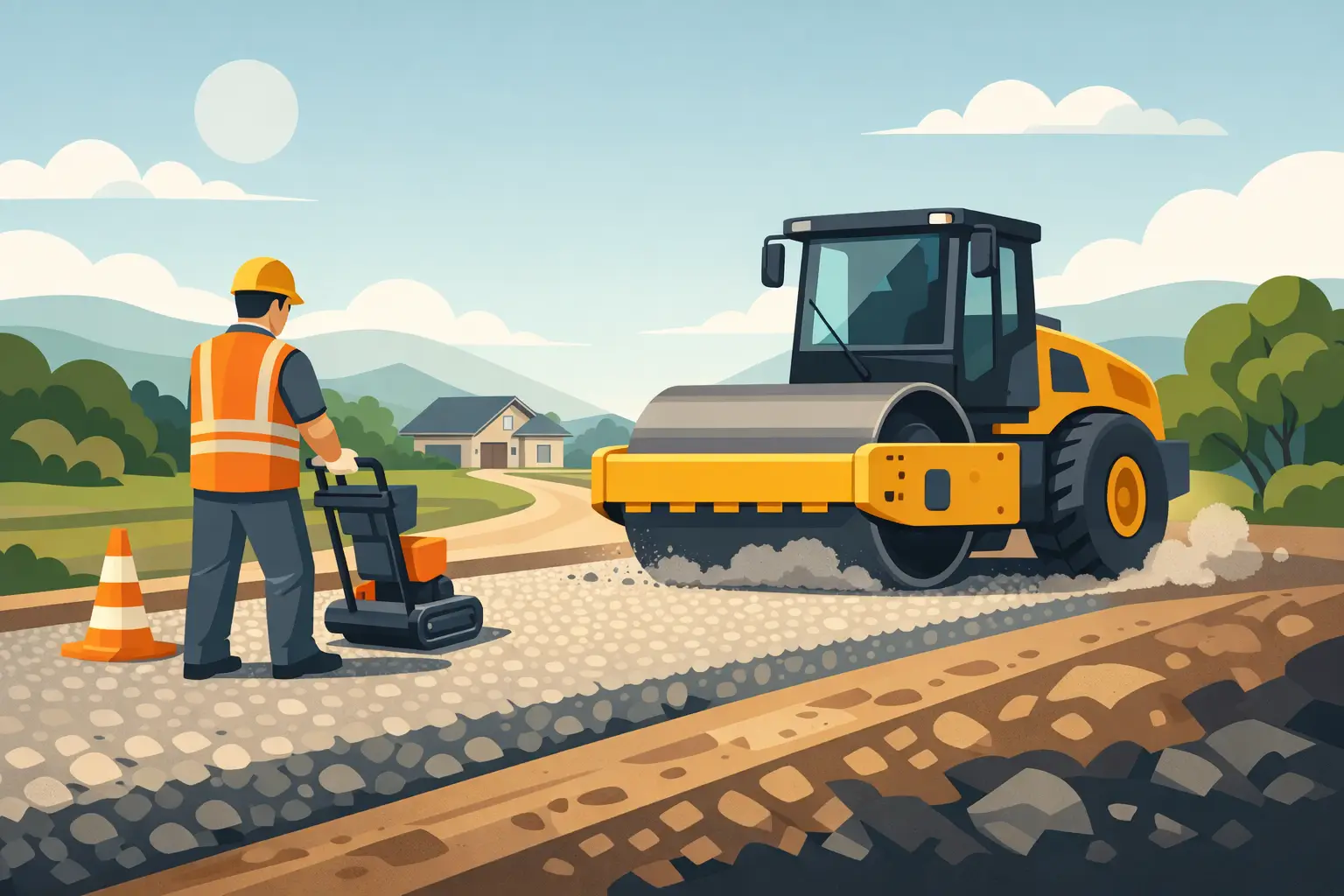
Placing fill is only part of the work. Material needs to be spread in manageable lifts and compacted before the next layer goes on. Thick, loose lifts may appear firm on top while remaining soft beneath the surface. That is how settlement starts.
Compaction works best when the material has the right moisture content. Soil that is too dry may not bind and tighten properly. Soil that is too wet can pump, stick to equipment, and refuse to compact. Depending on conditions, the crew may need to add moisture, aerate wet material, wait for the site to dry, or bring in better fill.
The equipment choice matters as well. Dozers are useful for stripping, cutting, spreading, and rough shaping large areas. Skid steers can work efficiently around tighter pads, buildings, and drainage features. Excavators handle deeper cuts, unsuitable soil removal, drainage excavation, and material placement. Compaction equipment is selected around the soil type and the required finished use.
For projects with engineered plans, density testing may be required at specified intervals. Those test results give the builder, owner, and inspector confirmation that the subgrade has reached the required compaction. On smaller rural and residential projects, the scope may be more straightforward, but the same principle still applies: a firm, properly built base costs less than repairing settlement after the structure or road is complete.
Drainage Cannot Be an Afterthought
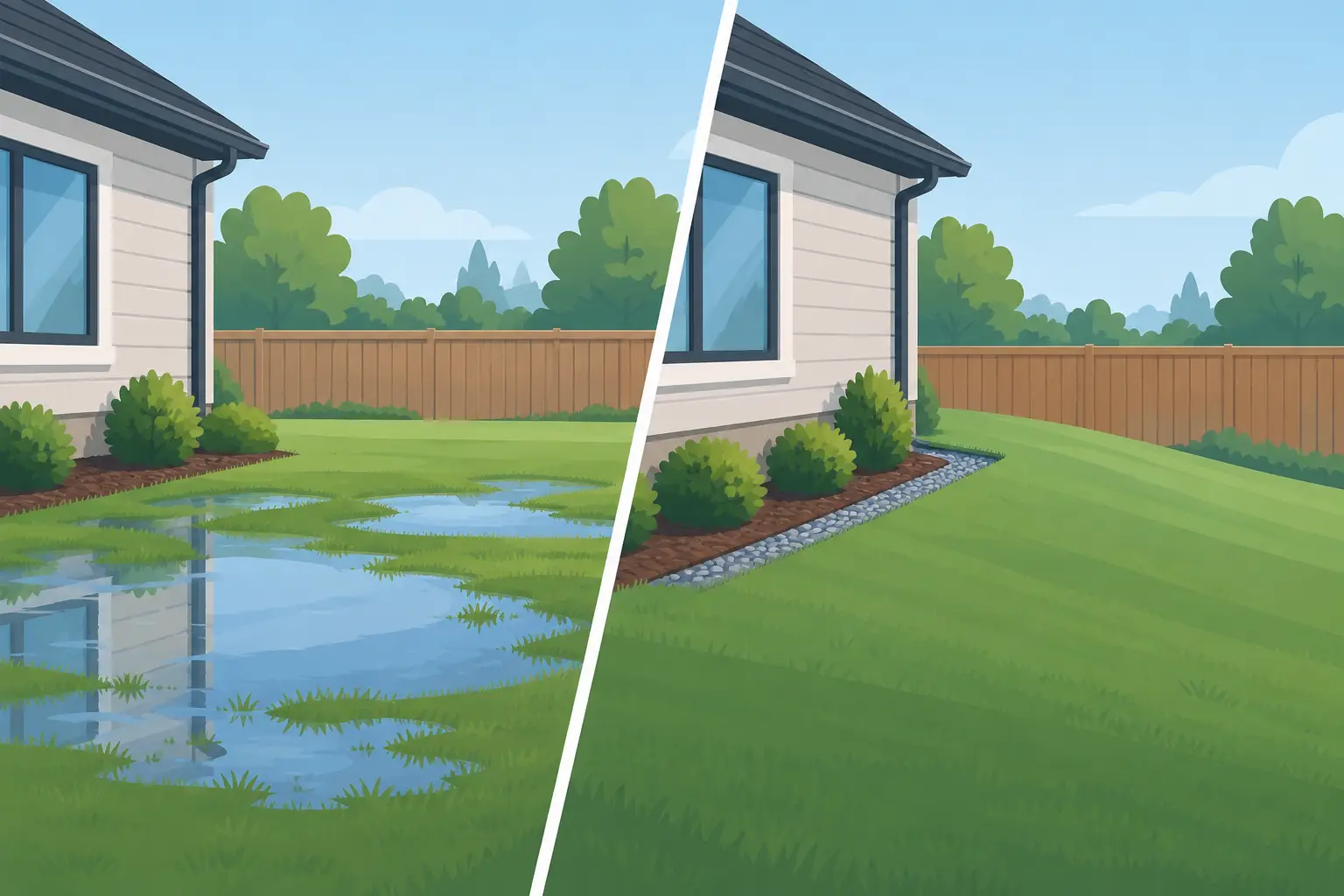
Water is one of the fastest ways to shorten the life of a pad, road, or parking area. If water remains under the surface, it weakens soil and creates movement. If it runs across the finished area, it can cut ruts, wash base material away, or carry sediment where it does not belong.
A prepared subgrade should direct water away from structures and toward a planned outlet. That might involve a shallow swale, perimeter ditch, culvert, ditch crossing, or a change in site elevation. The right solution depends on the property and where the water naturally wants to go.
This is especially relevant for driveways and access roads. A gravel surface can only perform as well as the ground below it. If the subgrade stays wet or the road has no crown and no side drainage, adding more rock may provide a short-term improvement but will not fix the underlying failure. In those cases, grading, drainage correction, and possibly stabilization or select fill come before new road base.
Know When Imported Material Makes Sense
Native soil is often enough for portions of a site, particularly when it is dry, consistent, and properly compacted. But some conditions call for imported materials. Select fill can improve weak or inconsistent ground. Road base is typically used above the completed subgrade for roads, driveways, and parking areas. Limestone screenings, clean rock, decomposed granite, and other aggregates each serve different purposes depending on the project.
More material is not automatically the answer. A thick layer of rock over soft, wet soil can still sink and rut. The correct sequence is to address the soft area, establish drainage, build and compact the subgrade, then place the appropriate base or surface material.
Material selection also depends on traffic. A ranch entrance used by pickups has different demands than a commercial entrance receiving concrete trucks, delivery vehicles, and trailers. A contractor should consider axle loads, turning areas, expected rainfall, maintenance expectations, and whether the surface needs to remain usable in wet weather.
Coordinate the Subgrade With the Next Trade
A finished subgrade needs to match the construction plans, not just look clean from the road. Pad elevation, width, slope, utility locations, retaining needs, and access for concrete trucks or building crews should be addressed before final grading is complete.
For foundation work, confirm the pad limits and any required overbuild area so the concrete crew has room to work. For roads and parking areas, plan transitions to gates, culverts, existing pavement, and building entrances. For larger developments, construction access may need to be built early and maintained while the rest of the site is under work.
Communication prevents expensive rework. If utilities are coming through the pad, it is better to plan trenching and backfill before final finish work than to cut up a completed, compacted area later. If drainage structures are needed, they should be set at the correct elevation before the surrounding grades are locked in.
A Practical Approach for Texoma Projects
Good site work is not about making every property look the same. It is about reading the ground, understanding the intended use, and using the right equipment and materials to build a surface that performs. Triple R Dirt Works handles the grading, excavation, pad construction, drainage work, road building, and material delivery that often need to happen together on a Texoma project.
If you are planning a new pad, access road, parking area, or larger development, walk the property after a rain if possible. Pay attention to standing water, soft tracks, runoff paths, and low approaches. Those details give a clear starting point for building ground that will hold up when the work and weather arrive.