
How to Calculate Gravel Depth for a Driveway
A gravel driveway that looks thin after the first hard rain usually was not a gravel problem. It was a depth, drainage, or subgrade problem. Knowing how to calculate gravel depth before material is delivered helps you order enough rock, budget the job correctly, and build an access road or parking area that holds up under traffic.
Gravel depth is not one number for every job. A light-use walkway, a homeowner driveway, a ranch entrance used by loaded trucks, and a commercial parking area all need different material sections. Soil conditions matter too. In Texoma, a firm, dry subgrade may need less buildup than soft clay that stays wet after a storm.
Start With the Finished Gravel Depth You Need
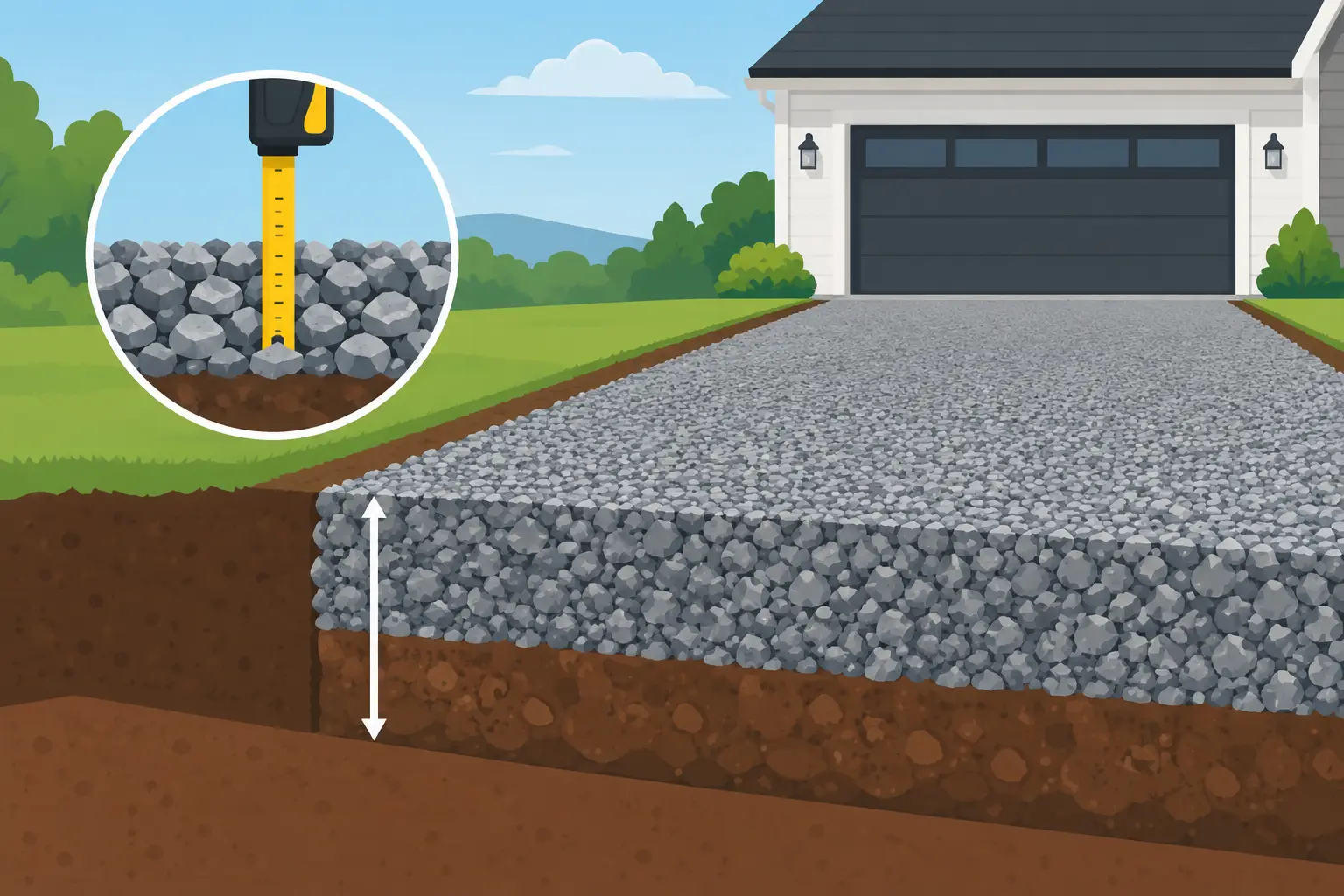
For most residential gravel driveways, 4 to 6 inches of compacted material is a practical finished depth when the existing ground is firm and properly graded. That depth can work well for passenger vehicles, pickups, and normal daily traffic.
A driveway with soft native soil, frequent delivery trucks, trailers, farm equipment, or poor drainage often needs 6 to 8 inches of compacted road base. In problem areas, the right answer may be to improve the subgrade, install geotextile fabric, build a thicker base, or correct drainage before adding more surface rock.
Parking lots, equipment yards, barn approaches, and commercial access roads should be evaluated for expected traffic and soil conditions. Heavy traffic can pump water and fines through a weak base, creating potholes and ruts even when the surface appears to have plenty of rock.
Keep in mind that the depth you want after compaction is not necessarily the depth you should order. Crushed limestone, road base, and other aggregate materials settle and compact. A contractor commonly allows extra loose material to achieve the specified compacted thickness, especially with road base that contains fines.
How to Calculate Gravel Depth and Material Volume
The basic calculation starts with the area of the project and the desired gravel depth. Measure length and width in feet, then convert your depth from inches to feet.
Use this formula:
“`text Length (ft) × Width (ft) × Depth (ft) = Cubic feet of gravel Cubic feet ÷ 27 = Cubic yards of gravel “`
Since gravel depth is usually measured in inches, divide the depth by 12 before using the formula. For example, 4 inches equals 0.333 feet, 6 inches equals 0.5 feet, and 8 inches equals 0.667 feet.
Here is a common driveway example. Say the driveway is 200 feet long and 12 feet wide, and you want a 6-inch compacted gravel section.
“`text 200 × 12 × 0.5 = 1,200 cubic feet 1,200 ÷ 27 = 44.4 cubic yards “`
That driveway requires about 44.4 cubic yards at the calculated depth. Because material compacts and job sites are rarely perfectly square or level, it is wise to account for waste, shaping, low spots, and compaction. Depending on the material and site, adding 5 to 15 percent is often reasonable. In this example, ordering roughly 47 to 51 cubic yards may be appropriate.
If your supplier sells by the ton rather than the cubic yard, the conversion depends on the aggregate. One cubic yard of crushed limestone or road base commonly weighs around 1.2 to 1.5 tons, but moisture content and rock size can change that number. Confirm the material’s actual conversion rate before placing an order.
A quick depth-to-coverage reference
At a 4-inch depth, one cubic yard covers about 81 square feet. At 6 inches, it covers about 54 square feet. At 8 inches, it covers about 40 square feet.
These are planning numbers, not a substitute for site measurement. They assume a level, rectangular area. Driveways that widen at the road, curve around a house, or have turnouts need to be broken into separate sections and calculated individually.
Measure the Area You Are Actually Building
A common mistake is measuring only the center travel lane and forgetting the width needed for tires, drainage slope, and edge support. A 10-foot-wide drive may be enough for a narrow, low-traffic lane, but 12 feet is more common for residential access. A wider section may be needed where vehicles pass, back trailers, turn into a shop, or meet at a gate.
For a curved drive, take several width measurements along the length and use the average width. For an irregular parking area, divide it into rectangles, triangles, or simple sections. Calculate each section, then add the totals together.
Also decide whether your dimensions are for the finished surface or the entire base course. If the gravel section will extend beyond the driving surface for edge support, measure that full footprint. The rock under the edges is part of what keeps the finished driveway from breaking down.
Depth Depends on the Base Under the Gravel
Gravel placed directly on grass, loose topsoil, or wet clay rarely performs like a properly built driveway. The material may look good on delivery day, then disappear into the ground as traffic pushes it down.
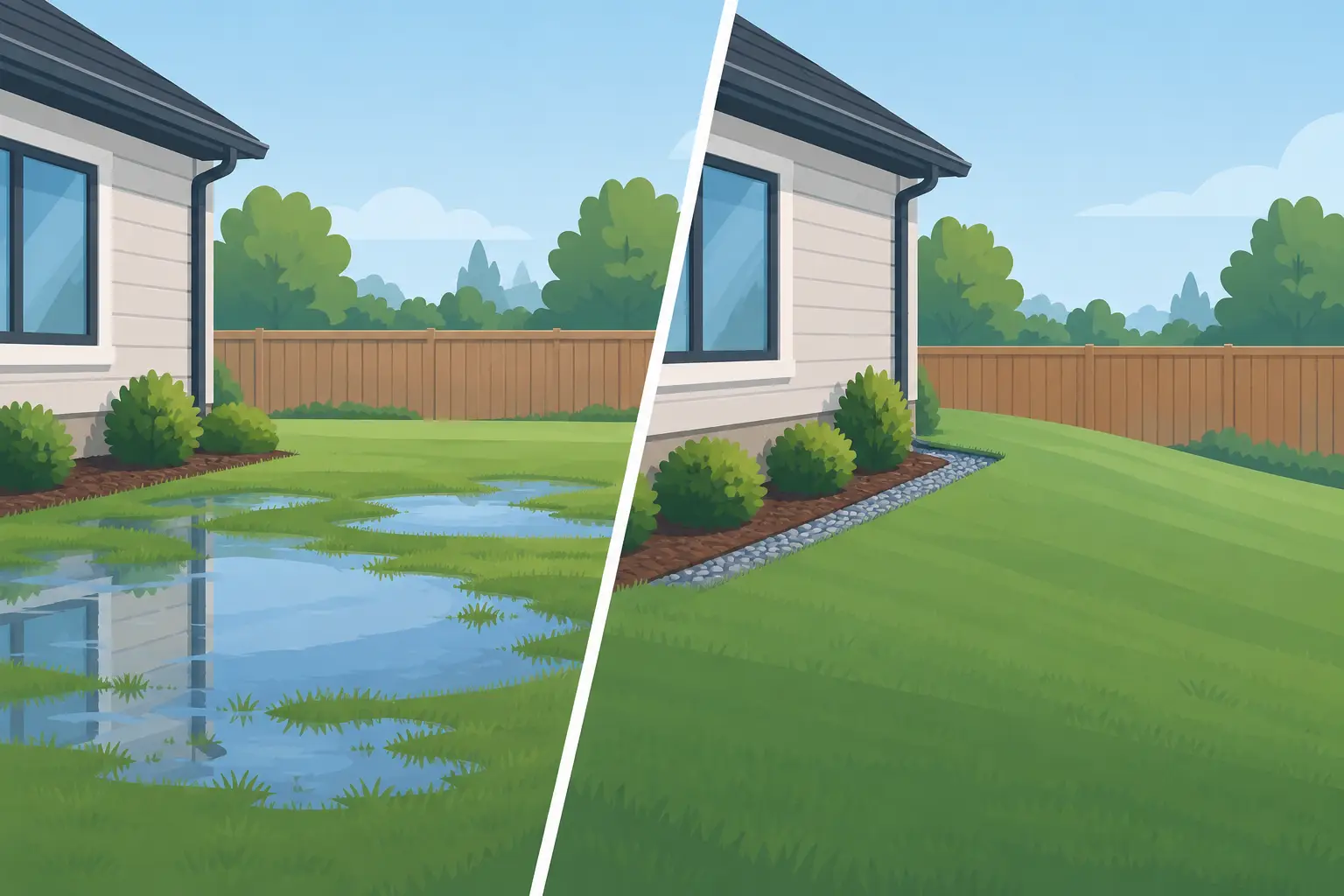
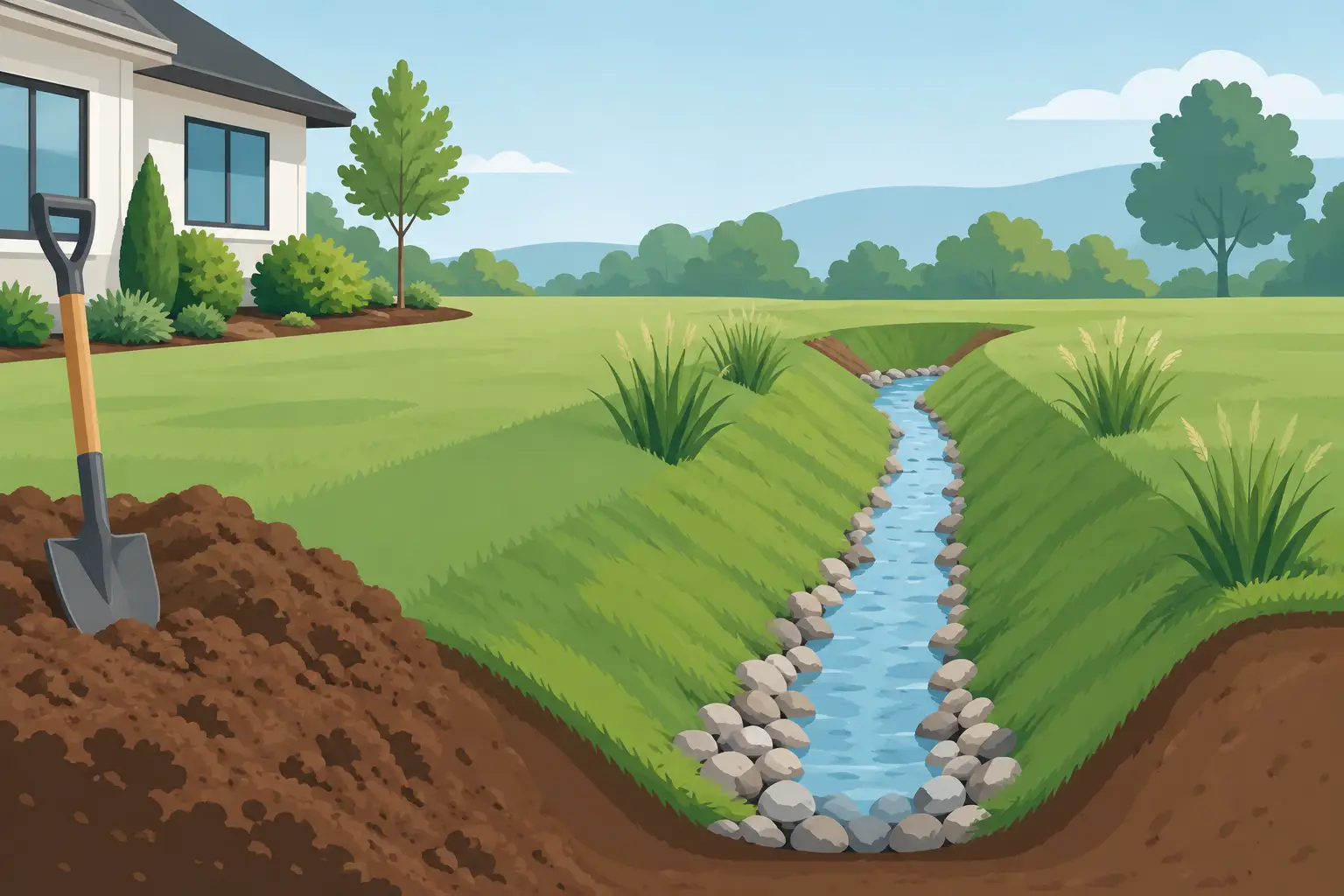
The best first step is stripping organic material where needed and grading a stable subgrade. The subgrade should shed water rather than trap it. In many cases, a crowned driveway with the center slightly higher than the edges helps move water off the driving surface. Ditches, swales, culverts, and turnouts may be needed to keep runoff from crossing or washing out the road.
If the subgrade is soft, adding more surface gravel alone may not solve the issue. A separation fabric can keep fine soil from mixing into the rock. Larger base stone may be needed in severe areas before placing road base on top. These steps add cost up front, but they can reduce repeated rock deliveries and blade work later.
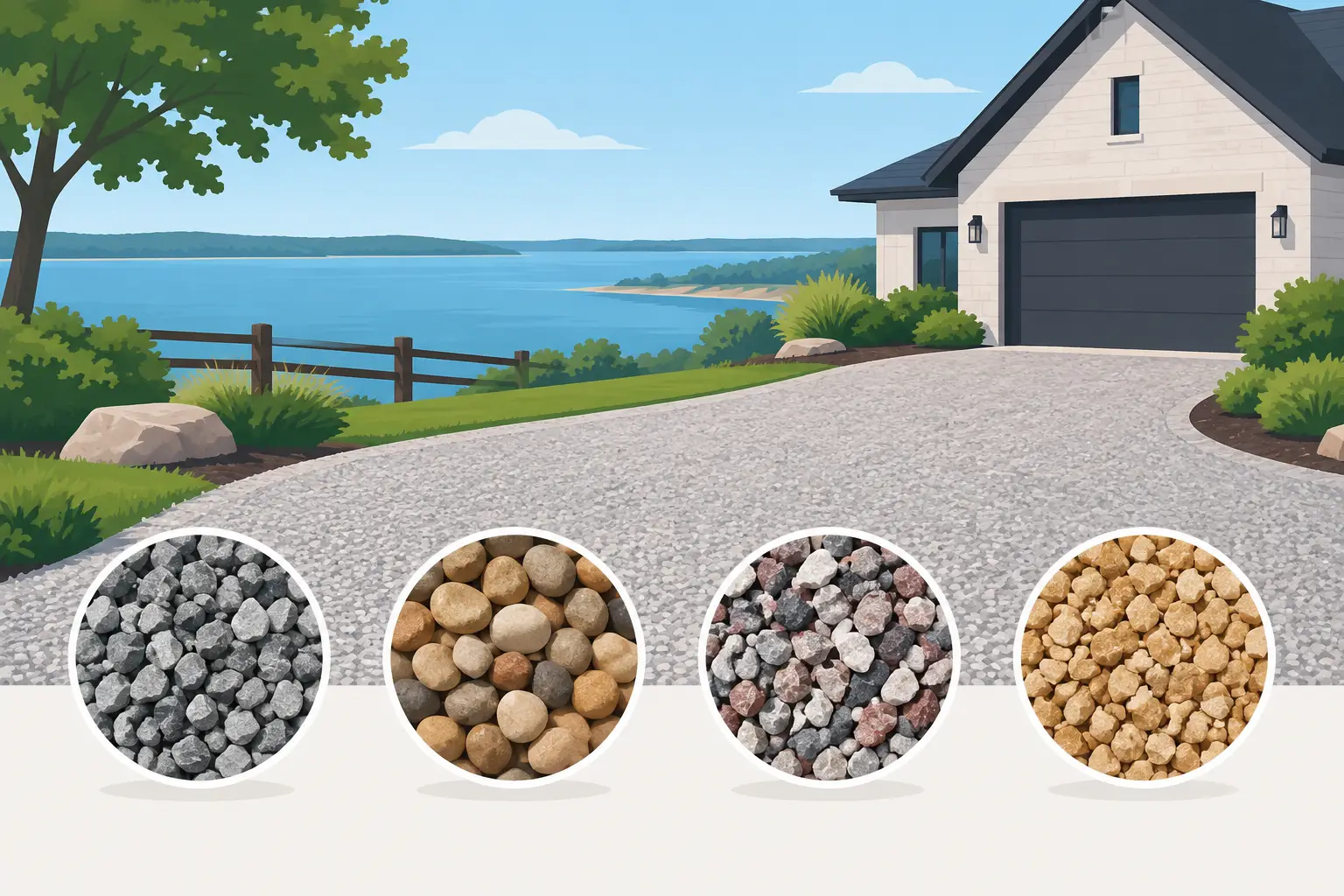
Road base is generally a better choice than clean rock for the structural layer of a driveway or parking area. Its mix of crushed stone and fines compacts into a tighter surface. Clean rock drains well and can work for decorative surfaces, drainage zones, or a top course, but it does not always lock together the same way. The right material depends on whether the job needs strength, drainage, appearance, or all three.
Plan for Compaction, Not Just Delivery
A spread pile is not a finished gravel section. After delivery, the material must be spread to an even grade and compacted. A skid steer, tractor, or dozer can move material, but compaction equipment is what helps build a dense, durable layer.
If you are placing 6 inches or more of road base, compacting in lifts can produce a better result than spreading the full thickness at once. A lift is a thinner layer of material placed, graded, and compacted before the next layer goes down. This is especially useful on a driveway that will see heavy pickups, trailers, or work trucks.
Do not spread material too thin at the edges just to make the pile cover more ground. Thin edges unravel under tires and allow water to work into the base. Keep the depth consistent, establish drainage, and compact while the material has enough moisture to bind without becoming muddy.
Avoid the Costly Gravel Calculation Mistakes
The math itself is simple. Most ordering mistakes happen when site conditions are left out of the math. Watch for these four issues:
- Calculating inches as feet. Six inches is 0.5 feet, not 6 feet.
- Ordering for the visible driveway only and leaving out turnarounds, parking pads, entrances, and widened gate areas.
- Using a finished compacted depth but ordering no extra material for compaction and grade correction.
- Covering soft ground without fixing drainage or building a stable subgrade first.
Another frequent issue is assuming every load holds the same volume. Truck capacity varies, and material may be quoted by tons, cubic yards, or loads. Get the unit of sale in writing and compare it to your calculation before the trucks are scheduled.
When a Site Visit Is Worth More Than a Calculator
A calculator can estimate material, but it cannot tell you whether a low spot needs a culvert, whether the soil will support a loaded concrete truck, or whether runoff is coming from a neighboring field. Those are field conditions that affect both the depth and the material choice.
For larger driveways, building pads, rural roads, parking lots, or sites with drainage trouble, having the area graded and evaluated before material arrives can prevent expensive rework. Triple R Dirt Works can handle the subgrade, drainage work, road base placement, grading, and material delivery as one coordinated job.
Measure carefully, build from a stable base, and give water a place to go. Gravel holds up best when the depth is right before the first truck ever drives across it.