

Ranch Pond Excavation Examples That Work
A ranch pond is not just a hole dug in a low spot. It has to collect enough water, hold it through dry weather, shed overflow without washing out, and fit the way the property is used. These ranch pond excavation examples show how the right cut, slope, spillway, and access plan can turn a problem area or open pasture into a working water source.
What a Working Ranch Pond Needs
The best pond location is usually determined by the land before the machine ever starts. A natural draw, drainage path, or low area may provide the water source, but it also has to offer enough room for a basin and a safe route for overflow. Digging in the wrong location can leave an owner with a pond that stays shallow, catches too much silt, or drains away as fast as it fills.
Soil matters just as much. Clay-heavy soil can often be compacted into a dependable pond bottom. Sandy or rocky ground may need a different location, imported clay, or a liner approach depending on the goal and budget. Before excavation begins, the pond should be laid out with practical grades, stable side slopes, a dam where needed, and a spillway that keeps heavy rain from cutting through the embankment.
For Texoma ranches and acreage, a pond also needs to work around gates, fence lines, livestock traffic, roads, utilities, and future building plans. The right pond is one that improves the property without creating a new maintenance problem.
Ranch Pond Excavation Examples for Working Land
Stock Pond Below a Natural Draw
A common ranch pond excavation example starts below a natural draw where runoff already concentrates after rain. Instead of trying to force water across flat ground, excavation follows the existing drainage pattern. The basin is cut deeper near the dam, while the upper end is shaped to accept runoff and allow sediment to settle before it reaches the deeper water.
This setup can provide livestock water and a reserve for wildlife while making use of a low area that may already stay wet or rutted. The dam needs properly compacted fill, and the spillway must sit at a safe elevation away from the dam. Water should have a controlled path out during a major storm. A pond that fills well but has no reliable overflow route can fail when the next hard rain hits.
Access is part of the job. Cattle should not be allowed to churn up every inch of shoreline if water quality and bank stability matter. A planned watering approach, reinforced access point, or fenced perimeter can protect the pond edge and reduce muddy conditions.
Borrow Pit Pond for a Building Pad or Road Project
On some properties, a pond excavation does two jobs at once. Material excavated from the pond can be used to build up a foundation pad, improve a low driveway section, or create a stable road subgrade. This can reduce the amount of select fill that has to be brought onto the property, provided the excavated material is suitable for the planned use.
For example, a landowner planning a barndominium pad may have a low pasture area that can become a pond. The contractor excavates workable fill from that area, hauls it to the build site, places it in lifts, and compacts it for the pad. The remaining excavation is shaped into a pond with stable banks and a defined overflow route.
This approach depends on soil conditions and haul distance. Pond material is not automatically good building-pad material. Organic topsoil, wet muck, and unsuitable soils should be stripped or handled separately. A good project starts with an honest look at what is in the ground and where it can be used.
Runoff-Control Pond Near a Gravel Driveway
A gravel driveway that stays washed out is often a drainage problem first and a rock problem second. When runoff crosses a road, it carries gravel, cuts ruts, and softens the base. In the right setting, a small runoff-control pond or detention basin can catch water before it reaches the drive.
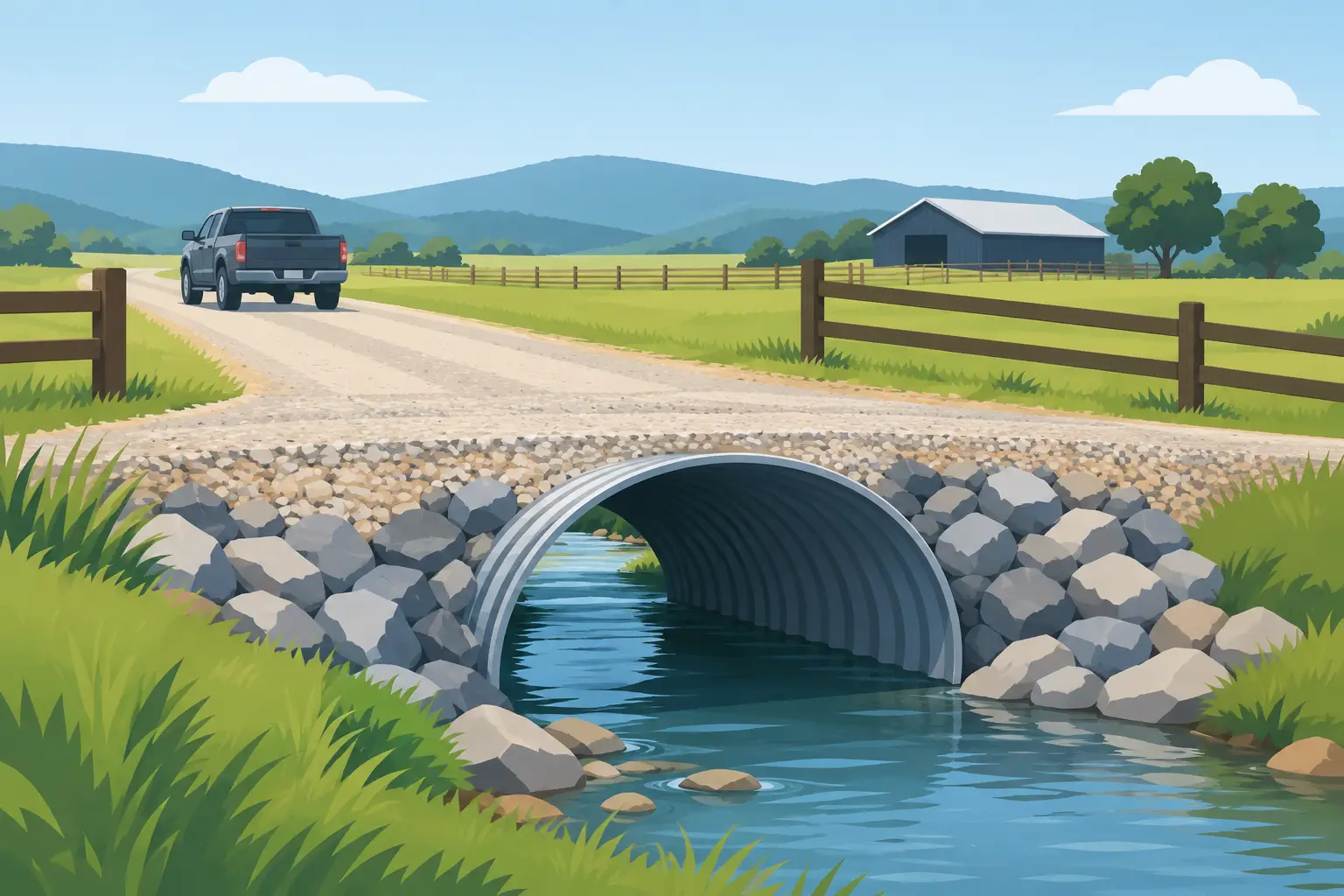
The excavation may be paired with ditch shaping, culvert installation, and road-base repair. Water is directed through a properly sized culvert or swale, allowed to settle in the basin, and then released through a stable outlet. This takes pressure off the driveway and helps keep loose gravel where it belongs.
The pond itself may not be intended for fishing or livestock. It is built for drainage control, so its depth, side slopes, and outlet design follow that purpose. That is why pond design cannot be copied from one property to another. A stock pond, a decorative pond, and a runoff basin may all hold water, but they are not built the same way.
Pasture Pond With a Protected Spillway
For a larger grazing operation, the main concern may be keeping a pond functional through repeated rain events and regular livestock use. In this example, the pond basin is excavated to create useful depth, the dam is built and compacted from suitable material, and the emergency spillway is graded wide enough to pass runoff without eroding the dam.
The spillway is one of the most important parts of the project. It should direct overflow across stable ground, not toward a road, neighboring tract, fence line, or structure. Depending on the site, the outlet area may need rock protection, grading, or vegetation establishment to keep water from cutting a channel.
A protected spillway is not extra polish. It is what helps the pond survive the weather it was built to handle. After a heavy Texoma rain, water will find a way out. The job is to make sure that way is planned.
Start With Layout, Not Just Excavation
A reliable pond project follows a sequence. First, the site is evaluated for drainage, soil, slopes, access, and the intended use. Next, the work area is cleared and topsoil is stripped where needed. Topsoil should be saved for final dressing around the pond, not buried in a dam where it can create weak, organic pockets.
Excavation then establishes the basin and provides material for fill if the design calls for an embankment. The pond bottom and dam are shaped with equipment suited to the job, typically excavators, dozers, skid steers, and haul trucks. Fill placed in a dam should be spread in controlled lifts and compacted, not simply pushed into a pile.
Final grading makes the difference between a clean project and a recurring headache. Banks need slopes that can be maintained safely. The spillway needs a clear discharge path. Nearby drainage should be directed intentionally, and disturbed ground should be dressed so it can establish vegetation. If the project includes a driveway, culvert, cattle guard, or fence-row work, coordinating it during the dirt-work phase usually keeps the property more functional while equipment is already on site.
Plan for Mud, Maintenance, and Material Needs
Ponds change over time. Runoff brings sediment, livestock wear down banks, and dry weather exposes shallow edges. A deeper zone helps maintain water longer, while gently sloped areas can make access safer and easier to maintain. The right balance depends on whether the pond is meant for cattle, fishing, aesthetics, drainage, or material borrow.
Rock can be useful at high-traffic access points, culvert outlets, and areas where concentrated water causes erosion. Sandy-loam topsoil can be spread on final graded areas to help establish grass. Road base or clean rock may be needed where equipment access, pond approaches, or adjacent roads need to stay firm through wet conditions.
Before digging, verify property lines, utility locations, drainage considerations, and any local requirements that apply to the site. A pond that affects downstream flow or crosses a drainage feature may require more planning than a simple pasture excavation.
Choose the Pond Around the Property’s Real Need
The strongest ranch pond excavation examples are not the ones with the biggest water surface. They are the ones that solve a clear land-use problem: livestock water in the right pasture, runoff kept off a road, usable fill for a pad, or a low area put to work instead of staying soft and muddy.
Triple R Dirt Works can help property owners look at the whole dirt-work picture, from pond excavation and grading to culverts, access roads, and material delivery. A well-planned pond should leave the property easier to use after the equipment is gone, not harder to maintain when the next storm rolls through.