

Best Gravel for Muddy Driveways in Texoma
A driveway that turns to mud after every Texoma rain is usually not a gravel problem alone. Choosing the best gravel for muddy driveways matters, but so do the subgrade, driveway shape, water flow, and the condition of the ground underneath. Spreading clean rock over soft, wet soil may look better for a short time. Without a stable base and a way for water to leave, that rock will work its way into the mud and the ruts will come right back.
For most muddy driveway repairs, the right answer is a compacted road base topped with a durable driving surface. The exact material and thickness depend on traffic, soil conditions, slope, drainage, and whether the drive serves a house, shop, pasture, or active construction site.
The Best Gravel for Muddy Driveways Starts With Road Base
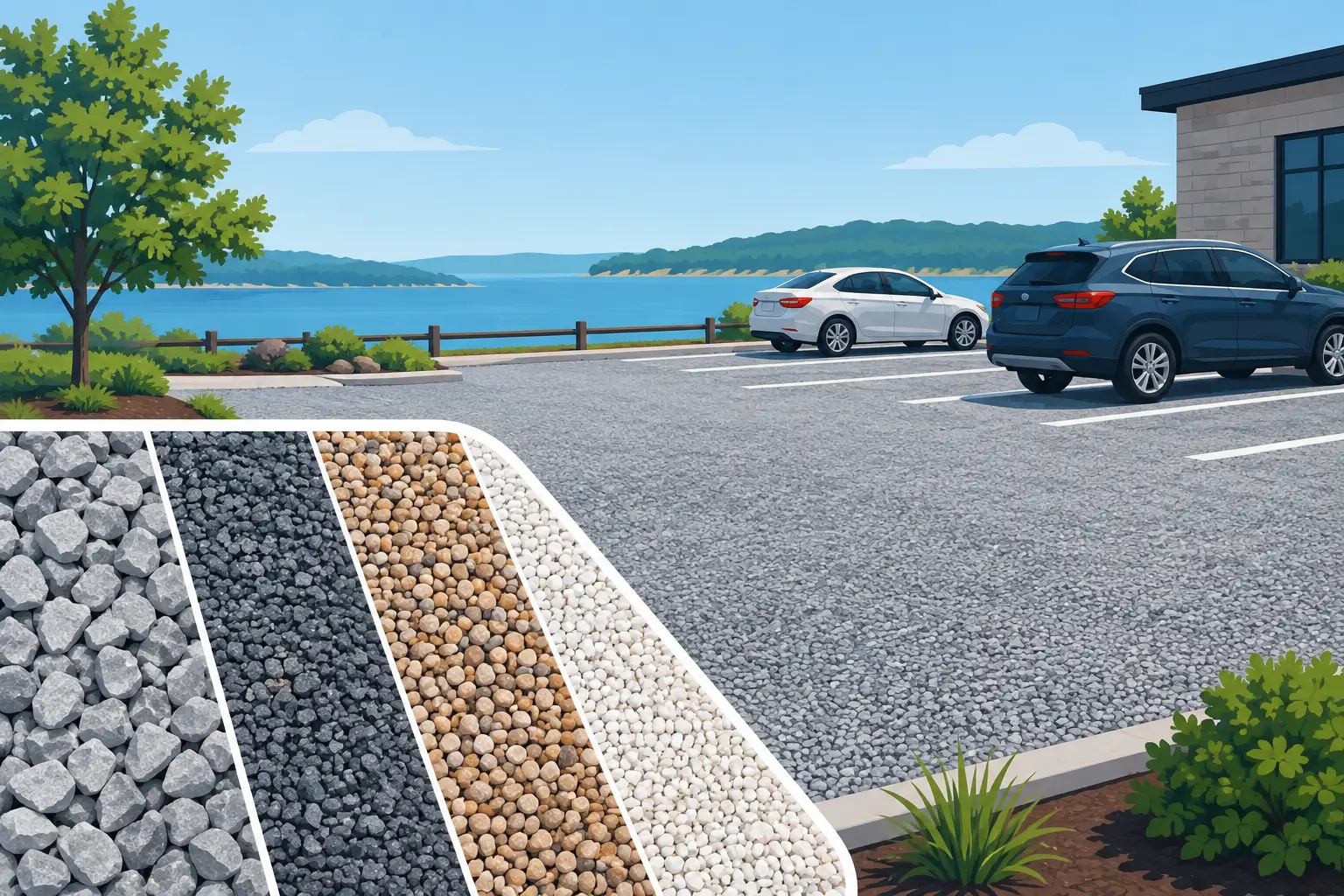
For a driveway that needs to carry regular vehicle traffic through wet weather, crushed road base is usually the best starting material. Road base contains crushed stone in a range of sizes, including fines. Those smaller particles fill the voids between larger rock and help the material lock together when it is spread, watered, and compacted.
This is different from clean rock. Clean rock has little or no fines, so it drains well but does not bind into a firm driving surface by itself. It can shift under tires, especially where a vehicle turns, stops, or climbs a grade. Clean rock has a place in driveway construction, but it is not always the best material to place directly over a muddy drive and expect it to solve the problem.
A quality limestone road base is often a solid choice for Texoma driveways because it compacts into a firm, workable surface. It performs well for residential drives, ranch entrances, equipment paths, and parking areas when the ground is properly prepared first.
Why Crushed Material Performs Better Than Round Rock
Round gravel tends to move against itself. It does not interlock the way crushed material does. That can make it frustrating on a driveway with turning traffic, trailers, pickups, tractors, or delivery trucks.
Crushed limestone or crushed aggregate has angular edges that knit together under compaction. With the right gradation, it creates a denser surface that resists rutting better than loose pea gravel or river rock. For a working driveway, traction and stability matter more than a perfectly uniform appearance.
Use Larger Rock Where the Ground Is Failing
When the driveway has deep ruts, pumping mud, or a soft subgrade, road base alone may not be enough. In those areas, larger clean rock can serve as a stabilizing layer before road base goes on top.
A common repair approach is to excavate or reshape the failed section, place larger rock to bridge the soft ground, then install a compacted road-base layer above it. The larger rock helps support the load and gives water room to move, while the road base creates the driving surface.
The proper rock size depends on the severity of the soft area. Material that is too small can disappear into saturated soil. Material that is too large can be difficult to drive on and hard to cover evenly. A driveway that only gets slick during heavy rain may need regrading and several inches of road base. A low crossing or a spot with constant seepage may need excavation, larger rock, geotextile fabric, and drainage work before it will hold up.
Where Limestone Screenings Fit In
Limestone screenings can help create a tight, smooth finish over a firm base. Because they contain fine material, screenings can compact well and reduce loose rock at the surface. They are useful for certain driveways, walkways, and light-use areas.
They are not a cure for deep mud. On a wet, poorly drained subgrade, screenings can hold moisture and become soft. Use them as a finishing material only after the drive has a stable, crowned base and water is directed away from the travel lane.
Drainage Decides Whether Gravel Will Last
Water is what turns a good driveway into a muddy one. If runoff travels down the middle of the drive, drains toward the wheel tracks, or gets trapped at the entrance, even high-quality gravel will fail sooner than it should.
A properly built gravel driveway should have a crown. That means the center sits slightly higher than the edges so water sheds off both sides instead of standing in the tire paths. The crown does not need to be extreme, but it needs to be maintained. Traffic and routine blading can flatten a driveway over time, which lets water collect and start the rutting cycle again.
Side ditches, swales, and culverts also matter. A driveway is often the high point that blocks natural drainage across a property. If water needs to cross the driveway, it needs a properly sized culvert or an engineered crossing point. Letting runoff cut across the surface will wash away fines, expose larger rock, and create holes that get worse with every storm.
For muddy approaches near gates, barns, shops, and homes, look beyond the driveway itself. Roof runoff, uphill pasture drainage, leaking water lines, and low spots in the surrounding grade can all keep the roadbed wet. Correcting the source of the water often saves more money than adding another load of gravel every year.
Build Thickness for the Traffic You Actually Have
A passenger vehicle driveway does not need the same section as a drive used by concrete trucks, feed trucks, dump trailers, or heavy equipment. The amount of gravel needed is based on ground conditions and load, not just driveway length.
On firm, well-drained ground, a compacted road-base layer may provide good service for light residential use. On clay soils, low ground, or areas that stay wet, a thicker section is usually necessary. Soft areas may require undercutting, fabric, a larger rock foundation, and multiple compacted lifts of base material.
Do not spread all the material at once and assume it will compact through. Thick lifts are harder to compact evenly. Building the driveway in controlled layers produces a better result, especially where the drive needs to support trailers, service vehicles, and ranch traffic.
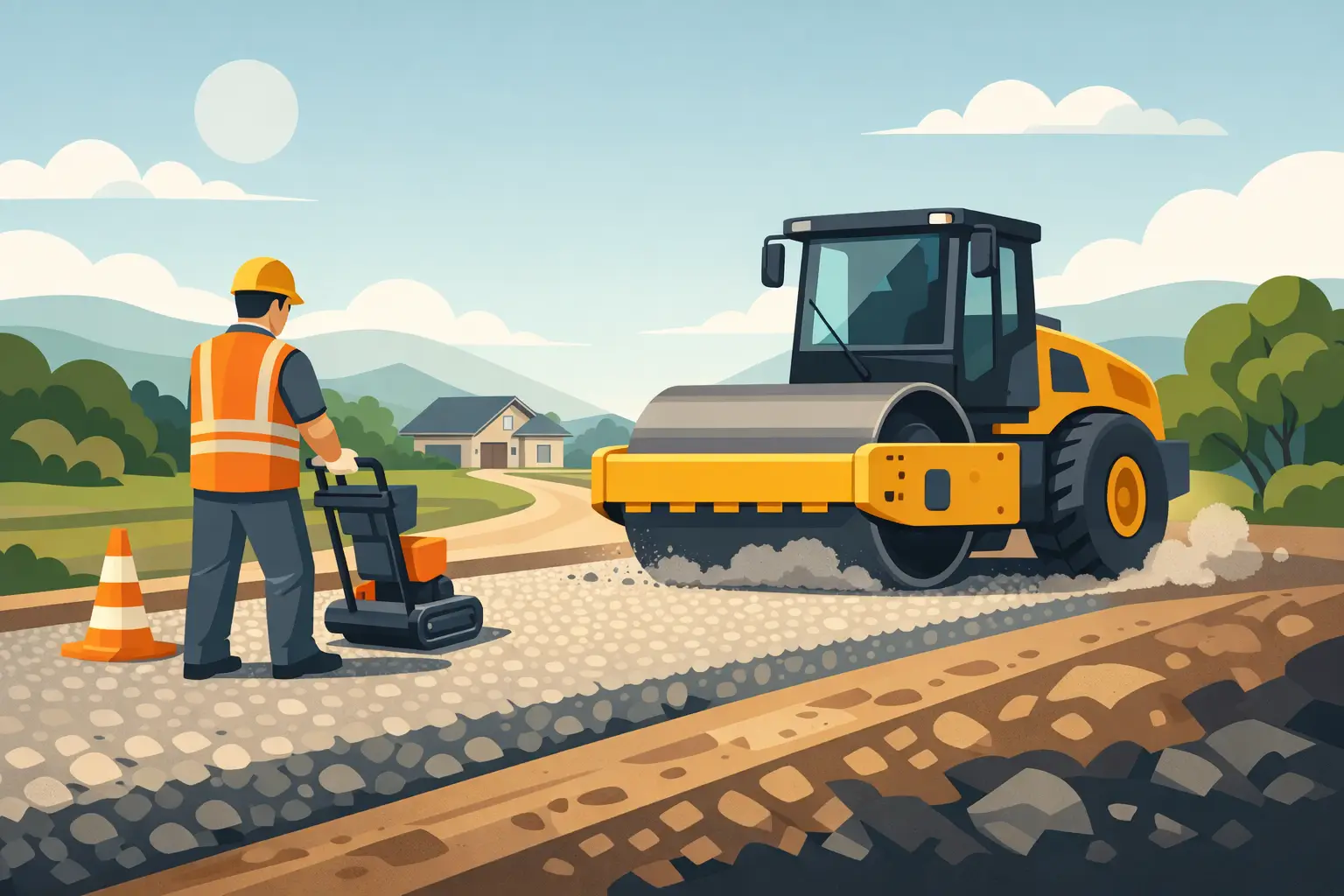
A loader, skid steer, dozer, or motor grader can shape the material, but compaction is what turns loose aggregate into a usable road surface. Moisture also matters. Material that is bone dry or saturated will not compact as well as material with the right amount of moisture.
Gravel Choices That Often Cause Problems
There is no single material that is wrong for every property, but a few common choices regularly disappoint when used in the wrong place:
- Pea gravel is attractive and easy to spread, but its rounded shape makes it prone to shifting under tires.
- Large clean rock can stabilize a deep soft area, but it is rough to drive on without a finer base layer over it.
- Screenings can create a clean finish, but they can become soft if placed over wet ground with poor drainage.
- Recycled material can be cost-effective, but consistency varies. It should be checked for gradation, compaction, and suitability for the intended traffic.
The cheapest gravel load is not always the lowest-cost repair. If the driveway has poor drainage or no stable subgrade, repeated topdressing adds material without fixing the reason the drive is failing.
A Practical Plan for a Muddy Driveway Repair
Start by identifying where the water is coming from and where it should go. Then inspect the driveway for low spots, ruts, soft edges, clogged culverts, and areas where water crosses the travel path. Those details determine whether the job is a simple regrade and fresh road base or a larger rebuild.
A sound repair often includes reshaping the subgrade, establishing a crown, installing or repairing culverts where needed, placing the appropriate base material, and compacting the finished surface. The driveway should also tie into the surrounding property grade so runoff moves away instead of returning to the wheel tracks.
For long rural driveways, it can make sense to focus first on the worst sections. Entrances, creek approaches, steep grades, shaded low areas, and locations near barns or gates usually see the most damage. Repairing those failure points correctly can restore all-weather access without rebuilding every foot at once.
Triple R Dirt Works can handle driveway grading, drainage correction, culvert installation, road-base delivery, and heavy-equipment work as one coordinated job. That matters when the solution calls for more than a load of rock.
A driveway should let you get home, get equipment to the pasture, or get a crew onto the jobsite after a hard rain. Build the base, crown, and drainage to handle the conditions on your property, and the gravel will have a real chance to stay where it belongs.