

Best Drainage Solutions for Acreage That Last
Water rarely stays where it first becomes a problem. On acreage, a soft spot beside the driveway can start with runoff coming off a field, a neighbor’s higher tract, a barn roof, or a shallow low area several hundred feet away. The best drainage solutions for acreage start by identifying where water enters, where it naturally wants to go, and what needs protection along the way.
A good fix should do more than move water off one wet patch. It needs to protect access roads, building pads, gates, livestock areas, fences, and usable ground without sending runoff into a new problem downstream. That usually takes a combination of grading, drainage structures, and the right material in the right place.
Start With the Water Path, Not the Wet Spot
Before digging a ditch or ordering rock, look at the property after a hard rain. Standing water tells part of the story, but washouts, silt deposits, ruts, exposed roots, and flattened grass often show the larger flow path. On rolling Texoma ground, runoff can pick up speed quickly. On flatter ground with tight clay, water may move slowly and stay near the surface for days.
The first job is to separate surface-water issues from groundwater or plumbing issues. Most rural drainage problems are surface water: rain runoff is blocked, concentrated in the wrong place, or trapped by poor grading. A wet area that remains long after dry weather, however, may need a closer look before major earthwork begins.
Existing features matter. A driveway that acts like a dam, an undersized culvert, a house pad built higher than surrounding ground, or a fence line that catches debris can all change how water crosses acreage. The solution should work with the land’s natural fall whenever possible. Forcing water uphill or relying on constant pumping is usually a costly way to fight a problem that proper grade could solve.
Best Drainage Solutions for Acreage by Problem
There is no single drainage system that fits every tract. The right answer depends on slope, soil, rainfall, acreage use, and how much water needs to cross the property during a storm.
Swales and graded channels for broad runoff
A swale is a wide, shallow channel shaped into the ground to collect and guide runoff. Unlike a narrow ditch, a properly built swale can move water at a controlled pace while remaining mowable and safer around equipment, livestock, and vehicles. It works well along the edge of a building pad, around a yard, beside a pasture road, or between a higher field and a lower-use area.
The key is consistent grade. Too little fall leaves water sitting. Too much fall can turn a swale into an erosion channel. In some locations, grass cover is enough to hold the soil. In faster-flow areas, rock protection may be needed at the inlet, outlet, or on the channel bottom.
Culverts for driveways, crossings, and drainage breaks
A culvert carries water beneath a driveway, private road, gate entrance, or crossing. It is one of the most common acreage drainage fixes, and one of the easiest to get wrong. A pipe can be too small for the drainage area, set too high to catch normal flow, installed without enough slope, or buried without adequate cover and compacted road base above it.
When runoff crosses a driveway, the culvert needs a defined inlet and outlet. Water should enter without cutting around the pipe, and it should leave without scouring a deep hole on the downhill side. Rock at the outlet, properly shaped ditches, and solid road material above the pipe help the crossing stay functional through repeated rain events.
Pipe size and material depend on expected flow, traffic load, and site conditions. A light-duty pipe that works under a small residential entrance may not hold up under loaded trucks, trailers, farm equipment, or regular commercial traffic. This is one place where installing the cheapest option twice costs more than building the crossing correctly once.
Driveway crowning and roadside ditches for all-weather access
Many failing gravel driveways are drainage failures first. If the road surface is flat or lower than the surrounding ground, water stays in the gravel, traffic pounds it into mud, and potholes follow. Adding more rock without correcting the shape only delays the next repair.
A driveway needs crown or cross-slope so water sheds off the running surface. It also needs drainage along the sides and enough outlets for roadside ditches to discharge safely. In low areas, a cross-drain culvert may be necessary to keep one side from holding water against the road base.
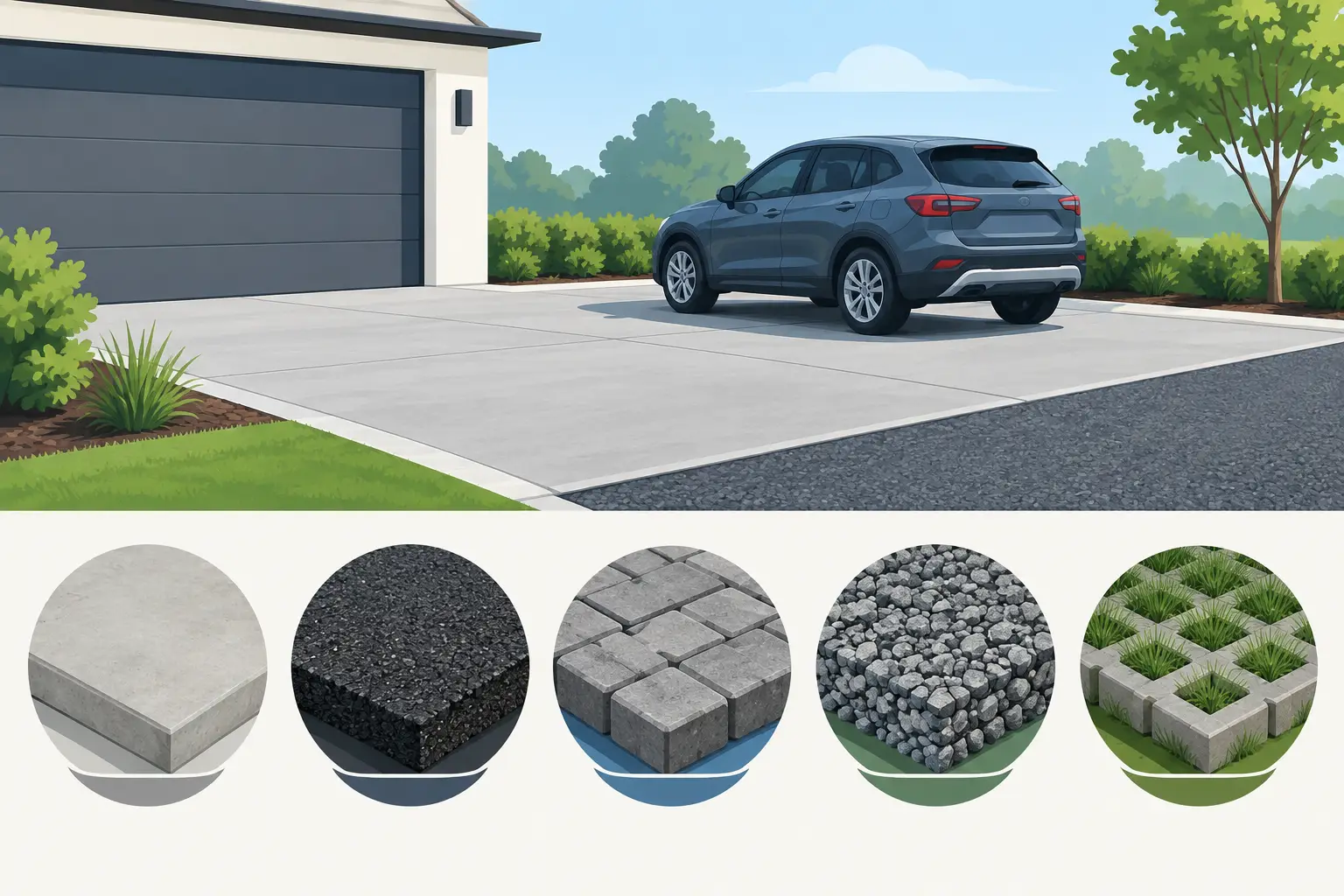
Material selection matters after the grade is right. Road base can provide a compactable foundation, while clean rock may be useful for surfacing or stabilizing wet approaches. The exact build-up depends on traffic, native soil, and whether the road serves a home, ranch operation, jobsite, or heavy delivery route.
French drains and subsurface drainage for confined areas
A French drain uses perforated pipe and drainage rock to collect water below the surface. It is useful near homes, shops, patios, retaining areas, and small landscape zones where a broad swale is not practical. It can also help intercept shallow water moving toward a structure.
This is not usually the first choice for open acreage. Subsurface systems handle a limited amount of water and still need a dependable outlet. If the outlet is blocked or lower ground has nowhere to accept discharge, the drain will not solve the problem. On large rural properties, shaping the surface grade is often more durable and more cost-effective than trying to pipe every wet area underground.
Catch basins and rock protection for concentrated flow
Where roof runoff, paved areas, or a steep slope sends water into one location, a catch basin or inlet structure can collect debris and direct flow into a pipe or channel. These systems are common near shops, parking areas, and construction pads. They need regular cleaning, especially where leaves, gravel, and sediment are likely to collect.
Rock protection is just as important when water exits a pipe or drops down a slope. Clean rock placed at inlets, outlets, and erosion-prone channels slows water and protects exposed soil. The rock must be sized and installed for the flow. Small decorative stone can wash away during the first serious storm.
Ponds and detention areas for larger drainage needs
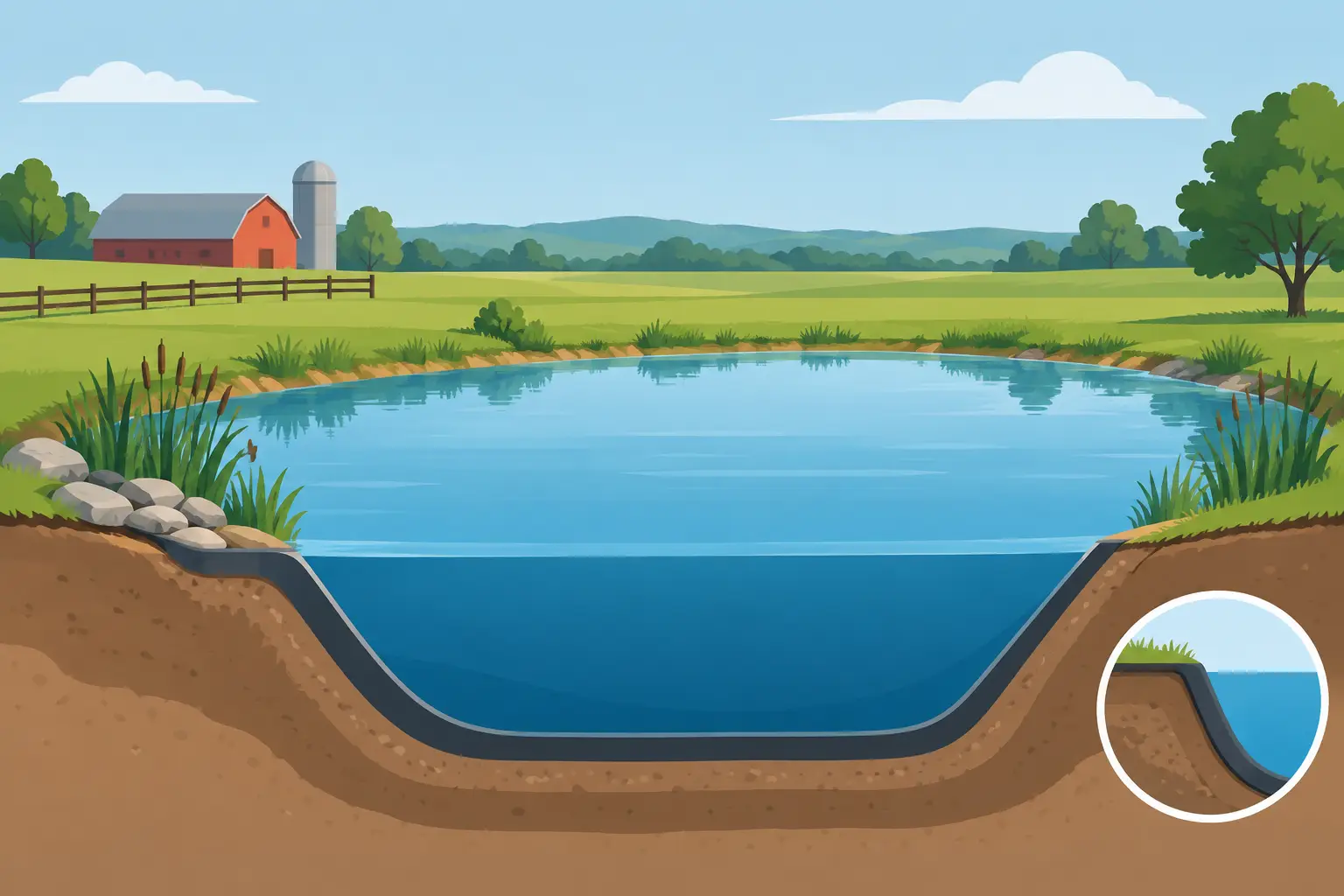
A pond can be a practical part of an acreage drainage plan when the property has a natural low area and enough contributing runoff. It can collect water, reduce pressure on lower crossings, provide livestock water, and create useful storage during heavy rain. But a pond requires more than digging a hole.
The watershed, soil type, spillway, dam construction, and overflow route all need attention. A pond without a properly built spillway can overtop in the wrong place and damage the dam, fence lines, roads, or neighboring property. In some cases, a shallow detention area or regraded low spot is a better fit than a full pond.
Keep Water Away From Building Pads
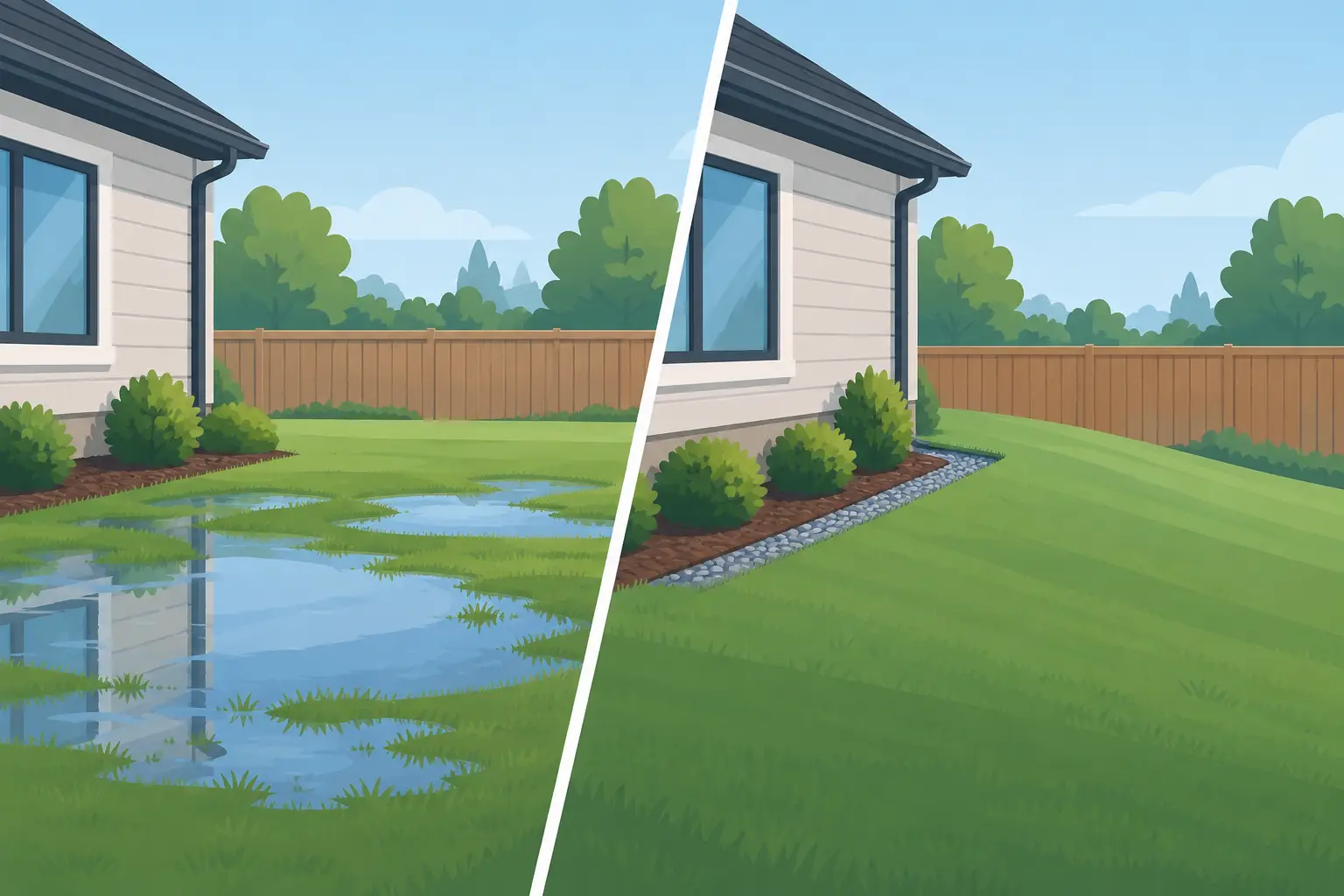
A foundation pad should sit above surrounding finish grade, with positive drainage moving away from the structure. Water should not collect at the edge of a slab, under a crawlspace, or against a shop wall. A properly prepared pad starts with stable subgrade, but it also needs a plan for roof runoff and uphill drainage.
On sloped acreage, a diversion swale or interceptor ditch above the pad may be needed to keep hillside runoff from reaching the building area. Downspouts should discharge away from the foundation and onto ground that can carry the water without washing out. If a pipe is used, its outlet needs to be protected and kept clear.
Avoid Fixes That Create the Next Problem
The most common mistake is moving water quickly without considering where it goes next. Deepening a ditch can dry one yard while flooding a lower gate. Raising a driveway can improve access while blocking the property’s only natural drainage route. Filling a low spot can push runoff toward a barn or neighboring tract.
A workable drainage plan accounts for the whole route: collection, conveyance, discharge, and erosion control. It should also allow for maintenance. Culvert ends need to stay open, ditches need occasional cleanout, and gravel roads need reshaping after traffic and weather wear down the crown.
For acreage owners, the practical question is not whether water can be removed completely. It is whether it can cross the property in a controlled way without damaging the improvements that make the land useful. Triple R Dirt Works approaches drainage correction with that field-first mindset: establish grade, build reliable crossings, protect the flow path, and use materials that hold up.
A drainage project is worth planning before the next hard rain, not while a driveway is washing out. Walk the ground, mark the trouble areas, and focus first on the water paths that threaten access, structures, and working areas. The best result is land that drains quietly in the background while you get on with using it.