
Driveway Gravel Types That Hold Up in Texoma
A gravel driveway can look good the day it is spread and still turn into ruts, potholes, and loose rock after the first hard rain. Choosing between driveway gravel types is part of the job, but the material only performs as well as the grading, base, drainage, and compaction underneath it. For Texoma homes, ranches, job sites, and acreage roads, the best choice usually starts with how the driveway will be used.
A short residential drive with two pickups has different needs than a long ranch entrance carrying trailers, feed trucks, concrete trucks, or construction equipment. Soil conditions matter too. Black clay, low spots, creek-side ground, and areas with poor runoff can all turn a simple gravel delivery into an ongoing maintenance problem if the driveway was not built correctly from the ground up.
The Best Driveway Gravel Types Start With a Good Base
The top rock is what people see, but the base is what carries the load. A driveway built directly on soft native soil may sink and spread no matter how much clean rock gets added later. On a new drive, the ground should be shaped, proofed for soft areas, and brought to the proper elevation before aggregate is placed.
Most working driveways need a compacted road-base layer below the finish material. This layer includes a mix of rock sizes and fines that lock together under compaction. It creates a firm section that spreads vehicle weight instead of allowing tires to press rock into the soil.
The driveway also needs crown or cross-slope so water leaves the driving surface. If water sits in the wheel paths, even quality limestone can loosen and wash out. Ditches, swales, and culverts may be necessary where runoff crosses the entrance or collects beside the road. Gravel is not a substitute for drainage work.
Road Base for a Stable, All-Purpose Driveway
Road base is one of the most practical driveway gravel types for Texas and Oklahoma properties. It is commonly made from crushed limestone or similar aggregate, blended with fines. The larger pieces provide structure while the smaller material fills the voids and compacts tight.
For a new gravel driveway, road base is often the right first material after subgrade preparation. It works well for residential drives, ranch roads, parking areas, equipment yards, and construction access. When spread at the proper depth, watered as needed, and compacted, it forms a hard, usable surface that holds up better than loose decorative stone.
Road base is not always the prettiest final surface. Depending on the material source, it may have a pale limestone color and a more compacted, dusty appearance in dry weather. But for customers who need dependable access rather than a decorative finish, it is difficult to beat. A road-base driveway can also receive a clean-rock or decomposed-granite finish later if the project calls for it.
When Road Base Makes Sense
Use road base when the driveway sees regular traffic, the native soil is soft, or the road needs to carry heavier vehicles. It is also a good choice for a long rural driveway where a loose surface would require frequent blading and replacement. The key is enough depth for the traffic load. A light residential drive may need less aggregate than a route used by loaded trailers and delivery trucks.
Clean Limestone Rock for a Finished Surface
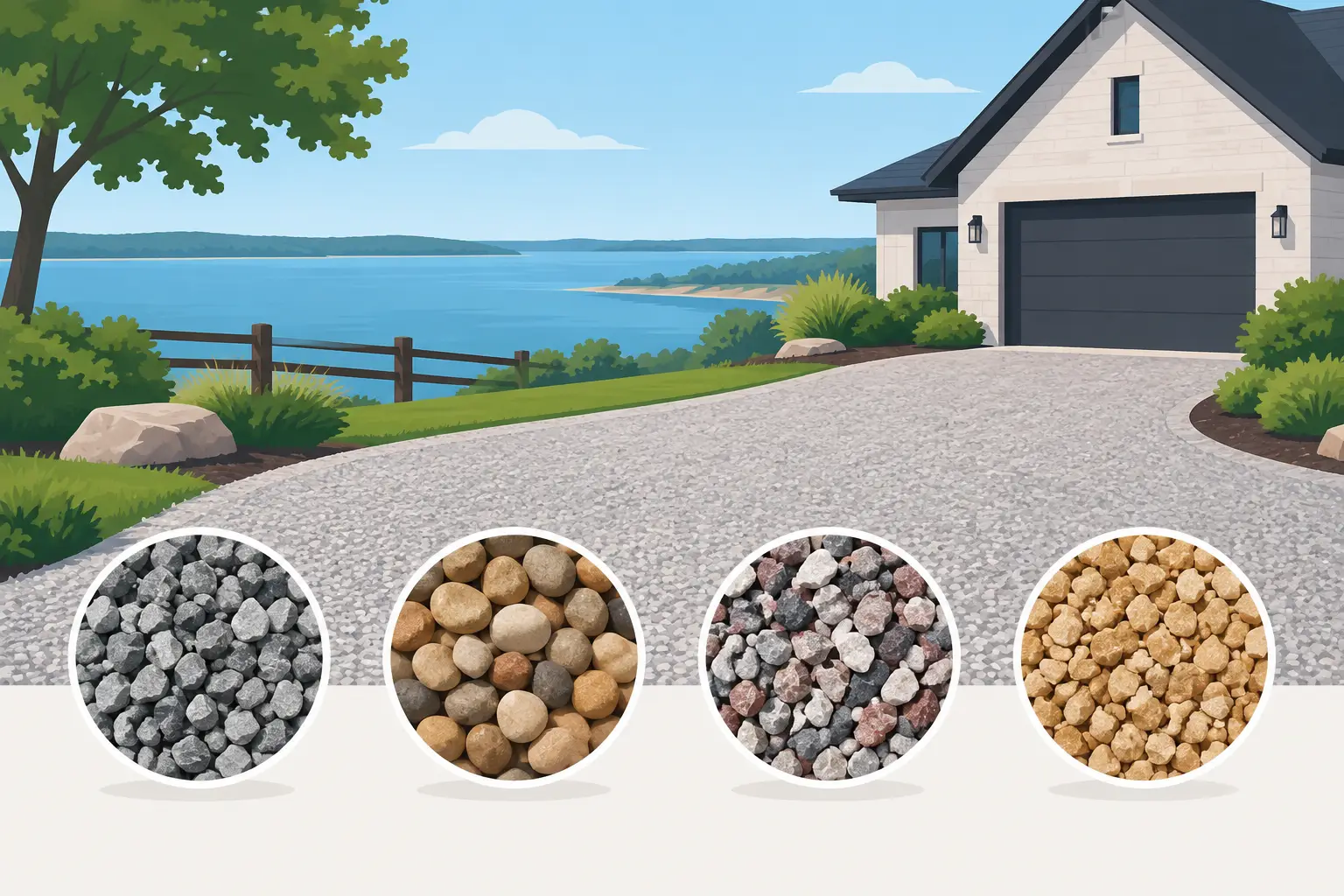
Clean rock contains little to no fines. Common driveway sizes often range from smaller chips to 1-inch or larger crushed stone, depending on the quarry and the intended use. Clean limestone gives a driveway a crisp, finished appearance and drains well because water can move through the open spaces between the rock.
This type of material works best over a solid, compacted base. On its own, clean rock does not lock together the way road base does. If it is placed over mud, loose soil, or an unprepared driveway, vehicle tires can push it down into the ground or scatter it into the grass.
A clean-rock top layer is a good fit for residential entrances, gravel parking pads, and driveways where appearance matters along with function. It can reduce the dusty look of a fines-heavy surface, though loose stone may still migrate at turns, steep sections, and areas where drivers brake or spin tires.
For an entrance with a sharp turn from a county road, a larger, angular rock often stays in place better than rounded gravel. Angular crushed limestone has edges that help the material interlock. Rounded river rock and pea gravel may look clean, but they tend to roll under tires and are generally a poor choice for an active driveway surface.
Limestone Screenings for Tight Compaction
Limestone screenings are fine crushed limestone material. They can compact into a firm, smooth surface and are useful in certain areas of a driveway project. Screenings may be used for light-duty walkways, under pavers, around buildings, or as a thin finishing material where a tightly packed surface is preferred.
For a main driveway, screenings work best as part of a designed aggregate section rather than a thick layer placed directly on soil. Too much fine material can become slick or soft when saturated, especially in low areas with poor drainage. It may also create dust in prolonged dry weather.
Screenings can be a practical option for a light-use drive or parking area that has good drainage and a stable base below. They are not the automatic answer for every rural road. If the property has heavy clay, repeated trailer traffic, or runoff crossing the drive, a stronger road-base section and drainage correction usually need to come first.
Decomposed Granite for a Natural-Looking Drive
Decomposed granite, often called DG, has a natural tan to reddish appearance that can suit homes, barns, shops, and landscape-focused properties. It is made up of fine granite particles with small aggregate pieces, and it can compact well when installed over a properly prepared base.
DG is often chosen for appearance. It gives a softer, more natural finish than bright limestone and can blend well around country homes or landscaped areas. It is usually better for lighter-duty applications than a high-traffic commercial entrance or a drive used daily by heavy trucks.
Like any fine aggregate, decomposed granite needs drainage. Water that stands on the surface can soften the material and create washboarding or ruts. A crowned driveway, defined edges, and sound base material make a major difference in how it holds up.
Materials That Usually Cause Driveway Problems
Not every available rock product belongs on a drive. Pea gravel is smooth and rounded, so it shifts under tires instead of compacting into a stable running surface. It can work as decorative cover in low-traffic landscape areas, but it is frustrating under vehicle traffic.
Large clean rock can also create problems when used alone. Stone that is too large is rough to drive on, hard to walk across, and leaves open voids that do not provide a finished surface. It may have a place as underdrain rock or in specific base conditions, but it is rarely the right top layer for a residential driveway.
Reclaimed or mixed material can be economical in the right application, but consistency matters. If a load contains too much dirt, oversized chunks, or debris, it may not compact or drain as expected. A driveway is only as dependable as the material placed in it.
Match the Material to the Traffic and Ground Conditions
The right gravel depends on the job. A short drive to a house on firm ground may perform well with compacted road base and a thin clean limestone finish. A long ranch road may need a thicker road-base section, drainage ditches, and culverts at crossings before any finish rock is considered.
For construction access, the goal is usually load support and all-weather use, not appearance. Road base and properly compacted select fill may be needed to build up weak areas. For a parking lot, traffic patterns matter. Turning trucks and repeated parking in the same spots can loosen a thin gravel section quickly.
Driveway edges deserve attention as well. Without defined shoulders and proper slope, rock gets pushed outward over time. Periodic grading can restore crown and pull loose material back toward the center, but regular maintenance should not be used to cover up a base or drainage problem.
Build It Once With the Whole Driveway in Mind
A gravel driveway is more than a load of rock spread across the ground. It is a working road section that needs the right elevation, subgrade, aggregate depth, compaction, and water control. Triple R Dirt Works can handle the grading, culvert work, road-base placement, and material delivery needed to build a driveway that serves the property instead of becoming another problem after every rain.
Before ordering material, consider what will use the drive six months from now, not just what uses it today. Planning for trailers, service trucks, wet-weather access, and proper drainage gives the finished driveway a much better chance of staying solid for the long haul.


