

Choosing a Cattle Guard Installation Contractor
A cattle guard is supposed to save time at the gate, not become the rough spot everyone slows down for. The difference usually comes down to the work below and around the steel. A qualified cattle guard installation contractor does more than set a prefabricated guard in a hole. They prepare a stable base, manage drainage, build smooth approaches, and make sure the installation fits the way trucks, trailers, equipment, and livestock move across the property.
For Texoma ranches, farms, rural homes, and developing properties, that site work matters. Heavy rain, soft subgrade, clay soils, loaded feed trucks, and daily traffic can expose shortcuts quickly. A cattle guard that is level, supported, and properly tied into the driveway provides reliable access without opening and closing a gate every trip.
What a Cattle Guard Installation Contractor Should Handle
The cattle guard itself is only one part of the job. Before installation begins, the contractor should look at the driveway alignment, slope, drainage path, traffic type, and existing road material. A guard placed at the low point of a driveway or directly in a drainage swale may need additional culvert work, grading, or a different layout to keep runoff from washing out the approaches.
The excavation needs to be sized for the cattle guard and its supporting structure. Depending on the product and site conditions, that may include precast concrete footings, a concrete foundation, or engineered support rails. The bearing surface must be firm and level. Setting a heavy cattle guard on loose fill, uneven rock, or unprepared native soil can allow it to shift, settle, or twist under traffic.
A capable contractor also builds the transition back into the road. This is where many installations fall short. Steep or abrupt approaches make trailers bounce, put extra impact on the cattle guard, and pull gravel away from the crossing. Proper road base, grading, and compaction create a gradual approach that carries traffic across the guard without forming ruts or potholes.
For most rural access points, the completed work should account for four practical needs:
- A stable, level support system that matches the cattle guard manufacturer’s requirements
- Driveway approaches wide enough and strong enough for expected vehicles
- Drainage that moves water away from the structure and road edges
- Safe tie-ins to fences so livestock cannot walk around the crossing
Those details are not extras. They are what turn a steel cattle guard into a working entrance.
Start With Traffic, Not Just the Opening Width
A pickup truck entering a pasture and a loaded dump truck entering a jobsite do not place the same demand on a cattle guard. Before selecting a unit, consider the heaviest and widest vehicles that will use the crossing. That can include cattle trailers, horse trailers, hay trucks, tractors, skid steers, fire apparatus, delivery trucks, and construction equipment.
Width deserves careful thought. The guard must provide enough driving room for trailers and equipment without forcing drivers close to the edge. If the property entrance has a curve, narrow gate opening, or offset driveway, the contractor may need to reshape the approach so vehicles line up straight before crossing.
Load rating matters just as much. A light-duty cattle guard may work for occasional passenger traffic, but it is not automatically suitable for repeated commercial deliveries, oilfield traffic, or fully loaded agricultural trucks. The right installation contractor will ask how the property is used rather than assuming every entrance needs the same product.
There is a trade-off here. Larger, heavier-rated guards and concrete foundations cost more upfront, and they require more excavation and material. On a working ranch or an active construction entrance, that cost is often less than repairing a failed crossing, damaged trailer, or washed-out driveway later.
Precast and Concrete Foundation Options
Many cattle guards are installed with precast concrete foundations because they provide a consistent bearing surface and can speed up field installation. Precast components can be a good fit when access is available for delivery and lifting equipment and the site has been properly excavated and prepared.
Poured concrete may make sense on sites with unusual dimensions, poor existing conditions, or a custom entrance layout. It can also be needed where plans, local requirements, or the cattle guard manufacturer call for a specific foundation design. Either option depends on the preparation beneath it. Concrete is strong, but it cannot correct unstable subgrade or water that has nowhere to go.
Drainage Decides How Long the Installation Lasts
Water is one of the main reasons rural driveways and cattle guard approaches fail. Water moving along a road can cut channels at the sides of the crossing. Water trapped beneath the cattle guard can soften the subgrade and cause settlement. Water coming off an adjacent field can overload an entrance that was never designed to carry it.
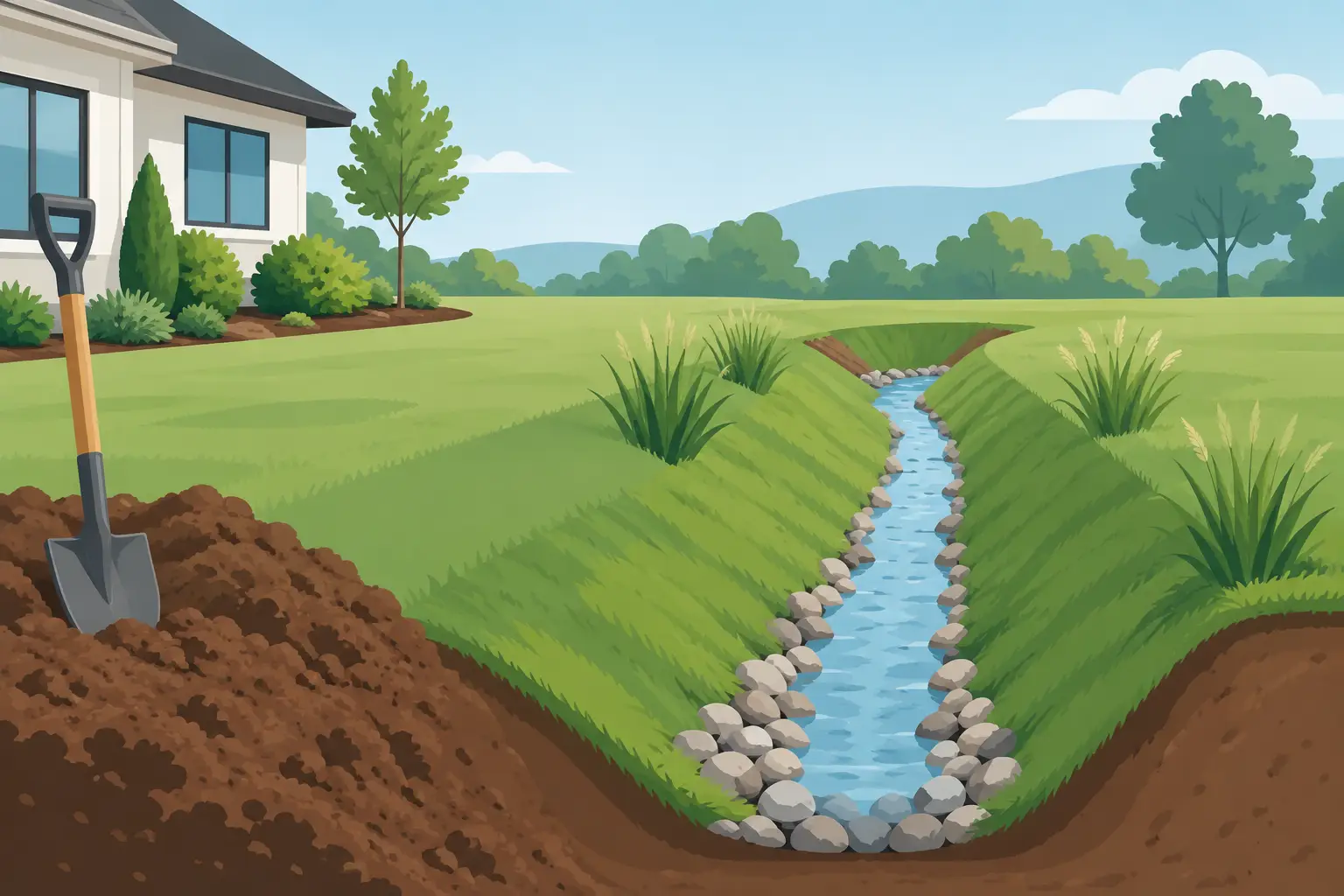
The solution depends on the property. Sometimes a properly shaped crown and roadside ditch are enough to move runoff past the entrance. In other situations, a culvert under the drive is needed to carry water from one side to the other. A swale, additional rock protection, or regrading may be needed where runoff is concentrated.
This is why a cattle guard installation should be evaluated as part of the access road, not as a stand-alone steel product. If the road base is thin, the driveway is already holding water, or the entrance is lower than the surrounding ground, installing the guard alone will not solve the underlying problem.
Triple R Dirt Works can combine cattle guard installation with driveway grading, culvert installation, road-base placement, and aggregate delivery when the entrance needs more than a simple replacement. Keeping the excavation, drainage, road work, and material supply coordinated helps avoid gaps between phases of the job.
Fence Tie-Ins and Livestock Control Matter
A cattle guard only works when livestock cannot bypass it. The fence line must tie into the ends of the guard without openings at the corners, under the rails, or along uneven ground. This may require setting or relocating posts, adjusting a gate layout, or grading small gaps where the fence meets the approach.
The right layout also considers how livestock and people use the entrance. A separate walk-through gate may be useful for foot traffic, and a nearby equipment gate may still be needed for unusual moves or maintenance. On properties with horses, smaller livestock, pets, or frequent pedestrian traffic, discuss the intended use before deciding whether a cattle guard is the best solution for that location.
Cattle guards are not a one-size-fits-all answer. They are generally most effective at entrances used by vehicles where cattle are the primary concern. Properties managing smaller animals, animals that are accustomed to crossing unusual surfaces, or a mix of livestock may need additional barriers or a different gate plan.
Questions to Ask Before Work Begins
A good contractor should be able to explain the installation plan in plain terms. Ask what support system the cattle guard requires, how deep the excavation will be, what material will be placed and compacted beneath the structure, and how the driveway will transition onto both ends.
It is also worth asking where runoff will go after the job is complete. If a culvert is involved, confirm its size, location, and outlet path. A culvert that discharges onto an unprotected slope can create a new erosion problem farther down the drive.
Discuss materials as well. Crushed road base is commonly used to rebuild and shape the driveway approaches because it compacts into a durable surface. Clean rock may be useful for drainage areas, while select fill can help rebuild low spots or shape the road subgrade. The best material depends on the soil, traffic, and whether the surface will be maintained as gravel or built up for heavier use.
Finally, be clear about who supplies the cattle guard, precast components, concrete, fencing work, and aggregate. Some customers already have a cattle guard on site. Others want one contractor to coordinate the full crossing, including excavation, installation, driveway repair, and materials. Defining that scope early prevents delays once equipment arrives.
Signs an Existing Cattle Guard Needs Attention
A crossing does not always need full replacement. In some cases, the cattle guard is sound but the approaches have settled, the road base has worn away, or drainage has changed over time. Regrading and adding material may restore a smoother, safer crossing.
Full removal and reinstalling may be the better choice when the guard has shifted, the concrete support has cracked or settled, the rails are damaged, or the structure no longer matches current traffic. If trucks and trailers have gotten larger since the original installation, the entrance geometry and load rating may no longer fit the job.
Watch for standing water, tire ruts at either end, exposed foundation edges, loose guard movement, bent rails, and erosion along the sides. Addressing those signs early is usually easier than waiting for a washout or major failure after a hard rain.
A well-built cattle guard should feel like part of the road: straight, solid, properly drained, and ready for the traffic your property actually sees. Put the same care into the base and approaches that you put into selecting the guard, and the entrance will keep working when the gate would have slowed everything down.