
Five Signs Drainage Needs Regrading on Your Property
A hard rain tells the truth about a property. Water will show where a driveway is too low, where a building pad is holding runoff, and where the ground is sending water straight toward a house, shop, barn, or fence line. Knowing the five signs drainage needs regrading can help you correct a small grade problem before it becomes washed-out gravel, soft subgrade, erosion, or water damage.
In Texoma, drainage problems are rarely just about one puddle. Heavy storms, clay soils, changing ground conditions, and rural driveways all put pressure on the way water moves across a property. Proper regrading gives runoff a defined path away from structures, travel areas, and low spots where it does not belong.
Five Signs Drainage Needs Regrading
1. Water Stands Long After the Rain Stops
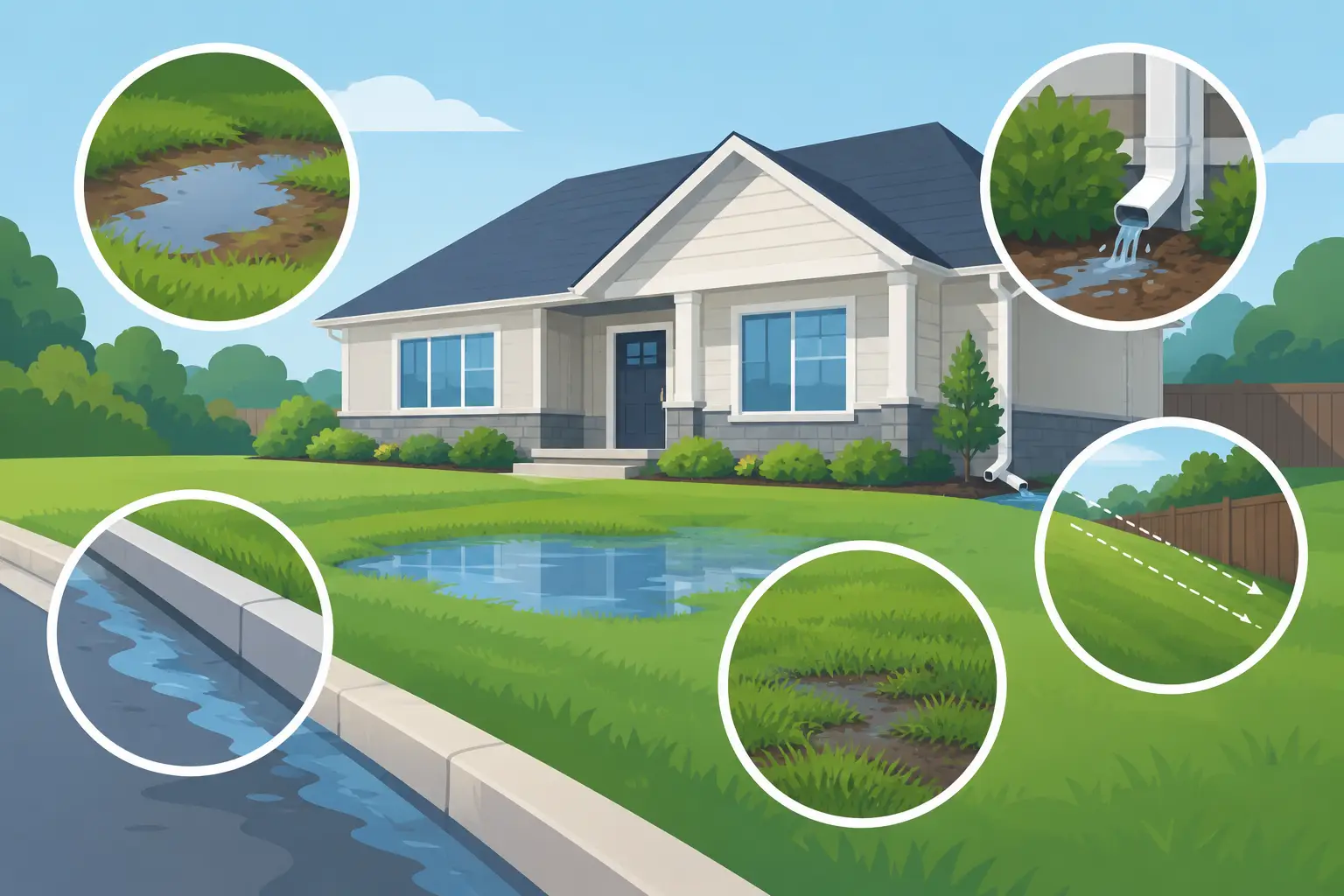
A puddle in a shallow low spot immediately after a hard storm is not always a major concern. But water that remains for a day or more, especially in the same location after every rain, usually means the ground has no effective outlet. The area may be flat, settled, or pitched back toward a structure instead of away from it.
Standing water can soften the soil below a gravel drive, parking area, or building pad. Over time, traffic pushes that wet material down, creating ruts and potholes. Around a home or shop, repeated saturation near the foundation can lead to muddy access, damp crawl spaces, and unwanted moisture against the building.
Regrading may involve cutting down the high side, filling and compacting a low area, or establishing a shallow swale that moves water toward a safe discharge point. The right fix depends on where the water starts, where it needs to go, and whether a ditch, culvert, or existing drainage route is available.
2. Your Gravel Driveway Develops Ruts and Washouts
A gravel driveway should shed water from the center toward the sides. When it loses that crown, runoff travels down the wheel tracks instead. That moving water carries fines and rock with it, leaving ruts, exposed base material, potholes, and loose gravel piled along the edges.
Adding another load of rock can improve the appearance for a while, but it will not solve a driveway that is holding water or funneling it down the road. In many cases, the driveway needs to be reshaped first. A proper crown, solid road base, and side drainage give the material a chance to stay where it belongs.
The ditch line matters just as much as the driveway surface. If roadside ditches are too shallow, blocked, or higher than the drive, runoff has nowhere to go. On long drives or crossings, a culvert may be needed to carry water under the road without letting it cut across the surface.
3. Water Flows Toward Your House, Shop, or Barn
Water should move away from buildings, not collect along the slab or run toward doors and walls. A noticeable slope toward a structure is one of the clearest reasons to evaluate the grade. You may see muddy splash marks on siding, water at garage doors, wet soil along the perimeter, or runoff flowing around the building after a storm.
This does not always mean the entire lot needs to be rebuilt. Sometimes the problem is a small berm, settled fill, landscape border, or downspout discharge that traps water near the building. Other times, the building pad was not built high enough above surrounding ground, or later improvements changed the original drainage path.
Correcting the grade near a structure requires care. The goal is to create positive drainage away from the building without exposing footings, undermining a slab edge, or sending water onto a neighboring property. A contractor can evaluate elevations, shape the surrounding soil, and build drainage features that work with the rest of the site.
4. Soil Is Washing Into Ditches, Ponds, or Fence Rows
Erosion is more than a cosmetic problem. Small channels in bare dirt can quickly become deep cuts when the next storm hits, especially on a slope or along a road. You may notice sediment collecting in a ditch, muddy water entering a pond, exposed roots, or a fence line that is becoming difficult to maintain because runoff has carved out the ground beneath it.
The cause is often concentrated flow. Water is being forced through one narrow path because the surrounding ground does not drain evenly. Regrading can spread that flow out, redirect it through a swale, or move it through a ditch or culvert designed to handle the volume.
There is a trade-off here. A steep ditch may move water quickly, but it can also scour unless it has the right shape, protection, and outlet. A broad swale moves water more gently and is easier to mow, but it needs enough fall to keep from holding water. The best approach depends on the slope, soil type, available space, and how much runoff the area receives.
5. Low Spots Stay Soft and Hard to Use
A soft area in a yard, pasture entrance, equipment yard, or parking area is often a drainage issue below the surface. Tires sink, trailers leave deep tracks, and equipment tears up the ground even when the rest of the property is dry. If the problem returns after gravel or fill has been added, water may still be trapped underneath.
For working properties, this can affect more than appearance. A soft gate entrance slows down livestock and equipment traffic. A muddy parking area creates access problems for customers, crews, and deliveries. A wet construction entrance can track mud onto public roads and make it difficult to get materials where they need to go.
Regrading may need to be paired with material work. The area may require select fill to build elevation, compacted road base for support, or clean rock in a location that needs drainage and all-weather access. Simply placing rock on wet, unstable ground can cause it to disappear into the mud. The subgrade needs to be shaped and prepared first.
What Proper Regrading Actually Does
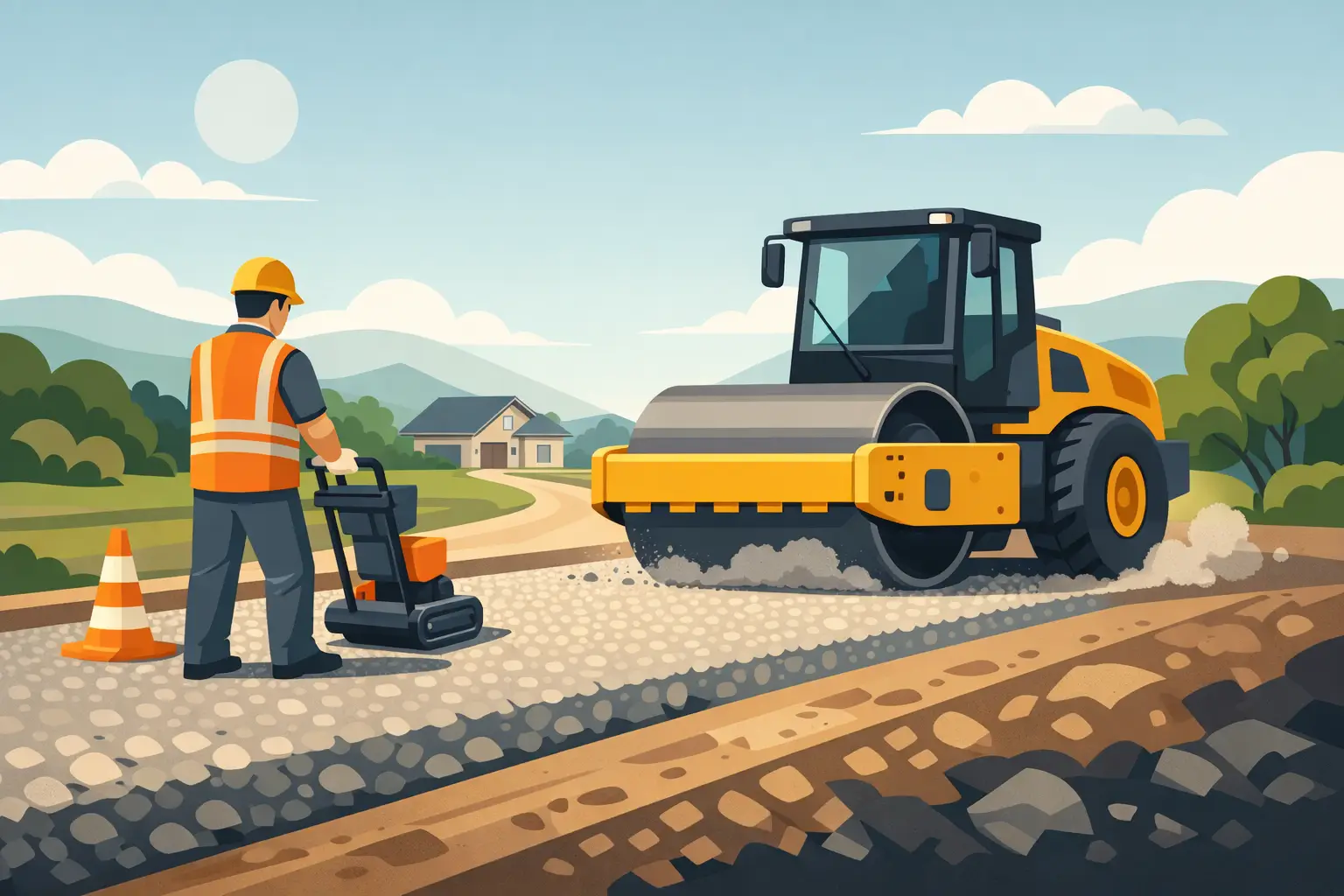
Regrading is not just moving dirt until a low spot looks level. It is controlled earthwork that establishes the elevations and slopes needed for water to leave the site without creating a new problem somewhere else. A dozer, skid steer, or excavator may be used depending on the size of the area, the amount of material that must be moved, and whether drainage features need to be excavated.
On a residential lot, the work may focus on directing water away from a foundation, reshaping a backyard low spot, or repairing a washed-out drive. On acreage or agricultural land, it may include rebuilding ditches, installing culverts at crossings, shaping approaches to cattle guards, or improving runoff around barns, arenas, and equipment areas. For construction projects, correct subgrade and building-pad elevation are part of keeping the job accessible and ready for the next phase.
Good drainage also needs a destination. Moving water away from one area only works if it can continue through a ditch, swale, culvert, pond overflow route, or natural drainage path. That is why a drainage correction should look at the full route of the water rather than one wet spot by itself.
When Regrading May Not Be the Only Fix
Some drainage problems need more than reshaping the surface. If a driveway crossing blocks a natural draw, a properly sized culvert may be necessary. If runoff is cutting across a steep area, erosion control or rock protection may be needed. If a building pad sits too low compared with surrounding ground, bringing in compactable fill and rebuilding the pad may be the practical answer.
Underground leaks, failed septic components, and irrigation issues can also create wet ground that looks like a grading problem. If water is present during long dry stretches, or the wet area is isolated from normal runoff, it is worth checking for those causes before moving dirt.
For most properties, the best time to look closely is after a meaningful rain. Take note of where water enters, where it slows down, where it crosses roads, and where it finally leaves the property. Photos taken during or shortly after a storm can make the problem much easier to explain and correct.
A properly graded property does not need to look overbuilt. It needs to stay usable when the weather turns. Whether the goal is a dry building pad, a driveway that holds its rock, or a pasture entrance that equipment can cross without bogging down, fixing the grade gives water a place to go and gives the rest of the property a better chance to hold up.